
7 Reasons Why Bai Tu Long Bay is less crowded than Ha Long Bay in 2026-2027
In today’s travel landscape, discerning adventurers are increasingly turning away from overcrowded tourist hotspots. As Vietnam continues to captivate global travelers in 2025, a fascinating shift is occurring in how people experience the country’s iconic limestone karst seascapes. While Ha Long Bay remains Vietnam’s most recognized natural wonder, drawing over 3 million visitors annually, its lesser-known neighbor—Bai Tu Long Bay—offers a remarkably different experience with significantly fewer crowds.
What explains this striking contrast between two adjacent bays sharing similar breathtaking beauty? The answer lies in a combination of deliberate government policies, geographical factors, and tourism development strategies that have kept Bai Tu Long Bay peaceful while Ha Long Bay experiences overtourism. For travelers planning their 2025-2027 Vietnam itineraries, understanding these differences is crucial for making informed decisions about which bay delivers the authentic experience they seek.

The Fundamental Differences: Bai Tu Long Bay vs. Ha Long Bay
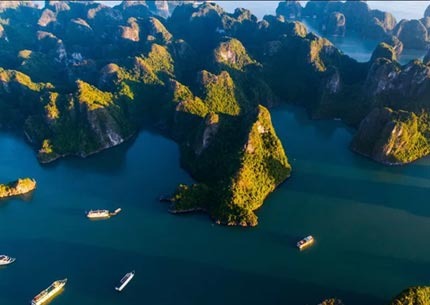
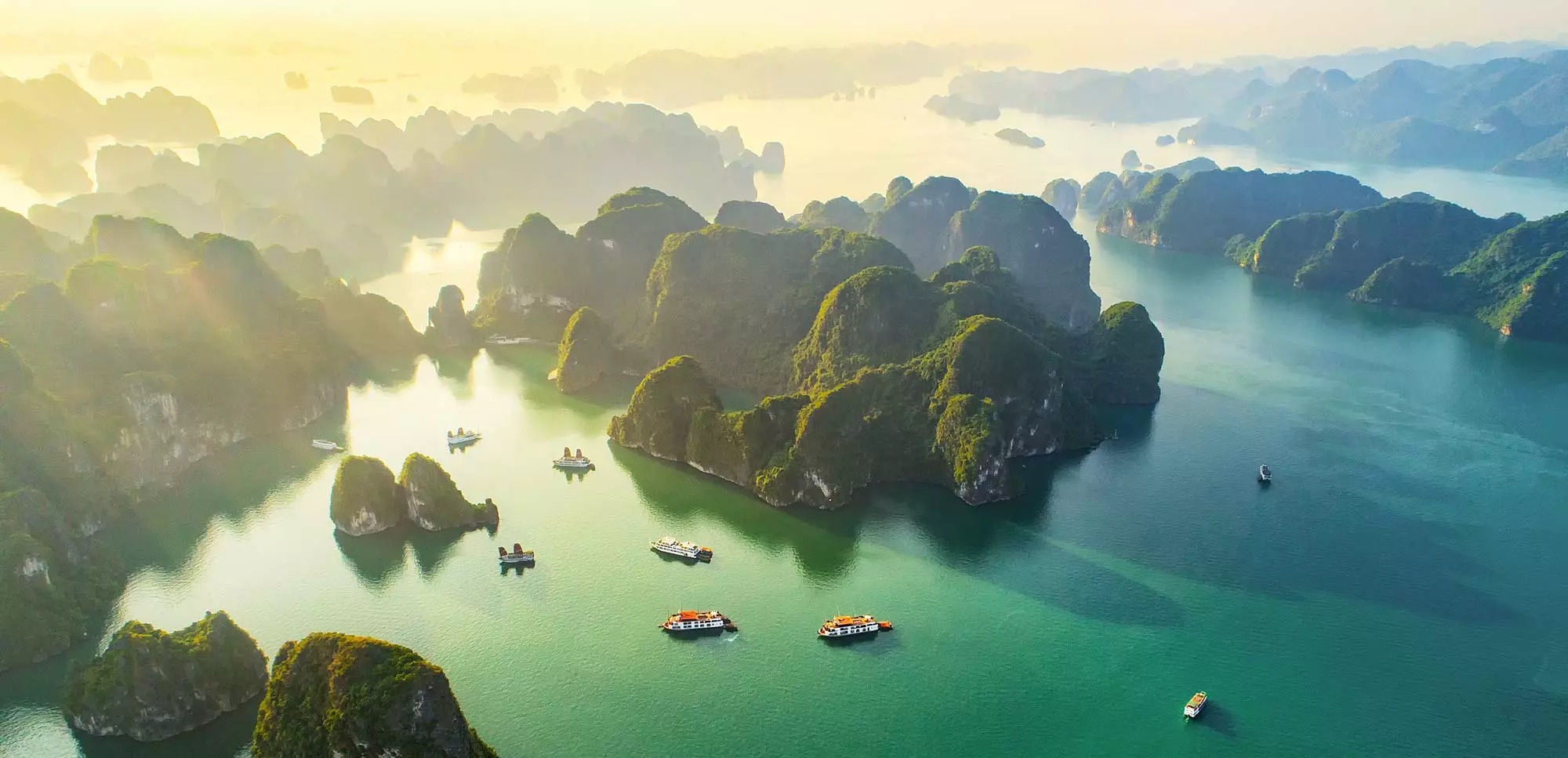
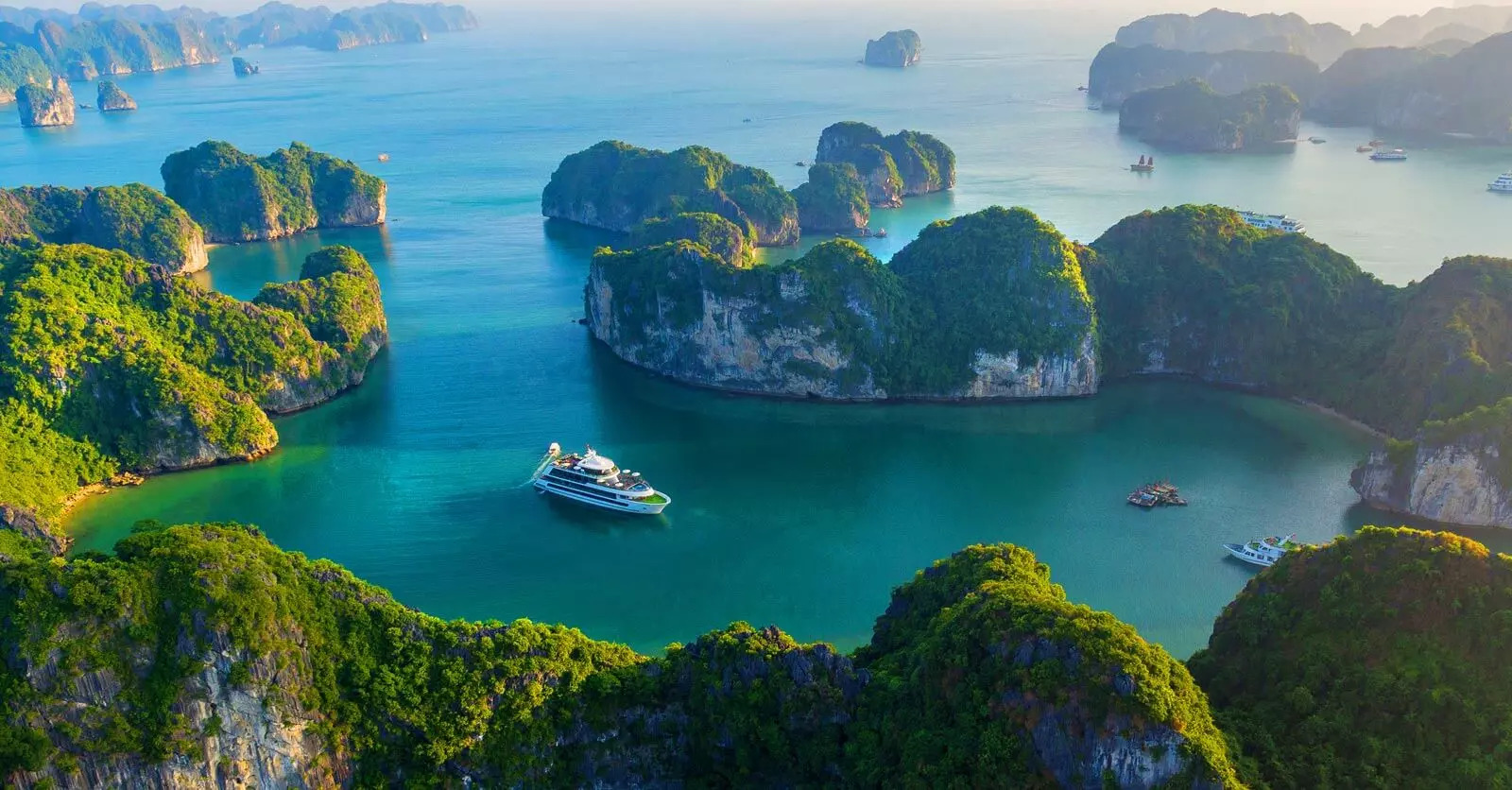
At first glance, these neighboring bays appear remarkably similar—both showcase the same geological marvel of emerald waters dotted with towering limestone karsts rising dramatically from the Gulf of Tonkin. However, their tourism experiences differ dramatically.
Ha Long Bay spans approximately 1,553 square kilometers with 1,969 limestone islands and has become Vietnam’s premier tourism icon, featured on everything from banknotes to international marketing campaigns. In contrast, Bai Tu Long Bay covers a larger area of around 2,000 square kilometers in the northeast portion of the greater Ha Long Bay region, containing hundreds of islands and islets.
The most notable difference? While Ha Long Bay accommodates an average of 8,000-10,000 tourists daily during peak season, Bai Tu Long Bay hosts fewer than 1,000 visitors per day even during high season. This stark contrast creates two entirely different atmospheres—one bustling and commercial, the other tranquil and pristine.
As Ha Long Bay Lux Cruises has observed through years of operating in both regions, the difference in visitor experience is profound, with many guests expressing amazement at how dramatically different their Bai Tu Long Bay journey feels compared to the more commercialized Ha Long Bay experience.
Why Is Bai Tu Long Bay Significantly Less Crowded? 7 Key Factors
1. Stringent Government Regulation and Limited Cruise Licenses
Perhaps the most significant factor keeping Bai Tu Long Bay serene is Vietnam’s deliberate regulatory approach. The Vietnamese government has implemented strict policies limiting the number of cruise operators permitted in Bai Tu Long Bay. As of 2025, only 28 companies hold licenses to operate in these waters, compared to over 200 operators in Ha Long Bay.
This limitation isn’t accidental—it’s strategic conservation. Approximately 15,783 hectares of Bai Tu Long Bay fall within Bai Tu Long National Park, a protected marine conservation zone established in 2001. The Ministry of Natural Resources and Environment enforces strict environmental guidelines for all cruise operations here, requiring comprehensive waste management systems, limiting plastic use, and mandating sustainable practices.
Cruise ships in Bai Tu Long Bay must adhere to specific design parameters that minimize environmental impact. For instance, vessels must incorporate advanced wastewater treatment systems that exceed standard requirements, with regular environmental compliance inspections occurring every 45 days.
2. Later Tourism Development and Minimal International Marketing
While Ha Long Bay began developing mass tourism infrastructure in the early 1990s, Bai Tu Long Bay remained largely untouched until around 2010. This 20-year head start gave Ha Long Bay tremendous brand recognition that Bai Tu Long Bay lacks.
The Vietnam National Administration of Tourism’s statistics reveal the marketing disparity: Ha Long Bay appears in 87% of Vietnam’s international tourism campaigns, while Bai Tu Long Bay features in only 14%. This limited promotion translates directly to visitor awareness—a 2024 survey of international travelers showed that while 94% recognized Ha Long Bay before visiting Vietnam, only 23% were aware of Bai Tu Long Bay.
Even major online travel agencies reflect this disparity. A quick search on Booking.com shows over 500 cruise options for Ha Long Bay but fewer than 60 for Bai Tu Long Bay. This reduced visibility naturally leads to lower visitor numbers.
3. Absence of Day Trip Options and Quick Tours
A key driver of Ha Long Bay’s high visitor numbers is the availability of condensed experiences. Approximately 40% of Ha Long Bay visitors opt for half-day or single-day cruises departing from Tuan Chau Marina, located just 160 kilometers (a 2.5-hour drive) from Hanoi.
In striking contrast, Bai Tu Long Bay cruises almost exclusively require overnight stays, with most journeys lasting 2 days and 1 night or longer. The minimum Bai Tu Long Bay cruise duration is typically 24 hours, with most quality experiences lasting 2-3 days. This time commitment naturally filters out travelers on tight schedules.
The starting prices reflect this difference as well. While Ha Long Bay day trips can be found for as little as $50 USD, Bai Tu Long Bay’s premium overnight experiences typically start at $180-250 USD per person, creating an economic barrier that further reduces visitor numbers.
4. Geographic Isolation and Extended Transfer Times
Though appearing close on maps, reaching Bai Tu Long Bay requires additional travel time that deters many tourists. Most Bai Tu Long Bay cruises depart from Hon Gai Port, which is approximately 180 kilometers from Hanoi—requiring a 3.5 to 4-hour transfer by car, compared to Ha Long Bay’s more accessible 2.5 to 3-hour journey.
This additional travel time makes Bai Tu Long Bay less attractive for travelers with limited schedules. The longer distance also means higher transfer costs—typically $45-60 USD per person for a private car transfer to Bai Tu Long Bay compared to $35-45 USD for Ha Long Bay transfers.
Additionally, while Ha Long Bay is directly accessible from Cat Ba Island (a popular tourist destination), Bai Tu Long Bay has no such convenient connection points, further isolating it from casual tourism routes.
5. Focus on Premium and Eco-Conscious Experiences
Bai Tu Long Bay has deliberately positioned itself in the premium segment of Vietnam’s tourism market. While Ha Long Bay offers everything from budget party boats to ultra-luxury cruises, Bai Tu Long Bay primarily features mid-to-high-end experiences focused on quality over quantity.
The average cruise vessel in Bai Tu Long Bay accommodates just 24-36 passengers, compared to Ha Long Bay’s larger ships that frequently carry 60-100+ guests. This deliberate capacity limitation creates a more intimate experience but naturally reduces overall visitor numbers.
Pricing structures reinforce this difference. The average overnight cruise in Bai Tu Long Bay costs approximately $280 USD per person in 2025, while comparable Ha Long Bay experiences average $180-220 USD. This premium positioning attracts a specific traveler demographic—typically older, more affluent, and seeking tranquility rather than entertainment.
6. Protected Marine Ecosystems and Conservation Priorities
A significant 40% of Bai Tu Long Bay falls within protected conservation zones where tourism activities are either prohibited or strictly regulated. The bay contains critical marine ecosystems, including:
- 1,909 hectares of coral reef ecosystems supporting over 234 coral species
- 102 recorded fish species, including 9 on Vietnam’s endangered list
- 7 unique seagrass bed habitats supporting critical marine life
- 224 recorded mollusk species, making it one of Vietnam’s most diverse marine environments
These conservation priorities translate to strict visitor limitations. For example, snorkeling and diving are permitted in only 3 designated areas of Bai Tu Long Bay, compared to 12 locations in Ha Long Bay. Swimming beaches are limited to 5 official sites, with others off-limits to protect marine habitats.
7. Different Visitor Experience Focus and Activities
The activities available in each bay create naturally different appeal. Ha Long Bay caters to entertainment-seeking tourists with:
- 14 major floating villages converted primarily for tourism
- 8 developed cave complexes with light shows and walkways
- Multiple floating entertainment complexes offering karaoke, shopping, and nightlife
- Adventure activities like rock climbing and motorized water sports
In contrast, Bai Tu Long Bay offers a nature-centered experience:
- Just 3 authentic fishing villages (Vung Vieng, Cap La, and Qua Van) where families still actively fish
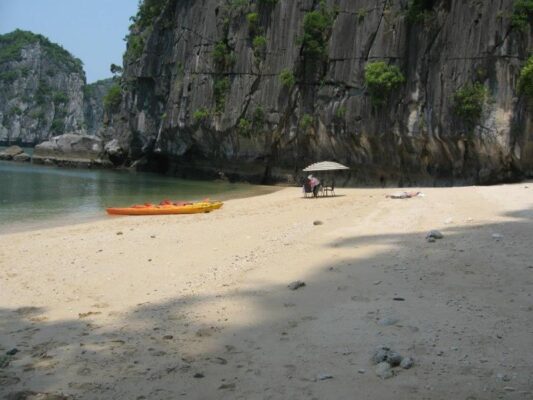
- Pristine beaches like Ban Chan and Trinh Nu that limit visitors to 30-50 people at a time
- Undeveloped cave systems that require guided exploration
- Non-motorized activities like kayaking, traditional fishing, and nature observation
This fundamental difference in experience naturally attracts different visitor types, keeping Bai Tu Long Bay’s numbers lower.

What Bai Tu Long Bay Offers That Ha Long Bay Doesn’t in 2026
Travelers choosing Bai Tu Long Bay gain access to several unique experiences unavailable in Ha Long Bay:
Untouched Natural Areas
Bai Tu Long National Park encompasses 15,783 hectares of protected marine and island ecosystems, including pristine areas like Cong Dam and Vung Ha where limestone formations remain untouched by tourism development. These areas feature rare geological formations like circular limestone rings creating hidden lagoons that are completely absent from Ha Long Bay’s tourism routes.
Genuine Cultural Interactions
Unlike Ha Long Bay’s commercialized cultural displays, Bai Tu Long Bay offers authentic connections with local communities. At Vung Vieng fishing village, approximately 50 families (about 200 people) continue traditional fishing practices dating back generations. Visitors can participate in actual fishing activities alongside locals and observe traditional net-making techniques still used daily.
Exceptional Marine Biodiversity
Bai Tu Long Bay’s stricter environmental protections have preserved richer marine ecosystems. Snorkeling areas like those near Cong Do island showcase vibrant coral gardens with 85% live coral coverage, compared to Ha Long Bay’s declining reef health (currently averaging 35-40% live coral coverage). Marine researchers documented 102 fish species in Bai Tu Long Bay in 2023, including several endangered species rarely seen in Ha Long Bay’s more trafficked waters.
Pristine Beaches Without Crowds
While Ha Long Bay’s famous beaches like Ti Top can hold up to 500 visitors simultaneously, Bai Tu Long Bay’s untouched beaches offer remarkable solitude. Ban Chan Beach, spanning 400 meters of pristine white sand, limits visitors to a maximum of 50 people at any time. During the shoulder seasons (April-May and September-October), cruise guests often have entire beaches to themselves—an unimaginable luxury in Ha Long Bay.
Is Bai Tu Long Bay Worth Visiting in 2025-2027?
For travelers seeking tranquility, authenticity, and deeper connection with Vietnam’s natural landscapes, Bai Tu Long Bay offers tremendous value. Based on satisfaction surveys conducted by major cruise operators, Bai Tu Long Bay consistently achieves higher visitor satisfaction scores (averaging 4.8/5) compared to Ha Long Bay (4.2/5).
The primary factors cited for these high ratings include:
- Uncrowded waters: Travelers report seeing an average of only 5-8 other cruise ships during their entire journey, compared to 30+ in Ha Long Bay
- Cleaner environment: Water clarity in Bai Tu Long Bay measures 7-9 meters visibility compared to 3-5 meters in Ha Long Bay
- More personal service: With fewer guests, cruise staff provide more individualized attention
- Authentic experiences: Cultural interactions feel genuine rather than staged for tourists
However, Bai Tu Long Bay isn’t for everyone. Travelers should consider these factors:
- Higher costs: Expect to pay 30-40% more than comparable Ha Long Bay experiences
- Longer time commitment: Most quality experiences require at least 2 days/1 night
- Fewer entertainment options: Those seeking nightlife or shopping should choose Ha Long Bay
- Advanced booking required: With limited cruise options, reservations should be made 2-3 months in advance during peak season
Conclusion: Making Your Choice Between Vietnam’s Twin Bays
The question of why Bai Tu Long Bay remains less crowded than Ha Long Bay has multiple answers—strategic government regulation, geographical isolation, premium positioning, conservation priorities, and different visitor experiences all contribute to this remarkable contrast.
For travelers planning Vietnam adventures in 2025-2027, the choice between these bays should align with personal priorities. Those seeking iconic views with maximum convenience and entertainment options will find Ha Long Bay satisfying despite the crowds. However, travelers valuing tranquility, authenticity, and pristine natural environments will find Bai Tu Long Bay’s lower visitor numbers to be its greatest asset.
As sustainable tourism continues gaining importance, Bai Tu Long Bay stands as a model for how thoughtful regulation and development can preserve natural wonders while still allowing meaningful visitor experiences. The bay’s lower visitor numbers aren’t accidental—they’re the result of deliberate choices that prioritize quality over quantity, conservation over commercialization, and authentic experiences over mass tourism.
For the most rewarding experience in either bay, travelers should consider visiting during shoulder seasons (April-May or September-October) when weather remains favorable but visitor numbers drop by approximately 40% compared to peak periods.
Whichever bay you choose, both offer glimpses into one of Earth’s most spectacular seascapes—a place where mountains meet ocean in a landscape that has inspired artists, poets, and travelers for centuries.
Hotline | WhatsApp: +84.978.358.422
Phone | WhatsApp: +84.962.261.687
Email: halongbayluxcruises@gmail.com
vietnammarveltravel@gmail.com
Top Halong Bay Review on the TripAdvisor