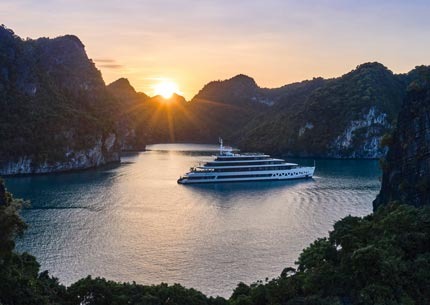
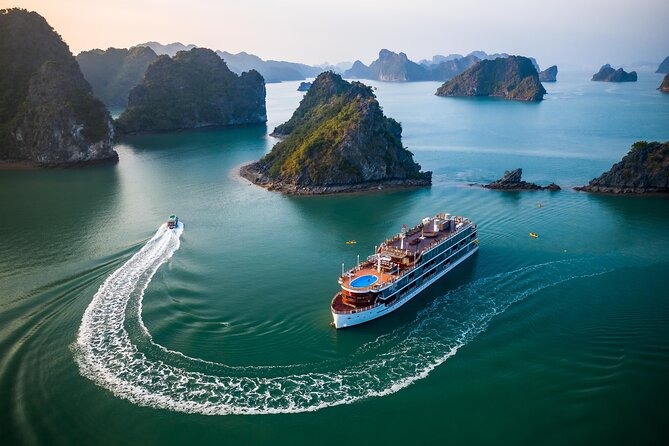
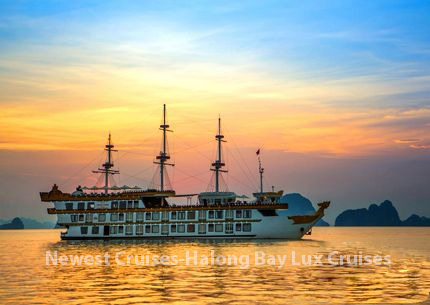
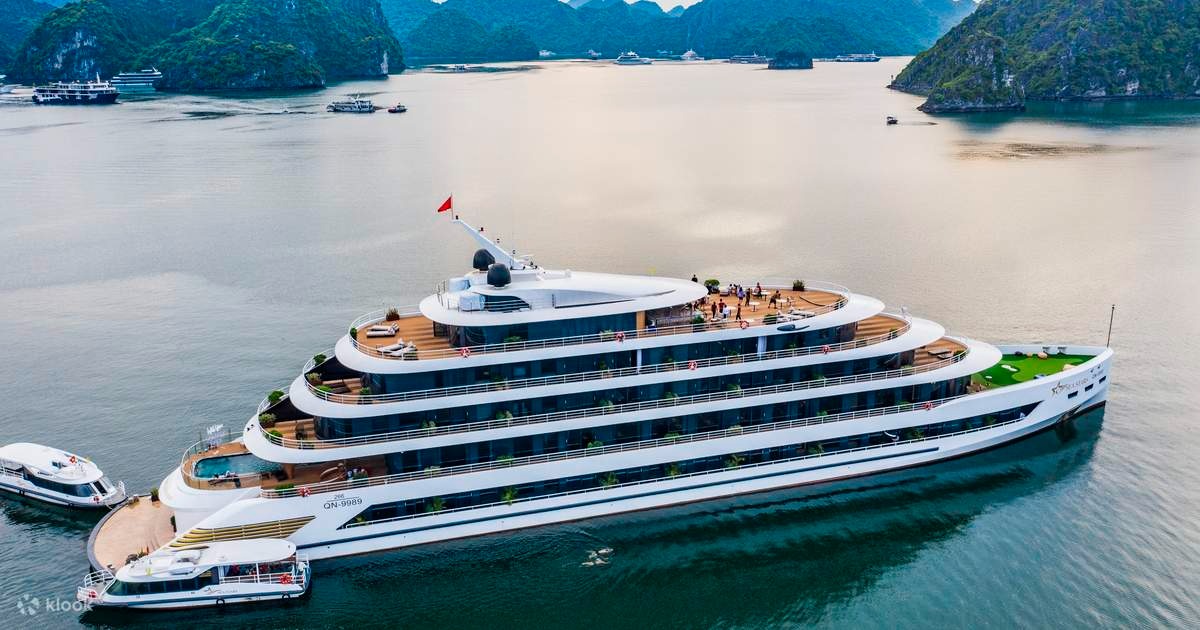
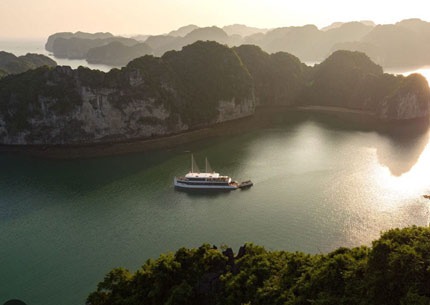
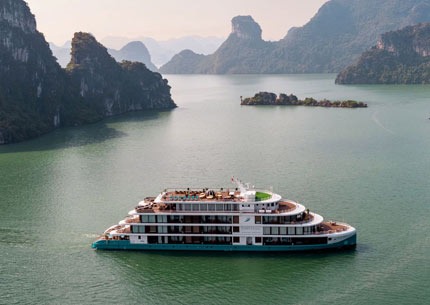
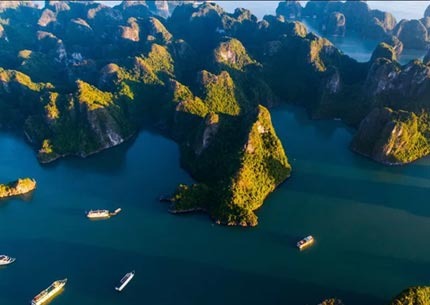
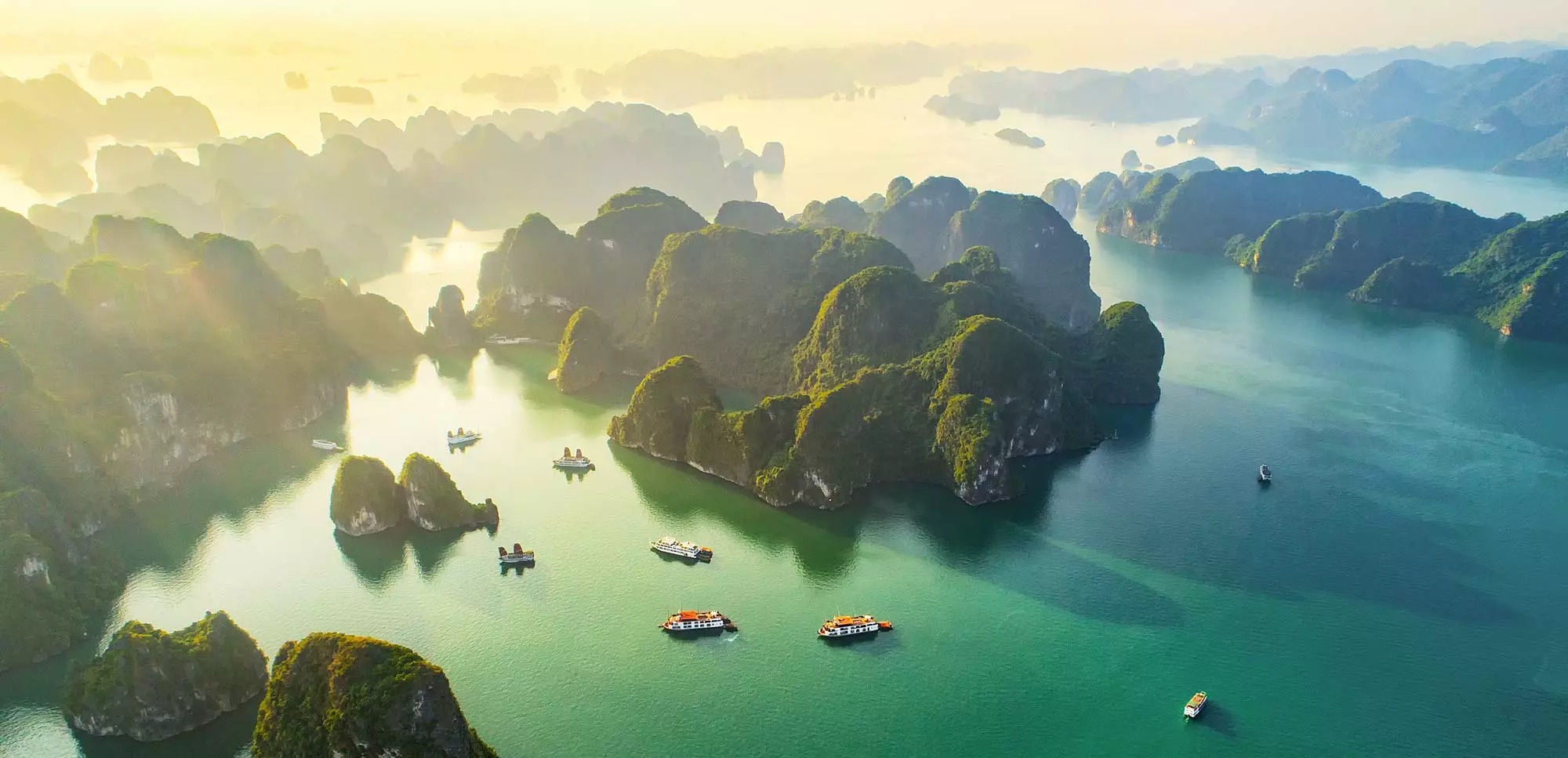
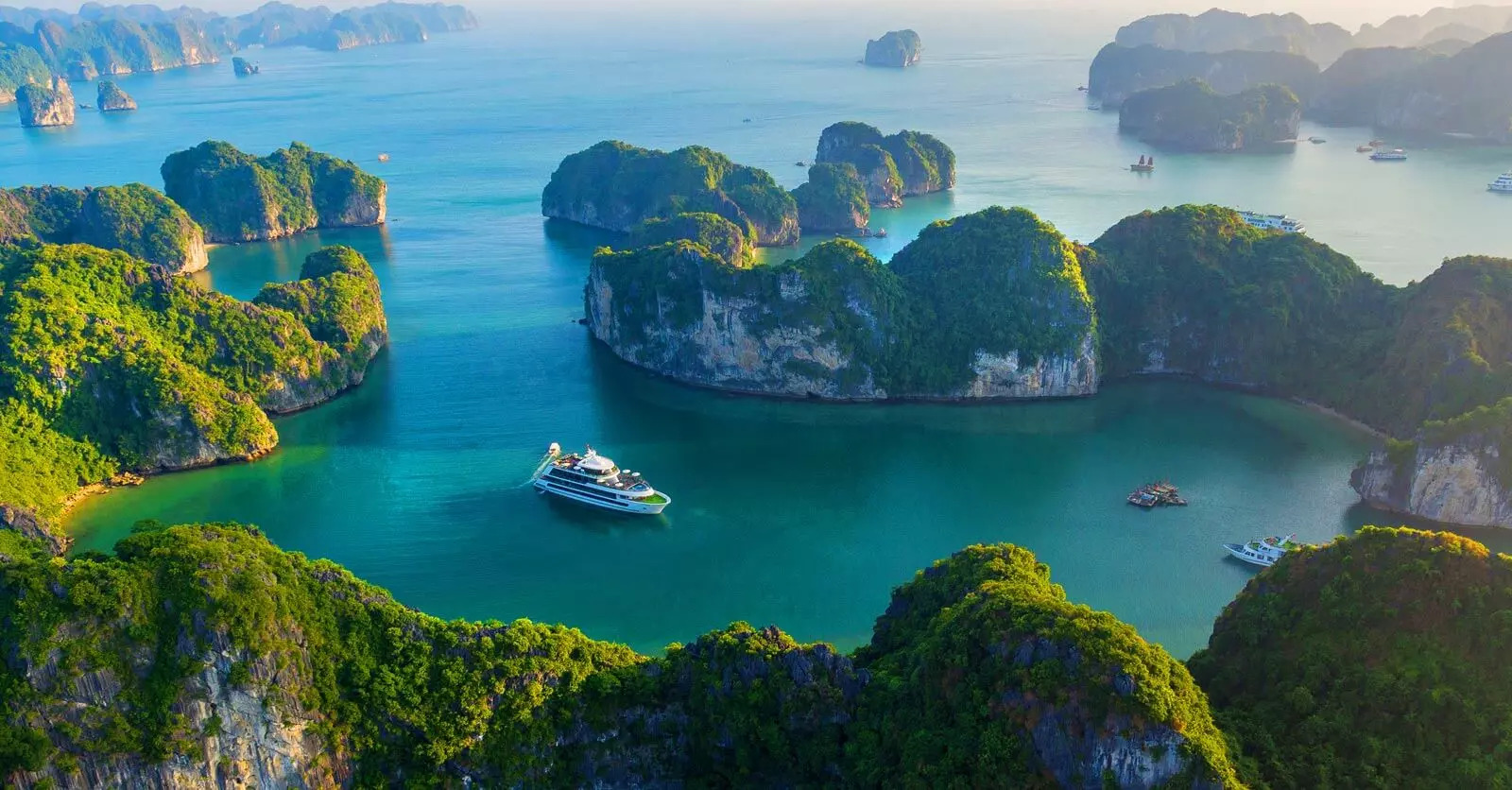
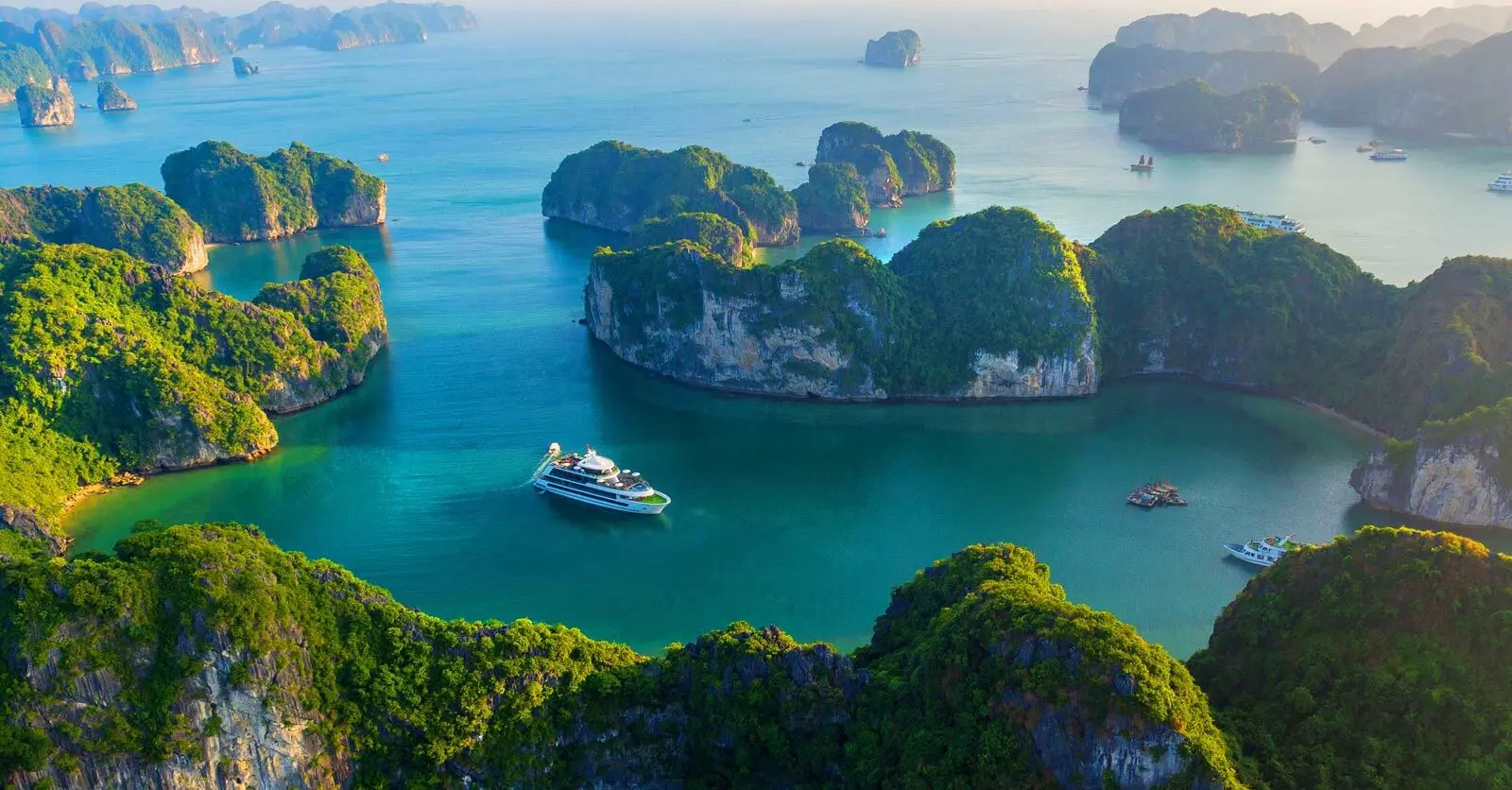
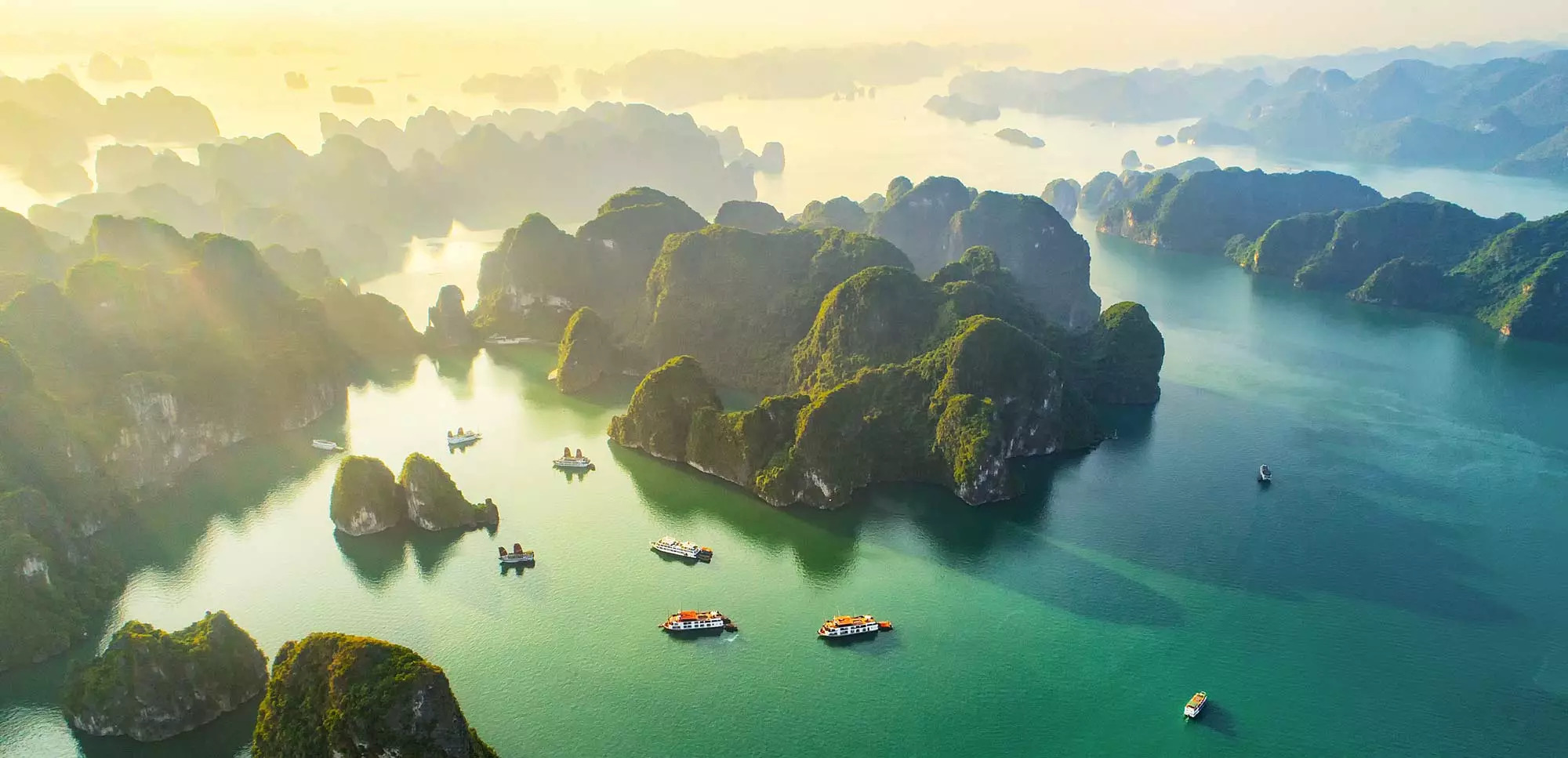
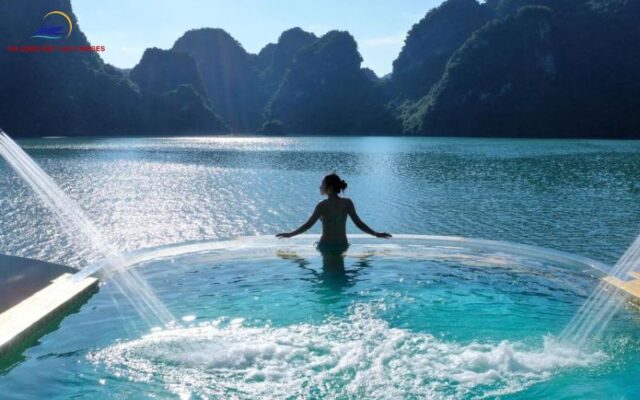
Discover Ha Long Bay Top Cruises cruise of 2025! Experience luxury on our new top-rated cruise with exceptional service. Enjoy 30-40% discounts, complimentary limousine bus transfers, free kayaking, no booking fees, and hassle-free cancellation Price from 45$ to 140$ all included.
Discover Ha Long Bay’s Top Cruises of 2026
Luxury Experience | Up to 40% Off | Free Cancellation | All-Inclusive from Just $45
Looking for the best cruise deals in Ha Long Bay for 2026? Step aboard our top-rated new cruises and enjoy luxury for less! Whether you're a solo traveler, couple, or family, our curated cruise packages offer unmatched value and unforgettable memories—all starting from just $45 USD.
What Makes Us Different?
30–40% Limited-Time Discounts
Complimentary Kayaking in Hidden Lagoons
No Booking Fees – Pay Later, Worry-Free
Easy Date Changes + 100% Free Cancellation
Cruise Inclusions (from $45–$140 All-In)
Full meals with delicious Vietnamese & international dishes
Scenic cruising past limestone karsts & floating villages
Top Cruises in Vietnam with Flexible Booking & Free Cancellation
Best Cruise Deals for Families, Couples, and Solo Travelers 2026
Book Early & Save Big
Reserve your spot today with no upfront fees – just great service, top savings, and the freedom to change or cancel anytime. From just $45 all-inclusive – luxury has never been more accessible.
Ha Long Bay Top Cruises – Luxury, Best Price, and Unforgettable Experiences
Ha Long Bay Top Cruises brings you the finest selection of luxury cruises in Ha Long Bay, Bai Tu Long Bay, and Lan Ha Bay – Vietnam’s most spectacular UNESCO World Heritage seascapes. Whether you’re seeking a 5-star Ha Long Bay cruise, a 6-star ultra-luxury journey, or a best-price premium package, we guarantee the top itineraries, best services, and unbeatable offers.
Why Choose Ha Long Bay Top Cruises?
Best Price Guarantee – Direct deals with cruise operators
Top-Rated Cruises – 5-star & 6-star modern ships with world-class amenities
Expert Itineraries – Curated 2-day, 3-day, and custom cruise programs
Trusted by Travelers – Thousands of 5-star reviews on TripAdvisor & Google
Our Most Popular Cruises
Ha Long Bay 2-Day Cruise – Perfect short getaway to explore iconic limestone karsts, floating villages, and hidden lagoons.
Ha Long Bay 3-Day Cruise – A deeper journey to untouched areas, kayaking, and cave exploration.
Bai Tu Long Bay Cruises – Less crowded, pristine waters, and authentic fishing village visits.
Lan Ha Bay Cruises – Scenic, peaceful, and ideal for kayaking & swimming.
Private Luxury Charters – Perfect for honeymoons, corporate events, or family celebrations.
Highlights & Activities on Ha Long Bay Top Cruises
Kayaking through emerald waters and limestone caves
Visiting famous spots: Sung Sot Cave, Ti Top Island, Luon Cave, Dark & Bright Cave
Swimming and sunbathing on pristine beaches
Cooking classes & traditional Vietnamese dining
Squid fishing under the stars
Tai Chi at sunrise on the sundeck
Visiting floating fishing villages
Ha Long Bay cruises, Ha Long Bay luxury cruises, best Ha Long Bay cruises, Ha Long Bay 2 day cruise, Ha Long Bay 3 day cruise, Lan Ha Bay cruise, Bai Tu Long Bay cruise, Ha Long Bay best itinerary, Ha Long Bay price 2026, Ha Long Bay package tours, Ha Long Bay overnight cruise, 5-star Ha Long Bay cruise, 6-star Ha Long Bay cruise, Ha Long Bay honeymoon cruise, Ha Long Bay family cruise, private Ha Long Bay charter.
Why Travelers Love Us
We combine local expertise, premium service, and unbeatable prices to ensure your Ha Long Bay experience is flawless. From booking to boarding, our dedicated team ensures you enjoy luxury, comfort, and authentic Vietnamese hospitality.
The Best Authorized Halong Bay Cruise Agency Cruise Experts with over 20 years of experience
Customer Care Support 24/7
We are local experts, always here to help you Fast Response & Friendly Support from the team
Best Price Guarantee Policy
The Best Value + Best Price Guarantee Great value for money regardless of your budget
Tung Sau Pearl Farm – Halong Bay Pearl
Tung Sau Pearl Farm: 10 Must-Know Facts Before You Visit
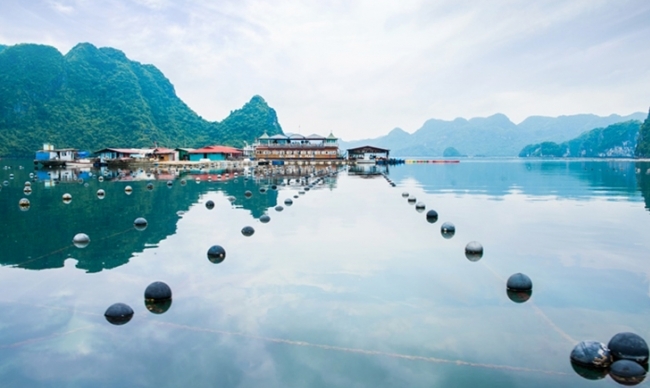
Tucked inside the emerald waters of Halong Bay, Tung Sau Pearl Farm is one of those rare stops that genuinely surprises first-time visitors. Most travelers arrive expecting a quick souvenir shop. What they find instead is a floating cultural experience — oyster tanks, pearl demonstrations, knowledgeable guides, and a showroom full of jewelry crafted entirely from pearls grown right here in the bay. Against a backdrop of towering limestone karsts and quiet, mirror-still water, it becomes one of the most memorable moments of the entire cruise.
This guide breaks down everything you need to know before visiting Tung Sau Pearl Farm in 2026, from how pearls are actually grown to what to buy, when to go, and which Halong Bay cruise will take you there.
Tung Sau Pearl Farm
1. What Exactly Is Tung Sau Pearl Farm — and Why Does It Matter?
Not every traveler knows what to expect when Tung Sau Pearl Farm appears on a cruise itinerary. The name sounds like a roadside attraction, but the reality is far more substantial.
Tung Sau Pearl Farm is a working marine pearl cultivation facility located within Halong Bay, Quang Ninh Province, in northern Vietnam. It is one of the most well-known pearl farming operations in the entire bay and has become a standard stop on many overnight cruise itineraries because of the educational and cultural value it offers to visitors.
The farm operates on floating platforms anchored in sheltered bay waters. Thousands of oysters are suspended beneath the surface in nets and cages, carefully monitored at different stages of the pearl cultivation cycle. This is not a museum replica — it is an active production facility where real pearls are being grown at any given moment during your visit.
What makes Tung Sau Pearl Farm particularly meaningful is what it represents for Halong Bay’s local economy and cultural identity. Pearl farming has been practiced in this region for decades. Vietnamese marine pearls, especially those cultivated in the clean waters of the bay, are recognized for their natural luster, warm tones, and quality nacre. A visit to the farm gives travelers direct insight into an industry that is closely tied to the lives of people who have worked on these waters for generations.
For cruise passengers, the stop typically lasts between 30 and 60 minutes, which is just enough time to watch a live demonstration, walk through the showroom, and ask questions. It is compact but surprisingly rich in content, making it one of the most talked-about cultural stops on Halong Bay cruises.
Tung Sau Pearl Farm
2. Where Is Tung Sau Pearl Farm Located in Halong Bay?
Understanding the geography of Tung Sau Pearl Farm helps explain why it can only be reached by boat — and why visiting it feels like entering a completely different world.
Tung Sau Pearl Farm sits in the southeastern part of Halong Bay, within a quieter section of the UNESCO World Heritage Site that is less frequented by large tourist vessels. The farm is nestled among clusters of limestone karst formations, sheltered from open sea winds, which makes the surrounding water calm and ideal for marine cultivation.
The bay itself covers approximately 1,553 square kilometers, with nearly 2,000 limestone islands and islets rising from the water. Tung Sau is positioned in an area where the water is relatively shallow and protected, providing ideal conditions for oyster survival and pearl development. The salinity and temperature of this part of the bay are well-suited to the species of oysters used in pearl production.
Because the farm is located entirely on water, there is no road access. Visitors must arrive by boat, either directly from a cruise vessel or transferred by smaller tender boat depending on the depth of the surrounding area. This is part of what makes the experience feel authentic — arriving by water, surrounded by karst cliffs and open sky, before stepping onto the floating platform where the pearls are actually being made.
Most cruise routes that include Tung Sau Pearl Farm combine the stop with other attractions in the central and southeastern bay zones. Depending on the itinerary, the farm may be visited alongside Sung Sot Cave, Ti Top Island, Luon Cave, or nearby kayaking areas. Some routes also pair it with a visit to Cua Van Floating Village, one of the oldest floating communities in Halong Bay, which creates a rich half-day of cultural immersion.
3. The Full History of Pearl Farming in Halong Bay
To truly appreciate Tung Sau Pearl Farm, it helps to understand where pearl cultivation in Halong Bay comes from and how it evolved into the organized industry visitors see today.
Pearl farming in Vietnam has roots stretching back to the early 20th century, but it was not until the late 1980s and 1990s that structured marine pearl cultivation began to develop seriously in Halong Bay. During this period, Vietnam began exploring aquaculture opportunities across its coastal regions, and Halong Bay’s protected waters, biodiversity, and geographic isolation made it a natural candidate for oyster farming.
The species most commonly used in Halong Bay’s pearl farms is Pinctada maxima (the silver-lipped or gold-lipped pearl oyster) and Pinctada fucata (the Akoya oyster), both of which produce the cream, white, golden, and silver-toned pearls that have become associated with Vietnamese craftsmanship. These oysters are native to Vietnamese waters and thrive under the environmental conditions specific to this part of the South China Sea.
Tung Sau Pearl Farm became one of the early and most prominent pearl cultivation operations in Halong Bay. Over the years, it evolved from a small-scale aquaculture project into a fully developed visitor experience, incorporating guided demonstrations, hands-on explanations of the cultivation process, and a permanent showroom for pearl retail. Today, it represents both a working farm and a cultural tourism facility, welcoming thousands of cruise passengers each year.
The broader pearl farming sector in Vietnam has grown considerably. Vietnam is recognized as one of Southeast Asia’s significant producers of cultured marine pearls, with Halong Bay, Phu Quoc, and the Con Dao Islands being among the main cultivation zones. The pearls produced in Halong Bay are generally distinguished by their round to near-round shape, natural luster, and warm white to cream coloration, which reflect the particular mineral and organic composition of the local seawater.
4. How Pearls Are Actually Made — Step-by-Step at Tung Sau
One of the most valuable parts of a visit to Tung Sau Pearl Farm is watching — and hearing explained — the actual science and craft behind pearl cultivation. This is not a process that can be rushed, and the demonstration at the farm brings that reality to life in concrete terms.
Step 1: Sourcing and Conditioning Healthy Oysters
Everything begins with the oysters themselves. At Tung Sau Pearl Farm, oysters are either sourced from hatcheries or collected from natural marine environments and then brought into a controlled conditioning phase. Only healthy, mature oysters with strong shells and robust tissue are selected for the grafting process. Sick or weak oysters are removed because they cannot survive the procedure.
During conditioning, oysters are kept in clean seawater tanks and fed a diet of phytoplankton and other microorganisms to build up their physical strength. This preparation phase can last several weeks. The goal is to ensure that each oyster enters the grafting process with the best possible chance of surviving and producing a high-quality pearl.
Step 2: Nucleus Insertion — The Grafting Process
This is the most technically demanding step in pearl cultivation and the one that requires the greatest skill. A trained technician carefully opens the oyster’s shell just enough to insert a small, round nucleus made from polished freshwater mussel shell into the gonad tissue. A small piece of mantle tissue from a donor oyster is placed alongside the nucleus to encourage nacre secretion.
The entire procedure takes only a few minutes per oyster, but precision is critical. If the nucleus is placed incorrectly, the oyster may reject it, and the pearl will not form properly. Skilled technicians at Tung Sau Pearl Farm can process dozens of oysters per day, but rejection rates remain a natural part of the process.
Step 3: Recovery and Return to Open Water
After grafting, oysters are placed in recovery containers filled with clean, temperature-regulated seawater. This recovery phase typically lasts two to four weeks. Technicians monitor the oysters closely during this period, watching for signs of stress, infection, or nucleus rejection.
Once the oysters have stabilized, they are transferred to submerged net cages suspended from the floating platforms at measured depths. These depths are chosen carefully — deep enough to avoid surface temperature fluctuations but shallow enough to maintain access to natural food sources.
Step 4: Long-Term Monitoring and Care
This is the longest phase of the process and the one that most visitors find surprising. Pearl cultivation is not quick. Depending on the oyster species and the desired pearl size, the growth period can last anywhere from 18 months to 4 or even 5 years. During this entire time, the oysters must be cleaned of algae and parasites, repositioned to optimize water flow, and checked regularly for health.
Water quality is monitored continuously. Any change in salinity, temperature, or pollution levels can affect the entire crop. This is why the sheltered location of Tung Sau Pearl Farm matters — the surrounding limestone karsts help protect the farming area from rough weather and open-water pollution.
Step 5: Harvesting
When the cultivation period is complete, the oysters are carefully raised from the water and opened by trained staff. The pearl is removed by hand, cleaned, and immediately assessed for quality. Not every oyster produces a gem-quality pearl — some produce pearls with irregular shapes, surface blemishes, or dull nacre. This natural variation is part of what makes high-quality pearls genuinely valuable.
Step 6: Sorting, Grading, and Polishing
Harvested pearls are sorted by size, shape, color, luster, and surface quality. High-grade pearls are set aside for fine jewelry production. Lower-grade pearls are used for decorative items or sold at reduced prices. Selected pearls are gently polished to enhance their natural shine before being used in rings, necklaces, earrings, and bracelets.
5. The 6 Best Activities to Enjoy During Your Visit
A stop at Tung Sau Pearl Farm is more than a single activity. For travelers who engage fully with what the farm offers, it can become one of the most enriching hours of an entire Halong Bay cruise.
Live Pearl Cultivation Demonstration
The centerpiece of every visit is the live demonstration of the grafting and harvesting process. A guide or farm technician walks visitors through the steps described above, showing actual oysters at different stages of development. You can see grafted oysters at various points in the growth cycle, from freshly nucleated specimens to those approaching harvest age.
This demonstration is particularly compelling because it puts scale and time into perspective. Holding a finished pearl and knowing it took two to four years of careful marine farming to produce gives the object a completely different meaning. Many visitors say this is the moment that transforms pearl jewelry from a commodity into something genuinely meaningful.
Exploring the Pearl Showroom
After the demonstration, visitors are usually guided into a well-stocked showroom where finished pearl products are displayed and available for purchase. The selection typically includes pearl necklaces, drop earrings, stud earrings, bracelets, rings, pendants, and loose pearls sold by quality grade.
The showroom at Tung Sau Pearl Farm tends to offer genuinely competitive prices compared to jewelry stores in major Vietnamese cities. Because the pearls are cultivated and processed on-site, the supply chain is shorter and the pricing reflects that. Staff are generally knowledgeable and happy to explain pearl grades, help with matching sets, and advise on care and cleaning.
Kayaking the Surrounding Karst Landscape
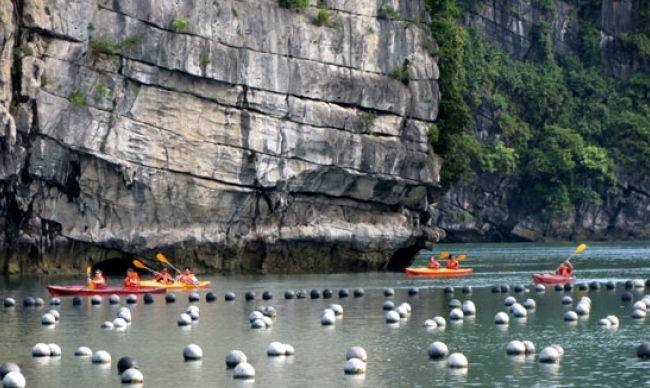
Many cruise itineraries that include Tung Sau Pearl Farm also allow time for kayaking in the nearby waters. The area around the farm is surrounded by dramatic limestone formations that rise vertically from the sea, and the calm, protected bay conditions make it ideal for both beginner and experienced paddlers.
Kayaking here offers a perspective on Halong Bay that is impossible to get from the cruise deck — you are low on the water, close to the cliff faces, and able to paddle into small caves, hidden coves, and narrow passages between karst formations. This combination of pearl farm visit and kayaking is one of the most popular pairings in Halong Bay cruise itineraries.
Photography at the Floating Platform
From a purely visual standpoint, Tung Sau Pearl Farm is a beautiful place to photograph. The contrast between the dark wooden structures of the floating platform, the oyster cages visible in the turquoise water below, and the grey-green limestone cliffs rising behind makes for compositions that feel both authentic and spectacular.
The best photography conditions are usually in the early morning, when the light is soft and golden and the water surface reflects the sky cleanly. Mist occasionally forms between the limestone islands in the early hours, creating an atmospheric haze that photographers particularly love.
Tasting Local Seafood on the Water
Some cruise itineraries offer a brief seafood tasting as part of the Tung Sau Pearl Farm stop, or the cruise itself will serve locally sourced seafood prepared immediately after the visit. Fresh oysters, clams, shrimp, and fish sourced from Halong Bay are often featured on dinner menus during overnight cruises that include cultural stops like the pearl farm.
This culinary element reinforces the connection between the marine environment, traditional livelihoods, and the food culture of Quang Ninh Province.
Watching the Sunset from the Farm
On selected cruise itineraries, the timing of the Tung Sau Pearl Farm stop coincides with late afternoon, which positions travelers perfectly for a sunset viewing from the floating platform or nearby waters. The low angle of the sun at this time casts warm amber light across the limestone karsts and turns the still water into a mirror of color — a setting that few travelers forget.
6. What Kinds of Pearls Are Sold — and How to Identify Quality
Not all pearls are equal, and a visit to Tung Sau Pearl Farm is an excellent opportunity to learn what distinguishes a high-quality pearl from an average one. Before you spend money in the showroom, it is worth knowing exactly what to look for.
Understanding Pearl Types Available in Halong Bay
The pearls sold at Tung Sau Pearl Farm are primarily cultured saltwater pearls, grown using the nucleation process described earlier. They are not imitation pearls, not freshwater pearls, and not synthetic. They are genuine marine pearls cultivated in Halong Bay’s seawater using traditional and modern aquaculture techniques.
The colors available typically span white, cream, ivory, light gold, and silver-grey tones, reflecting the natural pigment variation of the bay’s oyster species. Occasionally, you may also find baroque-shaped pearls, which are irregular in form but prized by many buyers for their unique character.
The 6 Key Quality Factors to Evaluate
Luster is the most important factor. High-quality pearls have a deep, reflective glow that seems to come from inside the pearl rather than just sitting on the surface. When you hold a quality pearl near a light source, you should see a sharp, crisp reflection.
Surface quality refers to the number and severity of blemishes on the pearl’s exterior. Minor natural markings are common and acceptable, but deep pits, cracks, or irregular chalky patches reduce value significantly.
Shape matters for matching and visual appeal. Perfectly round pearls are the rarest and most expensive. Near-round, oval, drop, and baroque shapes are increasingly common and priced lower accordingly.
Size is measured in millimeters across the pearl’s diameter. Pearls sold in Halong Bay typically range from 5 to 12 millimeters, with larger sizes commanding premium prices because they require longer cultivation periods.
Nacre thickness directly determines durability and luster. Thicker nacre means a more durable pearl with better long-term shine. You can sometimes assess nacre quality by the depth of the luster — thin nacre tends to look chalky or dull.
Color and overtone are matters of personal preference, but matching consistency across a necklace or earring set adds value. Overtones — the secondary colors that appear to float over the base color — can include rose, silver, and green.
Simple Tests to Verify Authenticity
One widely used test for genuine pearls is the tooth test: gently rub the pearl against the edge of your teeth. Genuine pearls feel slightly gritty or sandy; imitation plastic pearls feel completely smooth. This test is gentle and does not damage the pearl.
Weight is another indicator. Genuine pearls are denser than plastic imitations and have a noticeable heft relative to their size. A lightweight pearl of significant diameter is likely synthetic.
7. How to Include Tung Sau Pearl Farm in a Halong Bay Cruise Itinerary
Getting to Tung Sau Pearl Farm requires planning, because it is only accessible by water. Here is exactly how to make sure your itinerary includes it.
Overnight Cruises Are the Best Option
Day cruises rarely include Tung Sau Pearl Farm because they typically follow shorter, more condensed routes focused on Halong Bay’s most famous landmarks — Sung Sot Cave, Ti Top Island, and a handful of scenic viewpoints. The pearl farm, situated in a quieter section of the bay, requires more sailing time and is better suited to overnight itineraries that allow for a broader exploration of the bay.
A 2-day, 1-night cruise is the minimum recommended duration if Tung Sau Pearl Farm is a priority. These cruises typically depart in the late morning, reach the farm by early afternoon, and spend the night anchored in a scenic bay area before returning the following day.
For travelers who want a more immersive experience — with more time at sea, more cultural stops, and higher comfort levels — a 3-day, 2-night itinerary provides the ideal pace. These extended cruises allow for multiple stops, including the pearl farm, kayaking areas, floating villages, caves, and cooking classes.
Choosing the Right Cruise for Cultural Stops
When comparing cruise options on Halong Bay Lux Cruises, look specifically at the listed daily itinerary for Day 1 or Day 2 activities. Reputable operators will clearly indicate which stops are included, how long each visit lasts, and whether activities like kayaking or village visits are part of the package.
If Tung Sau Pearl Farm is a specific priority for you, contact the cruise operator directly before booking to confirm it is included in the route. Bay management regulations occasionally shift scheduled stops based on conservation requirements, so it is always worth verifying.
What a Typical Day Looks Like
A cruise day that includes Tung Sau Pearl Farm generally follows a structure like this:
Morning: Breakfast on board, kayaking or cave visit at an early morning stop.
Mid-morning to noon: Sailing to the Tung Sau area.
Early afternoon: Pearl farm visit (approximately 45 to 60 minutes), including the demonstration and showroom.
Optional: Kayaking near the farm (additional 30 to 60 minutes).
Late afternoon: Return to the cruise vessel for lunch or early dinner.
Evening: Squid fishing, sunset cocktails, or cooking class on board.
8. The Best Time of Year to Visit Tung Sau Pearl Farm
Halong Bay is a year-round destination, but the season you choose significantly affects your experience at Tung Sau Pearl Farm.
October to December: The Ideal Window
This three-month period is widely considered the best time to visit Halong Bay, and by extension, Tung Sau Pearl Farm. Temperatures during October and November typically range between 20°C and 28°C (68°F to 82°F), the skies are clearer than during the summer monsoon months, and sea conditions are generally calm and suitable for all cruise activities.
December brings slightly cooler temperatures, particularly in the evenings, but daytime conditions remain comfortable for outdoor activities. The reduced humidity compared to summer makes the limestone scenery particularly vivid, with clear reflections on the water’s surface.
January to March: Cool and Atmospheric
The early months of the year offer a cooler, mistier version of Halong Bay that many travelers find uniquely beautiful. Morning mist settles between the limestone karsts and gradually lifts through the day, creating an ethereal, otherworldly atmosphere.
Temperatures during January and February average around 15°C to 18°C (59°F to 64°F), which is comfortable for walking around the floating platform and showroom but can feel chilly on the water. Bringing a light jacket and layering is strongly recommended for this period.
Visibility for photography is excellent during these months, particularly in the morning. The combination of misty air and still water produces images that are hard to replicate in any other season.
April to June: Warm and Active
Spring and early summer bring rising temperatures and longer daylight hours. April and May are excellent months for kayaking near Tung Sau Pearl Farm, as the water is warm enough to be comfortable and the weather is largely stable.
By June, temperatures begin climbing toward the summer range of 30°C to 35°C (86°F to 95°F), and the humidity increases noticeably. Sunscreen, a hat, and lightweight clothing become essential.
July to September: Summer Monsoon Caution
The summer months bring the highest risk of storms and typhoons in Halong Bay. While many cruises continue to operate during this period, itineraries may be shortened or adjusted based on weather conditions and official maritime safety guidelines issued by Vietnamese authorities.
If you are visiting during July through September, monitor weather forecasts carefully, book with a flexible cancellation policy, and contact your cruise operator a few days before departure to confirm that the route — including Tung Sau Pearl Farm — remains scheduled.
9. Practical Travel Tips to Make the Most of the Visit
A well-prepared visitor gets significantly more out of Tung Sau Pearl Farm than one who arrives without context. These practical tips will help you maximize the experience.
Arrive With Questions Ready
The guides and technicians at Tung Sau Pearl Farm are genuinely knowledgeable and are accustomed to explaining the process to international visitors. Do not hesitate to ask specific questions — about how long particular oysters have been growing, what percentage produce gem-quality pearls, how water quality affects nacre, or how they detect nucleus rejection early.
Visitors who engage actively with the demonstration consistently rate the stop more highly than those who passively observe. The experience is structured to answer general questions, but going deeper reveals layers of information that most casual visitors miss.
Set a Budget Before Entering the Showroom
Pearl jewelry prices at Tung Sau Pearl Farm vary widely based on quality and design. A simple pair of pearl stud earrings might cost as little as $20 to $40 USD, while a premium matched-pearl necklace can range from $150 to $500 USD or more depending on pearl size, luster, and craftsmanship.
Decide roughly how much you are comfortable spending before you enter the showroom. This prevents impulse purchases and helps you focus on the pieces that genuinely align with your taste and budget. Gentle price negotiation is sometimes possible, particularly for multiple purchases.
Dress for Floating Platform Conditions
The surface of the floating platform at Tung Sau Pearl Farm can be uneven, slightly slippery, or damp from sea spray. Closed-toe shoes with grip are more practical than sandals or flip-flops, particularly if you are kayaking afterward or if the sea conditions are slightly choppy on the day of your visit.
Dress in layers if visiting between November and March — the water amplifies wind chill, and what feels warm on shore can feel significantly cooler when you are out on an open-water platform.
Photography Ethics and Permissions
The farm and showroom are generally photography-friendly, but it is courteous to ask before photographing workers up close, especially during the grafting demonstration. Wider angle shots of the farm, the water, and the surrounding karst scenery are almost always welcome and produce the most striking results.
If you have a waterproof camera or a sealed case for your phone, bring it — the combination of sea spray, transfers between boats, and potential kayaking makes water resistance valuable.
Understand Cruise Schedule Constraints
Your visit to Tung Sau Pearl Farm is part of a coordinated cruise schedule. The boat will depart on time regardless of whether individual passengers are still browsing the showroom. Keep track of the time given by your guide for the return to the vessel, and budget enough time for both the demonstration and shopping without cutting either short.
10. How to Book the Right Halong Bay Cruise That Includes Tung Sau Pearl Farm
Choosing the right cruise for your visit to Tung Sau Pearl Farm involves more than just selecting a departure date. The quality of the vessel, the depth of the itinerary, and the level of service all shape how memorable the experience becomes.
What to Look for in a Pearl Farm Cruise Itinerary
A genuine, well-structured cruise itinerary that includes Tung Sau Pearl Farm will typically specify the stop by name in the daily schedule, along with an approximate duration. It will also list complementary activities nearby — whether that is kayaking, cave visits, or floating village stops — that make the journey around this section of the bay worthwhile.
Avoid itineraries that simply list “pearl farm visit” without specifying location, duration, or inclusion details. Specificity is a signal of quality and transparency from the cruise operator.
Luxury Cruise Options That Include Cultural Experiences
For travelers who want the most complete Halong Bay experience — combining premium accommodations, gourmet dining, expert guides, and a thoughtfully curated itinerary that includes Tung Sau Pearl Farm and other cultural stops — a luxury or 5-star cruise is worth the investment.
The Halong Bay 6-Star Cruise available through Halong Bay Lux Cruises represents one of the highest-tier options for travelers seeking this level of experience. These vessels combine spacious private cabins, curated bay routes, private guided shore excursions, and gourmet on-board dining with access to cultural stops like Tung Sau Pearl Farm that are often missing from budget cruise packages.
The 2-Day Option for Focused Exploration
If a full multi-day cruise is not within your schedule or budget, the 2-Day Halong Lan Ha Bay 5-Star Cruise offers an excellent balance between duration, comfort, and coverage. This itinerary is designed to maximize the Halong Bay experience within a focused two-day window, with guided stops that can include pearl farm visits, kayaking, and scenic bay exploration without requiring a long time commitment away from other travel plans.
Personalized Booking Advice Through Halong Bay Lux Cruises
Halong Bay Lux Cruises offers personalized cruise consulting to help travelers find the right match for their travel style, group size, budget, and specific interests. If visiting Tung Sau Pearl Farm is a priority, the team can identify which current itineraries include it, advise on seasonal timing, and help with booking logistics.
This kind of consultative service is particularly valuable because cruise itineraries in Halong Bay are subject to change based on bay management regulations, weather, and seasonal scheduling. Having an informed contact who knows the current status of each route removes uncertainty from the planning process.
Frequently Asked Questions About Tung Sau Pearl Farm
Is Tung Sau Pearl Farm included in most Halong Bay cruises?
Not automatically. Many standard cruise packages focus on the bay’s most famous landmarks — Sung Sot Cave, Ti Top Island, and key viewpoints. Tung Sau Pearl Farm is more commonly included in overnight cruises or in itineraries specifically designed to include cultural and educational stops. Always check the listed itinerary before booking, and confirm with the operator if the farm is specifically named.
Can I visit Tung Sau Pearl Farm independently, without a cruise?
Independent visits are not practical for most travelers. The farm is located inside Halong Bay, reachable only by boat, and there is no scheduled public ferry or water taxi service to the site. Joining a cruise is the standard and most convenient way to visit. Some private boat charter services operating from Ha Long City or Tuan Chau Island may be able to organize a custom visit, but this option is significantly more expensive and logistically complex.
What is the cost of pearl jewelry at Tung Sau Pearl Farm?
Prices depend on pearl quality, size, and design. As a general reference: simple pearl stud earrings typically start around $20 to $40 USD, pearl pendant necklaces range from approximately $40 to $150 USD, and premium matched-pearl necklaces can reach $300 to $500 USD or more for high-grade specimens. Prices are generally fair and competitive compared to retail jewelry stores in Hanoi or Ho Chi Minh City.
Are the pearls sold at the farm genuine?
Yes. Tung Sau Pearl Farm sells cultured saltwater pearls grown on-site in Halong Bay. They are not imitation pearls. You can verify authenticity using the tooth test described earlier in this guide. Staff should also be willing to provide certificates of authenticity for higher-value purchases upon request.
How long does a typical visit last?
Most cruise operators allocate between 30 and 60 minutes for the Tung Sau Pearl Farm stop. This includes the cultivation demonstration, time to explore the showroom, and transfer back to the cruise vessel. If kayaking is included in the same stop, the total time at or near the farm location may extend to 90 minutes or more.
Is the visit suitable for elderly travelers or those with limited mobility?
The visit involves walking across floating platforms that can have uneven surfaces and slight movement from water. Most able-bodied elderly travelers have no difficulty, but anyone with significant balance issues, joint problems, or mobility limitations should speak with the cruise operator before booking to confirm what accommodations or alternatives may be available.
What currency is accepted in the showroom?
The showroom at Tung Sau Pearl Farm typically accepts Vietnamese Dong (VND) and often US Dollars (USD). Credit card acceptance varies. It is advisable to carry some local currency or USD cash in case card payment is not available. Confirm with your cruise operator in advance if payment methods are a concern.
Planning a trip to Halong Bay and want expert help finding a cruise that includes Tung Sau Pearl Farm? Visit Halong Bay Lux Cruises for curated cruise recommendations, personalized itinerary advice, and booking support from a team that knows the bay inside and out.
Address: Dang Xa, Gia Lam District, Hanoi, Vietnam