
UNESCO Heritage of Halong Bay: 7 Reasons It’s Asia’s Top Natural Wonder 2026-2027
Discover why UNESCO twice recognized this breathtaking Vietnamese marvel and why it should top your 2027 travel bucket list. Experience ancient limestone formations, rare biodiversity, and cultural treasures that make Halong Bay a world-class destination.
The Remarkable UNESCO Status of Halong Bay: Beyond a Typical Heritage Site
When travelers seek natural wonders that truly deserve the title “breathtaking,” Halong Bay stands in a class of its own. Unlike many UNESCO sites with single designations, Halong Bay earned its prestigious recognition twice – first in 1994 for its outstanding scenic landscape and then again in 2000 for its exceptional biodiversity. This dual UNESCO recognition places it among an elite group of global heritage treasures.
What makes Halong Bay extraordinary isn’t just its picturesque scenery – it’s the rare combination of geological marvels, rich ecological systems, and cultural significance that continue to captivate scientists and travelers alike in 2025. The bay satisfies multiple UNESCO criteria, including:
- Criterion VII: Exceptional natural beauty
- Criterion VIII: Outstanding example of Earth’s evolutionary history
- Criterion IX: Significant ecological and biological processes
As we explore Halong Bay’s UNESCO significance, you’ll discover why this natural wonder remains Vietnam’s crown jewel and why sustainable tourism practices have become essential to preserving its magnificence for future generations.

The Evolution of UNESCO Protection in Halong Bay Since 2000
Since its second UNESCO recognition in 2000, Halong Bay’s protection measures have evolved significantly. In the Heritage Management Board oversees 17 different conservation zones spanning 1,553 square kilometers, implementing stricter regulations than ever before.
The latest UNESCO monitoring report (2024) highlighted Halong Bay as a model for balancing tourism development with conservation, noting a 42% improvement in water quality since 2020 and successful restoration of three coral reef systems through the innovative “Coral Guardian” project.
The Geological Marvel: 500 Million Years of Earth’s History Frozen in Stone
Halong Bay’s iconic landscape didn’t form overnight – it represents over 500 million years of geological processes. What visitors witness today is the remarkable result of tectonic shifts, sea level changes, and the relentless power of chemical weathering on limestone formations.
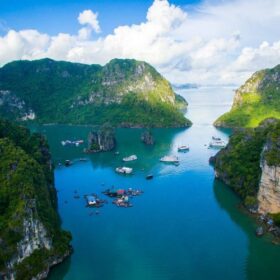
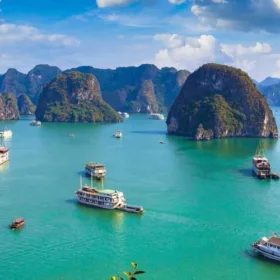
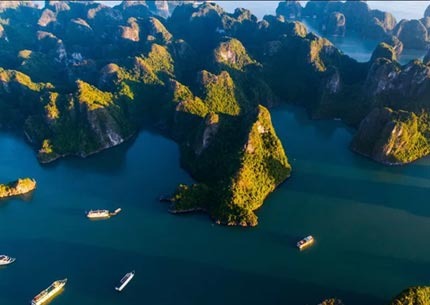
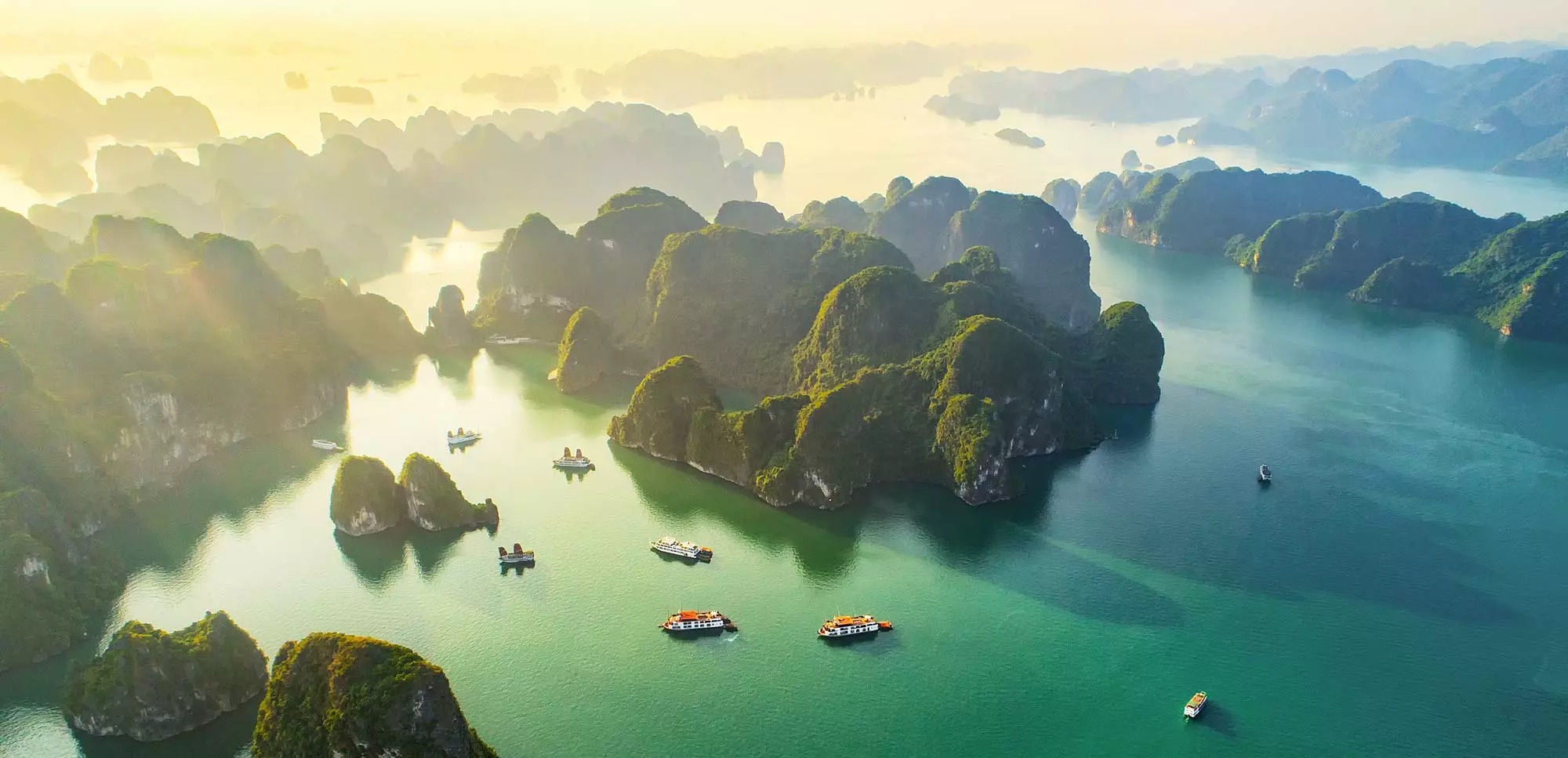
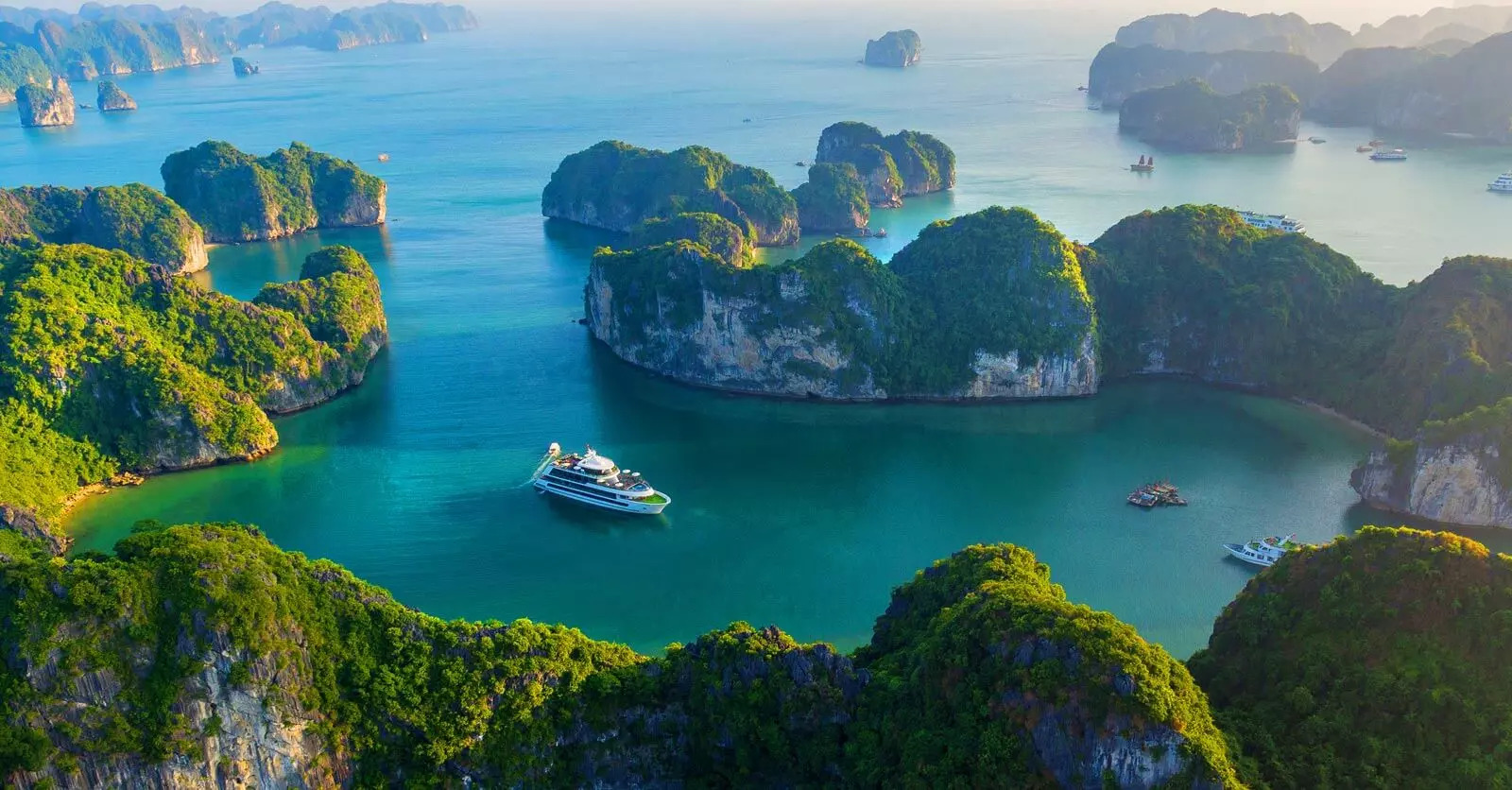
The bay features 1,969 islands and islets, creating one of the world’s most extensive karst landscapes in a marine setting. Each formation tells a chapter of Earth’s ancient history, with distinct types that geologists categorize as:
- Tower karsts: Steep-sided islands rising dramatically from the water
- Cone karsts: Dome-shaped formations with gentler slopes
- Fenglin karsts: Isolated towers surrounded by flat limestone plains
- Fengcong karsts: Clustered peaks connected at their bases
Sung Sot Cave: The Crown Jewel of Halong’s Cave Systems
Among Halong Bay’s 59 explored caves, Sung Sot Cave (Surprise Cave) stands as the most magnificent. Covering over 10,000 square meters across three chambers, it showcases spectacular stalactites and stalagmites formed over millennia.
The cave’s second chamber spans an impressive 30 meters in height, featuring limestone formations that local guides compare to sentinels standing guard. The final chamber opens to a garden of stone formations resembling mythical creatures – a testament to nature’s artistic capabilities through slow chemical processes.
The cave’s lighting system was completely redesigned in 2024 to reduce environmental impact while enhancing visitor experience, using smart LED technology that adjusts based on natural light conditions and visitor numbers.
Looking to explore these geological wonders yourself? Halong Bay Luxury Cruises offers expert-guided expeditions to the most spectacular formations with geological experts on board.
Dau Go Cave: The Hidden Historical Treasure
Less visited but equally impressive is Dau Go Cave (Wooden Stakes Cave), historically significant as the hiding place for stakes later used by Vietnamese forces against Mongol invaders in the 13th century. The cave spans three chambers with ceiling heights reaching 25 meters.
Distinctive stalactites here have formed into shapes resembling ancient Vietnamese warriors, while multicolored lighting installed in 2024 highlights the cave’s natural features without disrupting its delicate ecosystem.
Biodiversity Treasures: A Living Laboratory of Evolution
Halong Bay’s biodiversity is as impressive as its geology, hosting four distinct ecosystems that coexist in remarkable harmony:
- Marine ecosystem: Supporting 234 fish species and 450+ mollusks
- Tropical evergreen forest ecosystem: Covering larger islands
- Mangrove ecosystem: Acting as crucial nurseries for marine life
- Coastal ecosystem: Creating transition zones between land and sea
What makes Halong Bay’s biodiversity globally significant is its 14 endemic plant species found nowhere else on Earth and several endangered animal species that have found refuge here.
The Critically Endangered Cat Ba Langur: Halong’s Living Treasure
The Cat Ba Langur (Trachypithecus poliocephalus), one of the world’s most endangered primates, calls this region home. With only 73 individuals remaining as of late 2024, conservation efforts have intensified. The good news is that their population has increased by 17% since 2020 due to anti-poaching measures and habitat restoration.
These golden-headed primates can occasionally be spotted in the early morning or late afternoon on the limestone cliffs of Cat Ba Island. Their presence represents the biological importance of the Halong Bay ecosystem and the ongoing conservation challenges.
Marine Life Diversity: Underwater Wonders
Beneath the emerald waters, Halong Bay harbors a surprisingly rich marine ecosystem despite challenging conditions. Recent marine surveys in 2024 documented:
- 234 fish species across 89 families
- 149 coral species
- 91 seaweed species
- 75 crustacean species
The most biodiverse area, the Cong Do marine preserve, was expanded in 2023 to cover 2,400 hectares and now hosts successful coral restoration projects that have increased coral coverage by 23% since 2021.
Cultural Heritage: Where Dragons Descended and Civilizations Thrived
Halong Bay’s name translates to “Descending Dragon,” rooted in ancient Vietnamese mythology. According to legend, the gods sent dragons to help locals fight invaders. The dragons spat jewels and jade that formed the islands, creating natural barriers against enemies.
Beyond mythology, archaeological evidence reveals human presence in Halong Bay dating back 7,000+ years, with three distinct prehistoric cultures identified:
- Soi Nhu Culture (18,000-7,000 BCE)
- Cai Beo Culture (7,000-5,000 BCE)
- Ha Long Culture (5,000-3,500 BCE)
The Floating Villages: A 300-Year Legacy of Adaptation
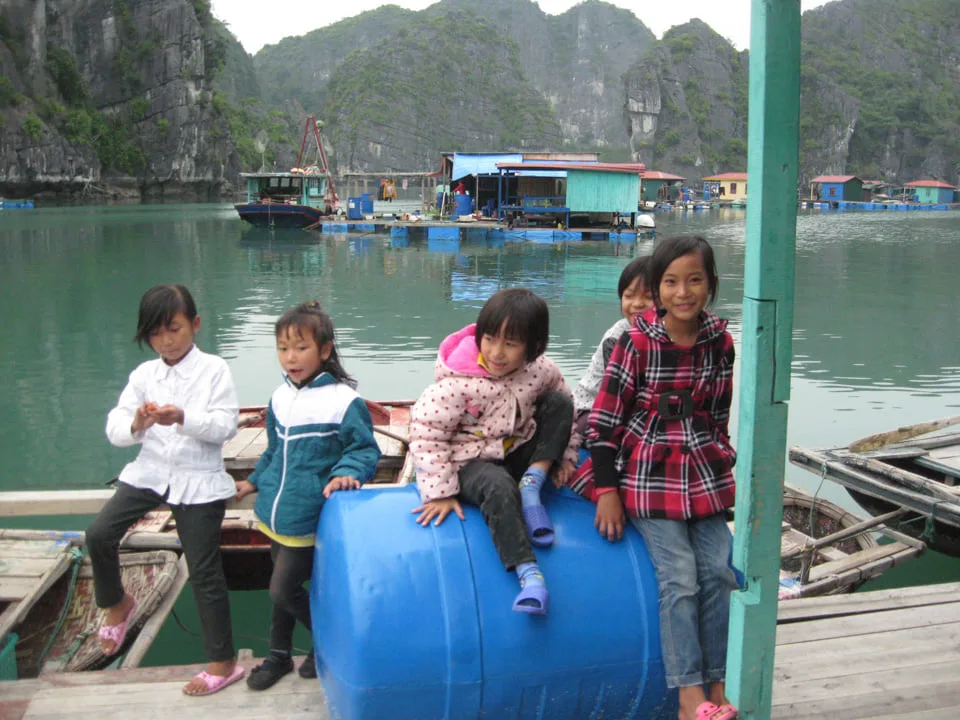
Perhaps the most remarkable cultural aspect of Halong Bay is its floating villages – communities that have adapted to life on the water for generations. The four remaining villages (Cua Van, Vung Vieng, Cong Dam, and Ba Hang) represent centuries of human adaptation to this unique environment.
Cua Van, the largest floating village with 176 households (as of 2025), maintains traditional fishing practices while adapting to modern conservation requirements. The village’s cultural center preserves ancient fishing techniques, boat building traditions, and the unique spirituality of sea-dwelling communities.
The 2025 UNESCO Cultural Mapping Project recently documented 47 distinct cultural practices unique to these floating communities, from specialized net-fishing techniques to weather prediction methods based on water color changes.
Experiencing Halong Bay in 2026-2027: Beyond the Ordinary
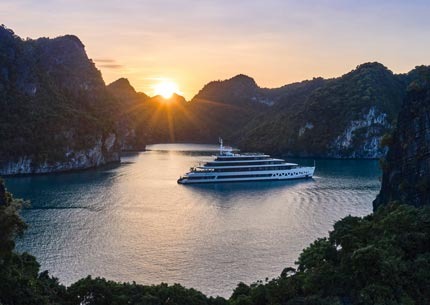
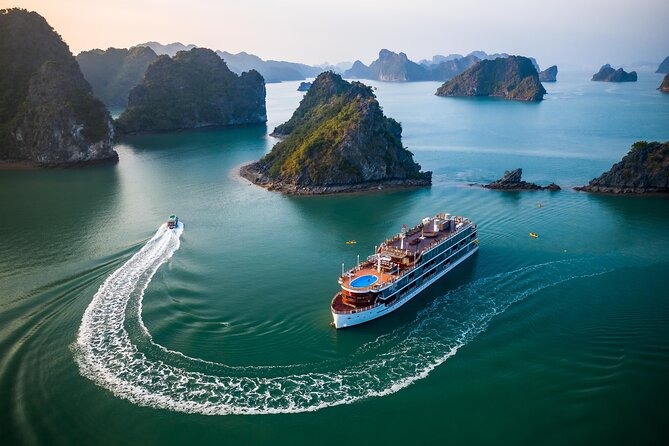
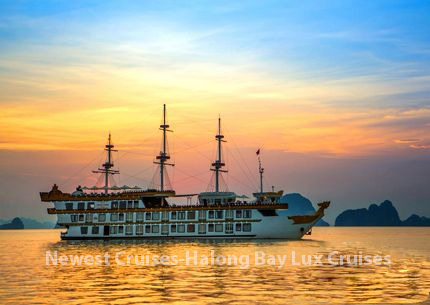
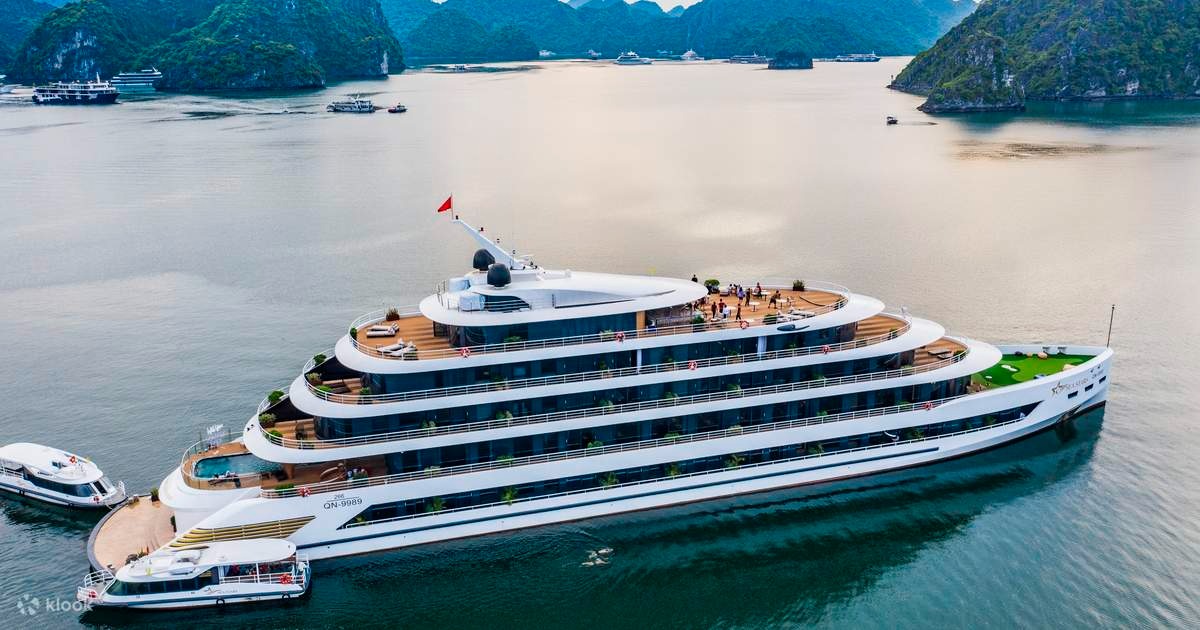
The best way to experience Halong Bay’s wonders is undoubtedly by cruise, allowing visitors to venture deep into this limestone labyrinth. In 2026, cruise experiences have evolved to emphasize sustainable practices while providing unprecedented access to remote areas.
Luxury Cruising: The Ultimate Way to Experience Halong Bay
Modern luxury cruises in Halong Bay combine traditional Vietnamese design elements with cutting-edge sustainability features. The latest vessels launched in 2026-2027 offer:
- Solar-powered amenities reducing carbon footprints by up to 30%
- Glass-bottomed observation decks for marine life viewing
- Onboard marine biology and geology experts
- Farm-to-table dining featuring local sustainable seafood
- Zero single-use plastic policies
For the ultimate experience, consider a 3-day 5-star cruise through Lan Ha and Halong Bay, which allows sufficient time to explore both the popular highlights and secluded areas rarely visited by day-trippers.
Kayaking Adventures: Intimate Exploration of Hidden Lagoons
Kayaking offers the most intimate way to experience Halong Bay’s hidden treasures. In 2025, guided kayaking expeditions utilize transparent kayaks that provide underwater viewing capabilities without disrupting marine ecosystems.
The Luon Cave kayaking route has been expanded in 2026 to include three additional lagoons only accessible during specific tide conditions, offering adventurers a chance to explore pristine environments few tourists have seen.
“The moment you paddle through a narrow opening between karsts and discover a hidden lagoon with crystal clear water and monkeys watching from the cliffs above – that’s when you truly understand Halong Bay’s magic,” says Ha Nguyen, senior guide with Halong Bay Luxury Cruises.
Conservation Challenges and Sustainable Tourism in 2026-2027
While Halong Bay’s beauty remains undeniable, its popularity presents ongoing conservation challenges. In response, Vietnamese authorities have implemented progressive sustainability measures:
- Cruise number limitations: Only 603 vessels are permitted to operate as of 2025, down from 800+ in 2019
- Zero-emission zones: Five areas where only electric vessels may operate
- Advanced waste management: All cruise operators must use closed-loop waste systems
- Visitor dispersal strategies: New routes developed to reduce pressure on popular sites
The Ha Long Bay – Cat Ba Alliance: A Model for Sustainable Tourism
Established in 2025, the Ha Long Bay – Cat Ba Alliance represents a groundbreaking partnership between government agencies, private cruise operators, and international conservation organizations. The alliance has pioneered:
- Marine debris removal programs recovering 27 tons of waste in 2026
- Coral restoration projects spanning 12 hectares
- Community-based conservation monitoring involving former fishermen
- Sustainable seafood certification for floating restaurants
Visitors in 2025 can participate in citizen science programs, contributing to biodiversity monitoring through simple observation activities during their cruises.
Planning Your 2026 Halong Bay Adventure: Essential Tips
Best Time to Visit: Seasonal Considerations
Halong Bay experiences four distinct seasons, each offering different advantages:
- Spring (March-May): Mild temperatures (20-24°C) with occasional mist creating ethereal landscapes. Peak photography conditions occur in April when morning mist typically clears by 10 AM, allowing for both atmospheric and clear shots.
- Summer (June-August): Warmest period (27-32°C) with occasional afternoon thunderstorms. Good for swimming but busier with domestic tourists. June offers the longest daylight hours for exploration.
- Autumn (September-November): Moderate temperatures (22-27°C) with clearest skies and lower humidity. October provides optimal visibility for both underwater activities and landscape viewing.
- Winter (December-February): Cooler temperatures (15-20°C) with frequent mist and drizzle creating mysterious atmospheres. January typically has the fewest visitors while still offering comfortable cruising conditions.
Getting to Halong Bay: Improved Transportation Options
Transportation to Halong Bay has improved significantly in recent years:
- Van Don International Airport: Located just 50km from Halong Bay, now connects with 15 international destinations as of 2025. Transfer time to Halong Bay is approximately 50 minutes.
- Cat Bi International Airport (Hai Phong): Located 70km from Halong Bay with more frequent international connections.
- Hanoi to Halong Expressway: The completed highway reduces travel time from Hanoi to just 2 hours, with luxury shuttle services departing hourly.
- High-speed ferry: New in 2024, connecting Hai Phong city to Halong Bay in just 30 minutes.
Choosing the Right Cruise Experience
With over 600 vessels operating in Halong Bay, selecting the right cruise experience is crucial:
- Day cruises: Cover main highlights but feel rushed (not recommended for photography enthusiasts)
- Overnight cruises: Good introduction to the bay’s highlights
- 2-day Halong and Lan Ha Bay cruises: Optimal for most visitors, balancing exploration time with comfort
- 3-day expedition cruises: Best for in-depth exploration and visiting less-crowded areas
For families with children, look for cruises with dedicated family cabins and educational programs – many newer vessels feature marine biology learning centers and safe swimming platforms.
Why Halong Bay Remains a Must-Visit Wonder in 2026 and Beyond
In an era of overtourism and “Instagram spots,” Halong Bay stands apart as a destination that exceeds expectations rather than disappointing through reality. The bay’s vastness – covering 1,553 square kilometers – means that despite its popularity, vessels can disperse widely, creating the feeling of discovery even in 2025.
What continues to distinguish Halong Bay from other natural wonders is its accessibility combined with its ability to still feel wild and untamed. Unlike many world-famous destinations that require arduous journeys or extreme physical fitness, Halong Bay’s treasures are available to travelers of all ages and abilities.
As one recent visitor noted: “I’ve seen Halong Bay in countless photos over decades, yet nothing prepared me for the feeling of sailing between those towering islands, touching limestone formed millions of years ago, and watching the sun set behind formations that have inspired artists for centuries. Some places are famous for good reason.”
The Future of Halong Bay: Balancing Preservation and Access
Looking beyond 2025, Halong Bay faces the universal challenge of balancing preservation with access. The Vietnamese government has committed to a sustainable tourism model that may eventually include:
- Digital visitor quotas using AI to manage daily visitor distribution
- Advanced mooring systems to eliminate anchor damage to coral
- Expanded no-fishing zones to support marine ecosystem recovery
- Integration with emerging marine protected areas
While these measures may limit some access, they ensure that Halong Bay’s UNESCO status remains meaningful – protecting the very qualities that make it worth visiting.
Conclusion: The Timeless Allure of a Living Heritage
Halong Bay’s UNESCO World Heritage status reflects not just its beauty but its irreplaceable value to humanity’s natural and cultural heritage. In 2026, as environmental consciousness shapes travel choices, destinations like Halong Bay offer something increasingly precious: authentic wonder that connects us to both Earth’s ancient processes and human history.
Whether you’re kayaking through hidden lagoons, learning about limestone formation from onboard geologists, or simply watching the changing light play across karst formations from your cruise balcony, Halong Bay offers moments of connection with our planet that remain profoundly moving.
As a natural wonder that has inspired artists, scientists, and travelers for centuries, Halong Bay doesn’t just deserve its UNESCO recognition – it reminds us why we preserve such places at all: to maintain our capacity for wonder in an increasingly developed world.
Ready to experience the UNESCO wonders of Halong Bay yourself? Halong Bay Luxury Cruises specializes in providing unforgettable, sustainable experiences that showcase the very best of this natural marvel while contributing to its preservation for future generations.
Book your luxury Halong Bay experience
Contact Halong Bay Lux Cruises now via Hotline | WhatsApp: +84.978.358.422 for pricing and special offers!
Thousands of travelers from Europe, UK, USA, and Australia have rated us 5-stars for our exceptional service and unforgettable Halong Bay luxury experience.
- Hotline | WhatsApp: +84.978.358.422
- Phone | WhatsApp: +84.962.261.687
- Email: halongbayluxcruises@gmail.com or vietnammarveltravel@gmail.com
- Website: halongbayluxcruises.com
- Reviews: Top Halong Bay Cruise Reviews on TripAdvisor
- Fanpage: https://www.facebook.com/halongbayluxcruises