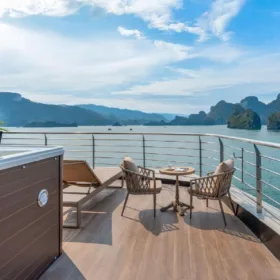
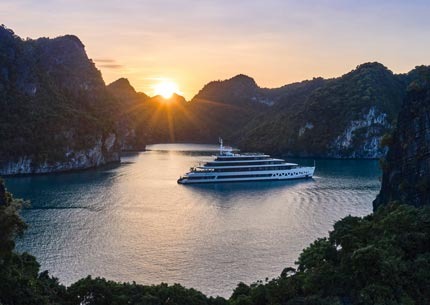
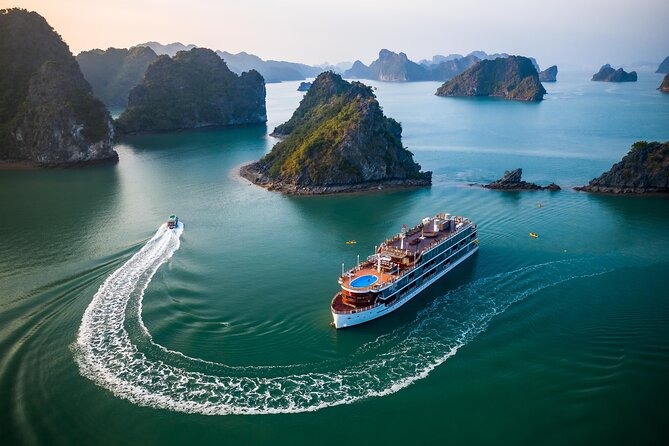
21 Top Beautiful Check-In Spots in Ha Long
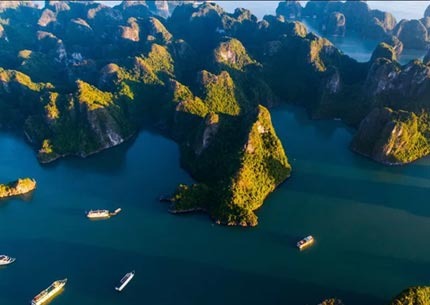
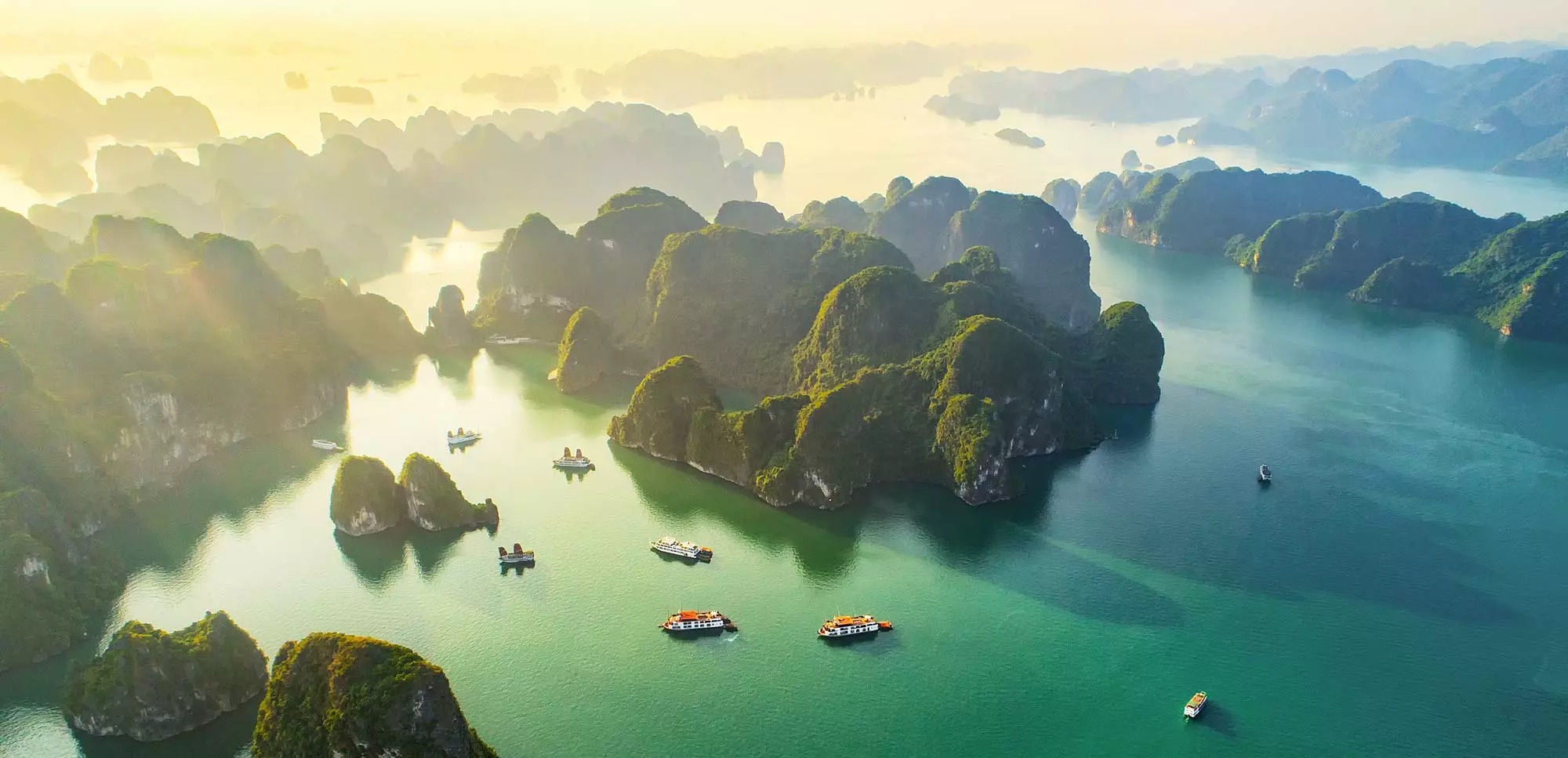
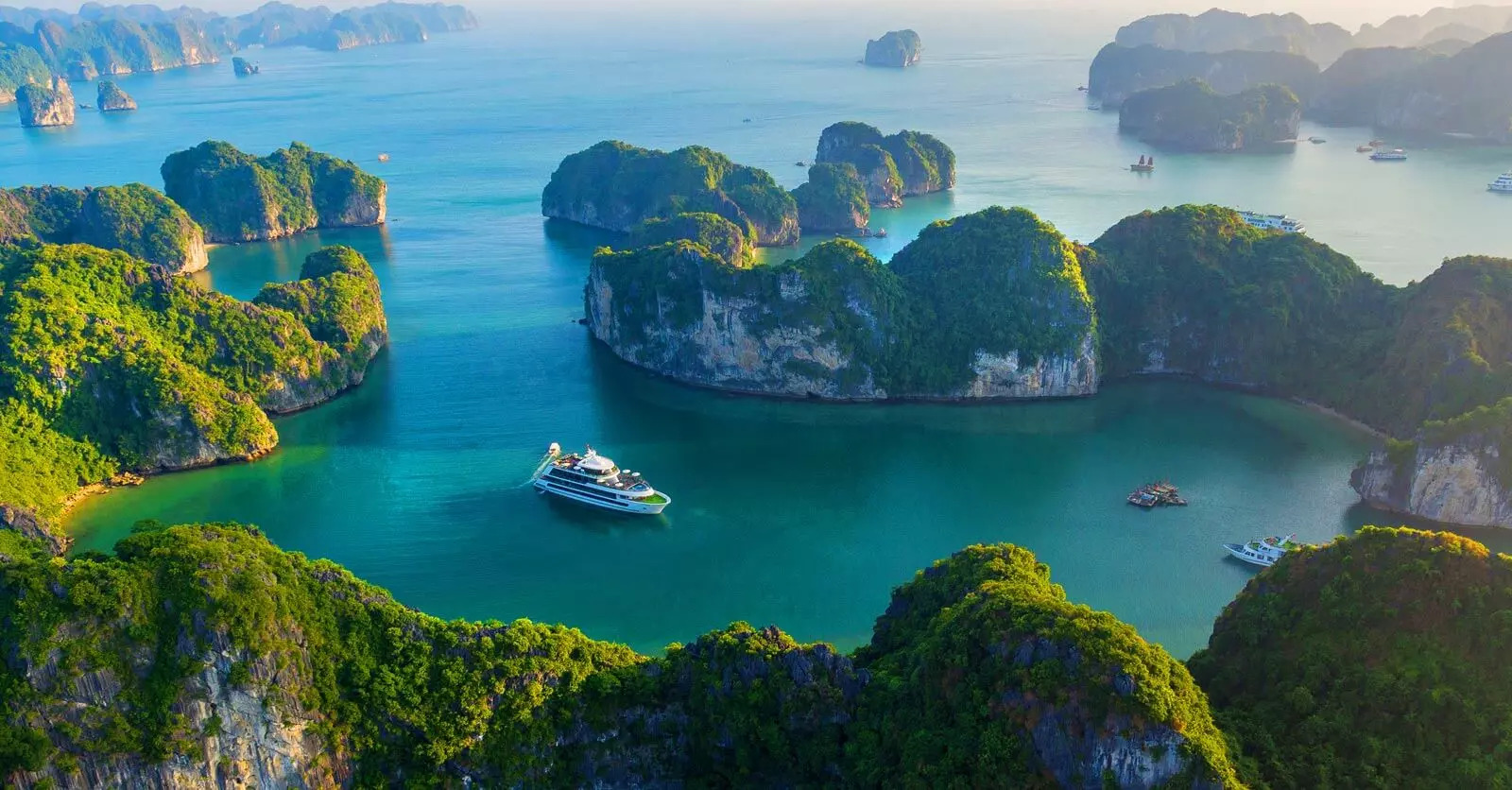
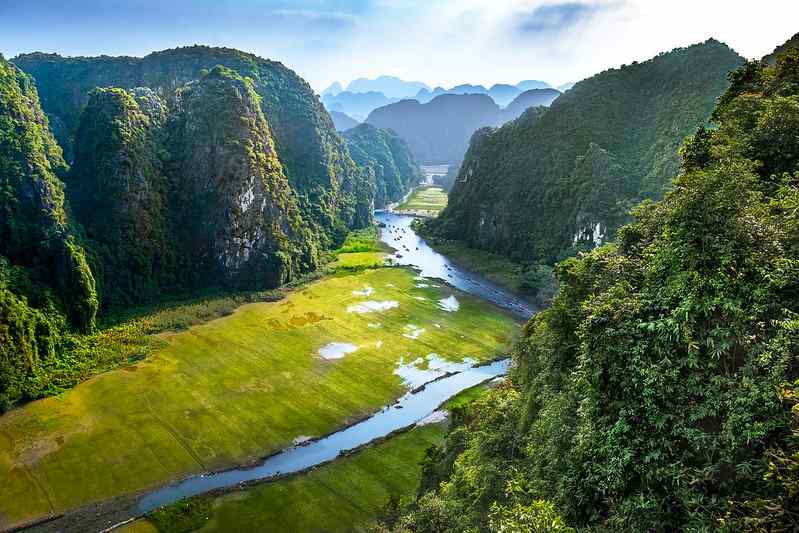
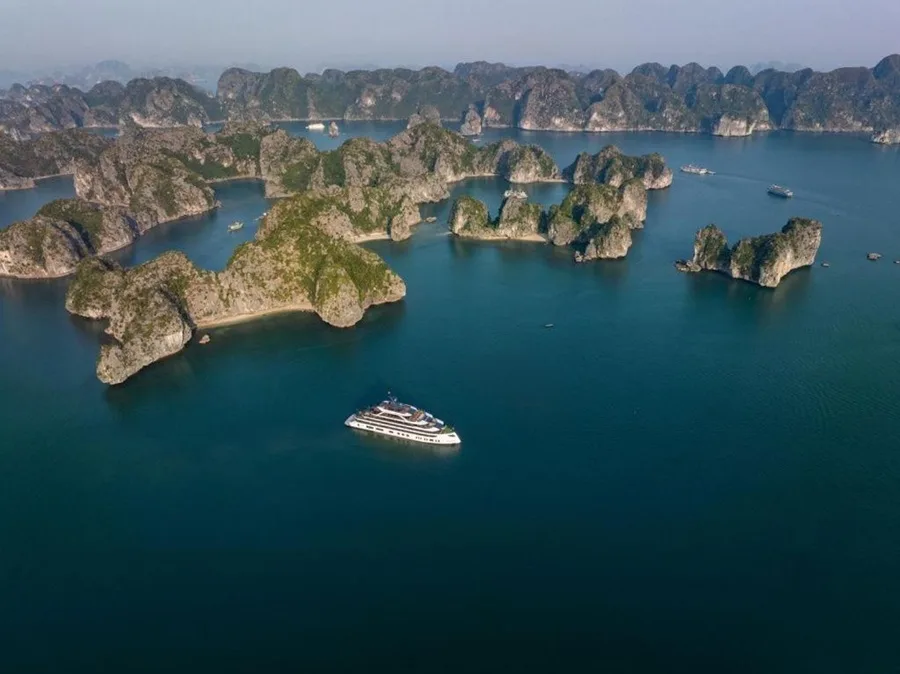
Ha Long is easily one of Vietnam’s most photogenic destinations, and it’s not hard to see why. Imagine emerald-green water stretching to the horizon, thousands of limestone towers rising dramatically from the sea, hidden caves lit by soft natural light, golden beaches tucked between karst islands, and a modern coastal city that comes alive at sunset. For travelers searching for the top beautiful check-in spots in Ha Long, the experience goes far beyond the bay itself — it spans cruise decks, island viewpoints, cave chambers, floating villages, seafront city walks, and remote island beaches in Quang Ninh Province.
Ha Long Bay covers approximately 1,553 square kilometers and contains around 1,969 limestone islands and islets, the majority of which remain uninhabited. Its core UNESCO World Heritage Site covers about 434 square kilometers, and in 2023, the broader Ha Long Bay–Cat Ba Archipelago received expanded UNESCO recognition for its outstanding universal value. This scale of natural heritage, combined with well-developed cruise infrastructure and a variety of city attractions, makes Ha Long one of the most rewarding destinations in Southeast Asia for both photography and sightseeing.
This 2026 guide covers the 21 most beautiful check-in spots in Ha Long, including detailed descriptions of what makes each location special, specific photography tips, and practical advice on how to visit each spot.
Why Ha Long Stands Apart as Vietnam’s Ultimate Check-In Destination
- Few destinations in Vietnam combine dramatic natural scenery and convenient tourism infrastructure as well as Ha Long.
- Ha Long offers UNESCO-listed seascapes, caves, fishing villages, beaches, and a vibrant coastal city in one destination.
- The area is relatively compact and easy to explore by cruise or short city tour.
- Ha Long is especially popular for photography and check-in travel because of its visual diversity.
- Travelers can capture limestone mountains at sunrise, kayak through cave arches, and enjoy panoramic island viewpoints in a single trip.
- Sunset over the bay creates some of the most iconic travel photos in Vietnam.
- Even within 24 hours, visitors can experience a wide variety of landscapes and photo settings.
- Adding a city tour makes the travel and photography experience even more diverse.
The destination suits every type of visual traveler:
- Landscape and nature photographers find endless material in the karst formations, mist-covered bays, and sea caves.
- Lifestyle and travel bloggers love the polished aesthetics of luxury cruise decks, floating villages, and beachfront scenes.
- Architecture enthusiasts are drawn to the Quang Ninh Museum’s dramatic glass façade, Bai Chay Bridge’s illuminated cables, and Sun World Ha Long’s entertainment complex.
- Casual travelers and first-time visitors can collect a full album of iconic Ha Long photos simply by following a well-planned 2-day itinerary.
Understanding the full range of available check-in spots — from bay attractions to city landmarks to outer island beaches — is the key to making the most of any Ha Long trip.
21 Top Beautiful Check-In Spots in Ha Long
1. Sung Sot Cave — The Iconic Cave You Cannot Miss
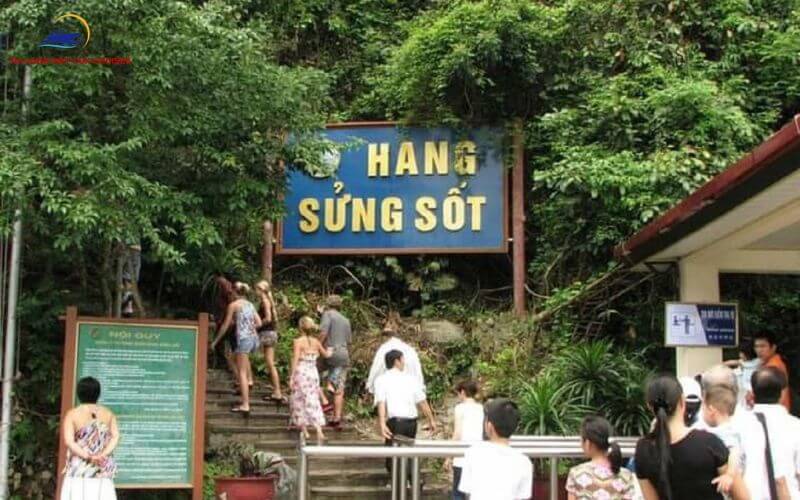
Located on Bo Hon Island in the heart of Ha Long Bay, Sung Sot Cave — also called Surprise Cave — is one of the most celebrated caves in Vietnam and consistently ranked among the top visited attractions in Ha Long Bay. The cave spans approximately 10,000 square meters across two massive chambers, with ceiling heights reaching up to 30 meters in certain sections. Its name comes from the genuine sense of surprise visitors feel when stepping inside and discovering the sheer scale of the interior.
The journey to the cave involves a walk up stone steps through dense forest vegetation, and even this approach offers rewarding views back across the bay. Inside, stalactites and stalagmites form shapes that local guides have long associated with animals, figures, and legendary characters, making the cave both a visual and storytelling experience. The second, larger chamber opens into a dramatic natural amphitheater that appears almost cathedral-like in scale.
Sung Sot is a standard stop on most Ha Long Bay cruise itineraries, which means morning visits can feel busy. Arriving with an early boat or choosing a cruise that prioritizes an early departure from the marina significantly reduces the number of people you’ll encounter at the cave entrance.
Photography tip: Switch to your phone’s wide-angle mode (0.5x) or use an ultra-wide lens to capture the full height and breadth of the main chamber. The ambient cave lighting creates a naturally dramatic atmosphere — avoid over-relying on flash, which tends to flatten the depth of the formations.
2. Ti Top Island — The Best Panoramic Viewpoint in Ha Long Bay
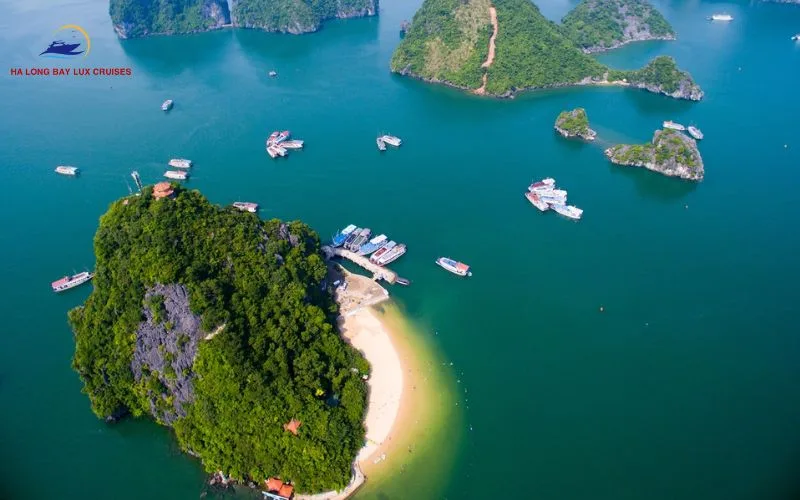
Named after Soviet cosmonaut Gherman Titov, who visited Ha Long Bay in 1962 alongside Ho Chi Minh, Ti Top Island is arguably the single most iconic check-in location on any Ha Long Bay cruise. The island offers two distinct settings: a crescent-shaped sandy beach at water level and a panoramic viewpoint summit reached via roughly 400 stone steps that wind up through jungle vegetation.
At the top, the view opens across a wide sweep of Ha Long Bay — limestone karsts dotting the water in every direction, cruise vessels anchored in the distance, and the open sea stretching toward the horizon. It is one of the few places in Ha Long where you can see above the karst formations rather than looking up at them.
The beach below is equally beautiful, with calm shallow water, soft sand, and a curved shoreline framed by green-clad rock walls. It’s a natural swimming spot and a strong setting for casual lifestyle photos and beach portraits.
Ti Top Island is included on a large number of classic Ha Long Bay itineraries, particularly 2-day 1-night and 3-day 2-night cruise routes. Late afternoon is the most photogenic time to visit, when the light turns warm and golden over the bay.
Photography tip: Don’t limit yourself to one setting. Take a wide shot of the beach from the water’s edge, then climb to the summit for a completely different composition looking out over the karst seascape. The contrast between the two perspectives creates a visually compelling pair of images.
3. Luon Cave — A Hidden Lagoon Discovered by Kayak
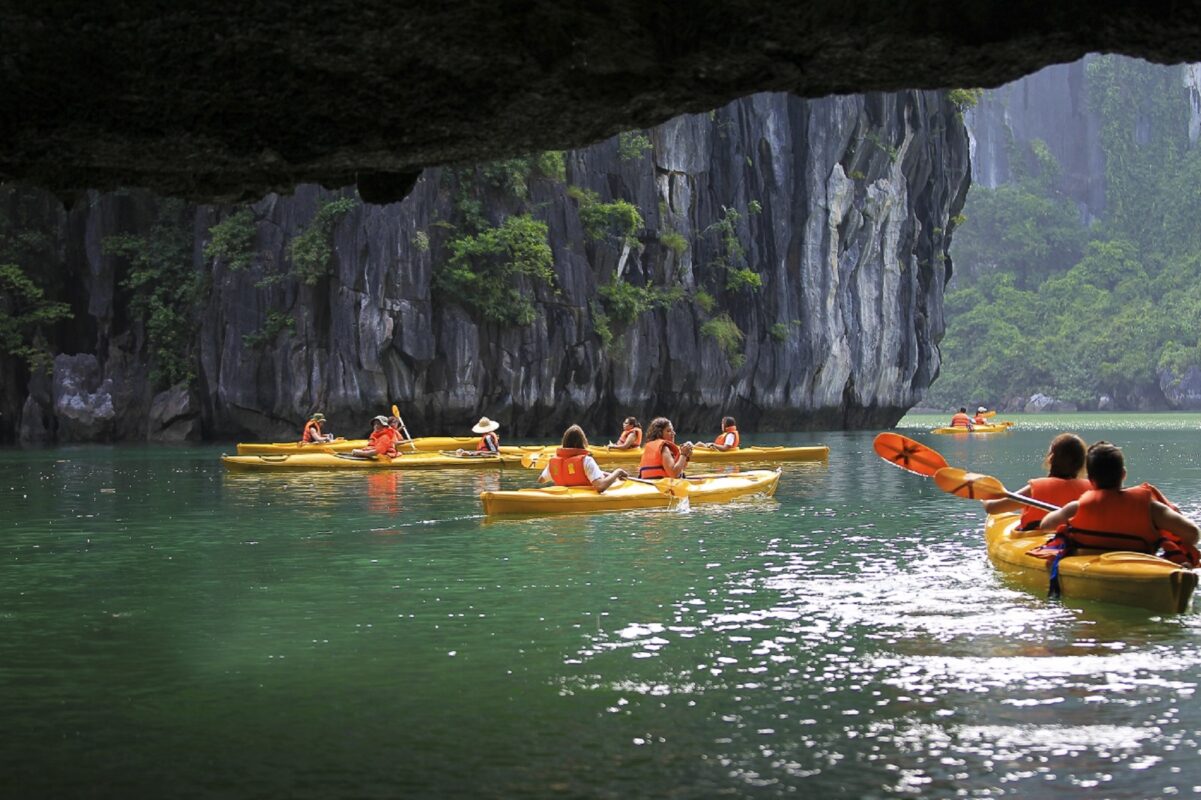
Luon Cave is one of those rare places in Ha Long that genuinely rewards travelers with a sense of discovery. Located near Bo Hon Island, the cave is a low limestone arch roughly 60 meters long that leads from the open bay into a completely enclosed tidal lagoon. The lagoon inside is calm, shallow, and surrounded on all sides by towering limestone walls draped with jungle vegetation — a hidden world that feels entirely separate from everything outside.
Entry into the lagoon is done either by kayak (paddled by the traveler) or bamboo rowing boat (paddled by a local guide), depending on the tidal conditions and the specific cruise program. The ceiling of the cave arch sits very low at certain tidal levels, requiring passengers to lean back in their seats to pass through, which adds an unexpected element of adventure to the experience.
Inside the lagoon, monkeys are often seen along the cliff edges, and the acoustic atmosphere — water echoing off limestone walls, birds calling from the jungle above — creates a memorable sensory experience beyond the visual.
Photography tip: A waterproof pouch or dry bag for your phone is essential here, particularly if you’re kayaking. The best photos inside the lagoon are taken by looking upward toward the rim of the surrounding cliffs, where the jungle meets the open sky.
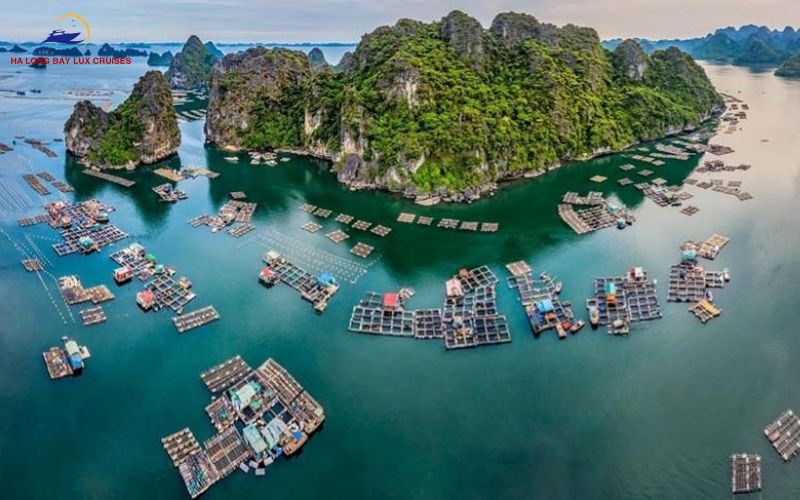
4. Cua Van Floating Cultural Village — Authentic Life on the Water
Cua Van was historically one of the largest floating fishing villages in Ha Long Bay, with a permanent population that lived entirely on the water for generations. Today, while many families have relocated to land as part of a government resettlement program, Cua Van retains its floating cultural center, traditional wooden houses on pontoons, colorful fishing boats, and the gentle rhythm of village life on still water.
The village offers a very different photographic mood from the dramatic cave and island scenery. Here, the appeal is quiet, human, and reflective — wooden boats rocking on glassy water at dawn, fishing nets drying in the sun, an elderly resident rowing a small wooden boat between houses. For travelers interested in documentary-style or cultural photography, Cua Van provides material that few other bay stops can match.
A floating museum inside the village introduces the traditional customs, livelihood practices, and heritage of Ha Long Bay’s fishing communities, adding cultural depth to the visit.
Photography tip: Early morning visits produce the most striking water reflections, and the golden hour light on the painted wooden houses creates a warm, nostalgic atmosphere. A telephoto focal length works well to compress the scene and isolate individual boats or figures against the surrounding water.
5. Hon Trong Mai — The Symbol of Ha Long Bay
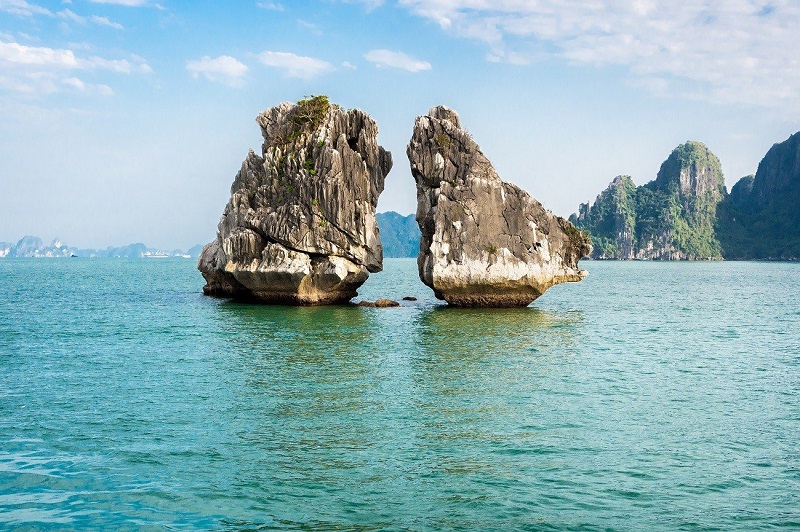
Some check-in spots are important not just because they’re beautiful, but because they are iconic symbols of a destination. Hon Trong Mai — known in English as Fighting Cocks Islet — belongs to that category. These two limestone formations, rising side by side from the water in the southwestern area of Ha Long Bay near the Dau Go region, appear to face each other like a pair of roosters, giving the islet its distinctive and unforgettable name.
Hon Trong Mai appears on Vietnam’s 50,000 VND banknote and in countless official tourism images of Ha Long Bay, making it one of the most recognized natural formations in the country. For first-time visitors especially, a photo at or near Fighting Cocks Islet carries a sense of destination achievement — proof that you’ve truly arrived in Ha Long Bay.
The formation is typically photographed from the cruise deck during a bay transit rather than as a dedicated landing stop, which means your position relative to the rocks depends on the cruise route and timing.
Photography tip: Use a zoom or telephoto lens to isolate the two formations against the water and sky, cutting out surrounding clutter. Shooting from the bow of the cruise in flat, overcast light can actually produce very clean, contrasty results.
6. Thien Cung Cave — A Palace of Limestone Formations
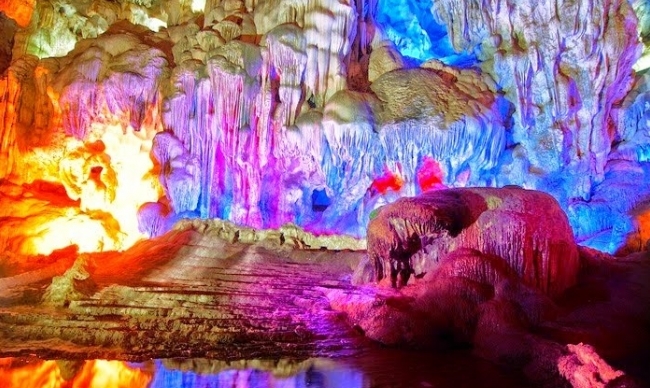
Thien Cung Cave, whose name translates as Heavenly Palace Cave, earns its dramatic name through the quality and density of its interior formations. Located on Dau Go Island in the southwestern part of Ha Long Bay, the cave covers approximately 10,000 square meters and contains some of the most intricate stalactite and stalagmite arrangements of any accessible cave in the bay.
The interior is lit with colored lighting that highlights the translucency and texture of the formations, creating a theatrical, almost otherworldly visual experience. Legends associated with the cave describe it as a wedding palace for a dragon king and his bride, and the cave’s natural columns and flowing rock curtains do give it a ceremonial grandeur.
Thien Cung is commonly included in half-day and full-day Ha Long Bay tour itineraries, making it an accessible option even for travelers with limited time on the water.
Photography tip: Set your camera or phone to a slightly lower exposure setting to avoid blowing out the artificial colored lighting. Shooting in RAW format (if using a camera) gives more flexibility in post-processing to recover detail in both the lit and shadowed areas of the formations.
7. Dau Go Cave — Ha Long’s Cave of Historical Depth
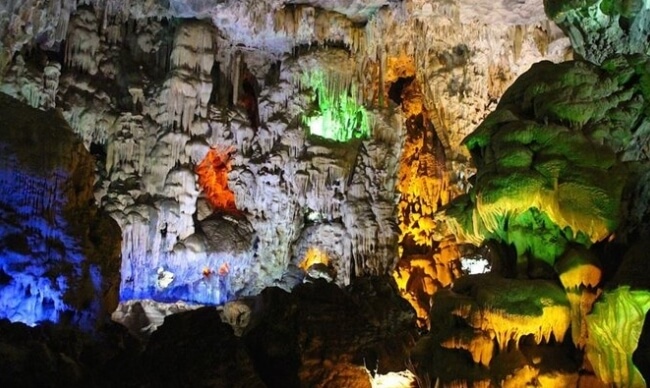
Adjacent to Thien Cung on Dau Go Island, Dau Go Cave is one of the oldest and most historically significant caves in Ha Long Bay. Its name, which translates roughly as Wooden Stakes Cave, refers to a legendary episode from the 13th-century Tran Dynasty, when the military leader Tran Hung Dao reportedly stored sharpened wooden stakes in the cave before using them to defeat the Mongol fleet at the Battle of Bach Dang River in 1288.
The cave covers approximately 5,000 square meters and consists of three connected chambers, each containing limestone formations of varying scale and character. The outer chamber features a wide, high-ceilinged entrance that frames a view back toward the open bay — one of the most naturally composed photos available in Ha Long without any additional setup.
The mix of natural beauty and historical narrative gives Dau Go Cave a depth of meaning that distinguishes it from purely scenic cave visits.
Photography tip: Position yourself near the back of the entrance chamber and shoot toward the cave mouth to capture the framed view of sky and limestone cliffs beyond. This creates a natural “frame within a frame” composition with dramatic contrast between the dark cave interior and the bright exterior.
8. Soi Sim Island — A Quiet Beach Alternative in the Bay
Not every cruise itinerary visits Soi Sim Island, which is precisely what makes it special. Less trafficked than Ti Top Island, Soi Sim offers a small sandy beach, calm clear water, and an accessible hillside path leading to a viewpoint over the surrounding bay. The island is covered in green vegetation including sim berry bushes (which give the island its name), adding color and texture to the landscape.
For travelers who have already visited the major cave stops and want a quieter, more peaceful beach check-in, Soi Sim provides a beautiful alternative. The beach is modest in size but photogenic in every direction, with limestone formations rising from the water on all sides.
Soi Sim is particularly well-suited to late afternoon visits, when the light softens across the bay and the beach takes on a warm golden tone.
Photography tip: The hillside viewpoint, when accessible, offers a perspective similar to Ti Top but without the crowds. Even a shot taken from the beach looking toward the karst backdrop produces clean, compositionally strong images.
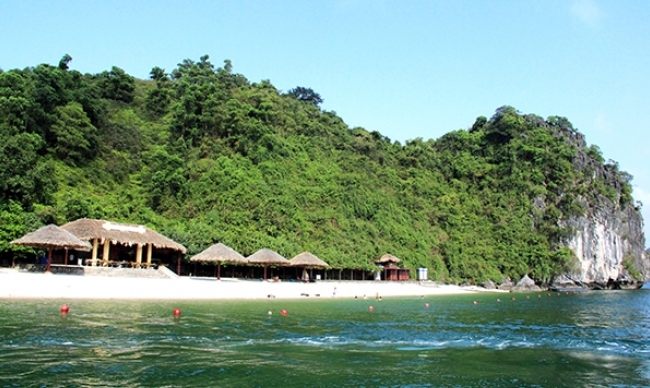
9. Bai Chay Beach — Where the City Meets the Sea
Bai Chay Beach is the most accessible coastal check-in spot in Ha Long City and a natural anchor for any city-based itinerary. The beach stretches for approximately 900 meters along the Bai Chay waterfront and is backed by a promenade lined with restaurants, cafés, souvenir shops, and palm trees. It offers open, unobstructed views across the water toward the bay, and on clear days the silhouettes of karst islands are visible in the distance.
The beach itself features soft light-colored sand and relatively calm water, making it suitable for swimming, beach walks, and sunset photography. In the cooler months from October to March, the beach atmosphere becomes more relaxed and photogenic, with fewer crowds and better light quality.
For travelers staying in the Bai Chay area before or after a cruise, the beach is an easy early-morning or late-afternoon check-in stop that requires no transport planning.
Photography tip: Sunset is definitively the best time to photograph Bai Chay Beach. The sky transitions through shades of orange, pink, and purple, and the waterfront lights begin to appear, giving the scene both natural warmth and urban energy. Silhouette shots along the water’s edge work particularly well during this window.
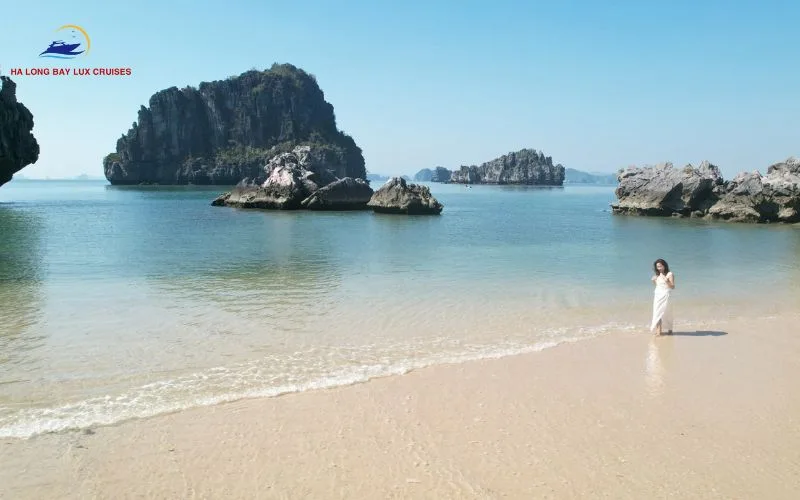
10. Bai Chay Bridge — Ha Long’s Most Photogenic Urban Landmark
Bai Chay Bridge is the most striking piece of modern architecture in Ha Long City. Completed in 2006, the cable-stayed bridge spans 1,106 meters in total length, with a main span of 435 meters over Cua Luc Bay. It connects the Bai Chay district on the west side to the Hon Gai district on the east side of the city and has become a defining feature of Ha Long’s urban skyline.
The bridge is particularly spectacular after dark, when its cables and pylons are illuminated with colored LED lighting that reflects off the water below. The changing colors cycle through the spectrum throughout the evening, making it a dynamic and visually rewarding subject for night photography.
Multiple viewing points along the Bai Chay waterfront offer clear sightlines to the bridge, and the combination of the bridge’s illuminated silhouette, the water’s reflection, and the distant city lights creates a layered, complex image that photographs beautifully.
Photography tip: Use a tripod or stabilize your phone on a solid surface for bridge night shots. A long exposure (2–10 seconds) captures the light trails and maximizes the reflection quality on the water surface. Shoot from the waterfront path on the Bai Chay side for the cleanest unobstructed angle.
11. Sun World Ha Long Complex and the Queen Cable Car
Sun World Ha Long is one of the largest entertainment and leisure developments in northern Vietnam, covering a substantial area of the Bai Chay hillside with theme park attractions, hotels, restaurants, gardens, and the landmark Queen Cable Car. The cable car itself stretches 2,222 meters across Cua Luc Bay — connecting the Bai Chay commercial area to the Dragon Park hill — and at the time of its construction, its gondola cabins were among the largest in the world, with each cabin capable of carrying up to 230 passengers.
Riding the Queen Cable Car provides sweeping elevated views over Bai Chay, Hon Gai, Cua Luc Bay, and on clear days, portions of Ha Long Bay in the distance. The experience is simultaneously a thrilling ride and a panoramic photography session.
Beyond the cable car, the Sun World complex includes the Dragon Park, Typhoon Water Park, and various seasonal events and festivals, giving it strong appeal for families and younger travelers. The area is especially vibrant in the evenings when the complex comes alive with lights and entertainment.
Photography tip: Riding the cable car at dusk — departing around 30 minutes before sunset — allows you to capture both daylight panoramic views on the outbound journey and illuminated evening city views on the return. The transition from golden light to blue hour light during this window is particularly beautiful.
12. Quang Ninh Museum — Ha Long’s Most Architecturally Striking Building
For travelers who appreciate architecture and cultural heritage alongside natural scenery, Quang Ninh Museum is one of the most rewarding check-in spots in Ha Long City. Designed by the German firm Gmp Architekten and opened in 2013, the building’s exterior is entirely clad in dark reflective glass panels, earning it the popular nickname “The Black Pearl of Ha Long.” The façade reflects the sky, sea, and surrounding landscape in a constantly changing visual display that makes the building appear almost liquid at certain times of day.
The museum covers the geology, ecology, history, culture, coal mining heritage, and biodiversity of Quang Ninh Province across multiple floors. Exhibits include fossil specimens from prehistoric marine life, models of traditional Vietnamese craft and trade vessels, documentation of the province’s role in the wider Vietnamese economy, and detailed information about the formation of Ha Long Bay’s limestone karst landscape over 500 million years of geological history.
The museum is located on Tran Quoc Nghien Street along Ha Long City’s waterfront, and the surrounding plaza offers clean sightlines to the full building exterior.
Photography tip: Position yourself approximately 30–40 meters from the building across the front plaza to capture the complete façade in one frame. The reflection quality on the glass exterior is strongest on bright, partially cloudy days when the sky has good tonal contrast.
13. Ha Long International Cruise Port — A Modern Gateway to the Bay
Opened in 2018, Ha Long International Cruise Port was Vietnam’s first purpose-built international cruise terminal and represents a significant upgrade in the country’s maritime tourism infrastructure. The terminal building features elegant contemporary architecture with sweeping curved rooflines, open-air observation areas, and a large arrival plaza that faces the bay.
For cruise travelers, this is typically the first photographic opportunity before boarding a Ha Long Bay day cruise or overnight cruise. The combination of the terminal architecture, parked cruise vessels, and bay water in the background creates a polished, travel-editorial quality setting.
The port is located in the Bai Chay area, within easy walking distance of Bai Chay Beach and close to the Sun World Ha Long complex, making it convenient to incorporate into a city check-in route.
Photography tip: Arrive at the port at least 45–60 minutes before your boarding time to explore the terminal exterior and surrounding waterfront without the bustle of other passengers. Morning light from the east illuminates the front façade particularly well.
14. Tuan Chau Marina and Tuan Chau Island — The Cruise Capital of Ha Long
Tuan Chau Marina is the primary departure point for a large proportion of Ha Long Bay and Lan Ha Bay cruises, and on any given morning it presents a spectacular scene: dozens of traditional junk-style wooden cruise vessels, luxury steel-hulled ships, and smaller day boats lined up along the marina piers, preparing to sail into the bay. This visual concentration of cruise vessels in one location is genuinely impressive and makes for striking travel photographs.
Tuan Chau Island itself — located approximately 12 kilometers west of central Ha Long City — has developed into a self-contained resort destination with beaches, hotels, international restaurants, and entertainment facilities. The island is connected to the mainland by a 2-kilometer causeway and serves as the base for a large segment of Ha Long’s cruise tourism industry.
For travelers arriving the day before a cruise, Tuan Chau is a practical and scenic place to spend the evening, with waterfront dining and bay views as the cruise vessels prepare for their morning departures.
Photography tip: The marina is most visually active and photogenic during early morning departures, roughly between 7:00 AM and 9:00 AM, when multiple cruise vessels are moving simultaneously and the bay light is clean and directional.
15. Bai Tho Mountain — A Legendary Viewpoint Over the City and Bay
Bai Tho Mountain — whose name translates as “Poem Mountain” — rises approximately 200 meters above sea level in the Hon Gai district of Ha Long City. The mountain has been admired by Vietnamese poets and royalty for centuries; inscriptions carved into its rock face date back as far as the 15th century, attributed to emperors and military leaders who were moved to write poetry by the view from its slopes.
From the upper slopes, the panorama encompasses Ha Long Bay’s limestone formations, the city of Ha Long spread across both sides of Cua Luc Bay, and on exceptionally clear days, the islands of Bai Tu Long Bay to the northeast. It is one of the very few elevated vantage points in the immediate Ha Long area that offers a bird’s-eye perspective of the bay scenery rather than a sea-level view.
Important note for travelers: Access to Bai Tho Mountain has been periodically restricted by local authorities due to safety concerns, trail management issues, and incidents involving unauthorized climbing routes. Before planning a visit, travelers should check with local tourism offices or their hotel for the most current access status. Do not attempt unofficial or unmarked routes.
Photography tip: If legal access is available at the time of your visit, aim to reach the viewpoint in the early morning hours — ideally before 8:00 AM — for the clearest atmospheric visibility and the most favorable angle of light across the bay and city.
16. Long Tien Pagoda — A Peaceful Cultural Check-In in the Heart of the City
Built in 1941 and dedicated to Avalokitesvara Bodhisattva (Quan Am), Long Tien Pagoda is one of the most important and most visited religious sites in Ha Long City. Located in the Hon Gai district at the base of Bai Tho Mountain, the pagoda features classic northern Vietnamese Buddhist architecture: curved ochre-tiled roofs, red-lacquered columns, ornate carved eaves, and incense-filled courtyards that open to small garden areas.
The pagoda gate, decorated with intricate stone carvings and flanked by guardian lion statues, is one of the strongest single-frame photographic subjects in Hon Gai. Inside the compound, the main hall houses gilded statues and is typically fragrant with the smoke of burning incense, creating an atmosphere that is both visually evocative and spiritually calm.
Long Tien Pagoda is open to visitors throughout the day and is located close to Hon Gai Market and the seafront, making it easy to combine with a broader Hon Gai city walk.
Photography tip: The pagoda gate is the most photogenic element of the exterior. Shoot in the morning when direct light illuminates the carved details. Inside the hall, use natural light entering from the courtyard rather than flash to preserve the warm amber glow of the lacquered surfaces. Always dress respectfully — covered shoulders and knees are expected — and seek permission before photographing worshippers.
17. Hon Gai Seafront — The Authentic Alternative to Bai Chay
While Bai Chay gets more international tourist attention, the Hon Gai side of Ha Long City offers a more local, unhurried version of coastal city life that many photographers and slow travelers find genuinely refreshing. The Hon Gai seafront runs along a coastal road with open bay views, fishing boat moorings, casual seafood restaurants, small cafés, and a daily rhythm of local life that feels noticeably different from the polished resort strip of Bai Chay.
From the Hon Gai waterfront, the view looks back across Cua Luc Bay toward Bai Chay Bridge and the western side of the city, framing the bridge and distant limestone karsts in a single wide panorama. The pedestrian waterfront area is pleasant for evening walks, with good seafood available at accessible local prices.
Hon Gai is also home to the city’s main wholesale seafood market, which operates at its most active in the early morning hours and provides compelling documentary photography opportunities.
Photography tip: The Hon Gai seafront produces excellent wide landscape shots of Bai Chay Bridge in the distance. Use the coastal road itself as a leading line, with the bridge and karst silhouettes as the focal point. Blue hour (roughly 30 minutes after sunset) gives a beautiful balance between ambient sky color and bridge illumination.
18. Lan Ha Bay — Tranquil Limestone Scenery Beyond the Crowds
Lan Ha Bay lies south of Ha Long Bay, adjacent to Cat Ba Island, and is part of the expanded Ha Long Bay–Cat Ba Archipelago UNESCO World Heritage Site recognized in 2023. It contains over 400 limestone islands and islets set in calm, clear water, with an ecosystem that includes mangrove forests, enclosed lagoons, hidden beaches, and remarkable biodiversity.
What distinguishes Lan Ha from the central Ha Long Bay area is its atmosphere. With fewer vessels and a greater proportion of natural scenery, Lan Ha Bay feels quieter and more immersive — the kind of place where you can kayak into an enclosed lagoon and feel genuinely alone in the landscape. For photographers, this means fewer boats in the background, cleaner compositions, and more opportunities for undisturbed sunrise and sunset photography from the cruise sundeck.
Popular stops within Lan Ha Bay include Ba Trai Dao Beach (Three Peach Beach), Dark Cave, Bright Cave, and numerous kayaking lagoons accessible through low limestone arches.
For an outstanding experience combining Ha Long and Lan Ha Bay, consider the 2-Day Ha Long & Lan Ha Bay 5-Star Cruise offered by Halong Bay Lux Cruises, which provides a carefully curated route through both bay areas with professionally guided activities, gourmet dining, and premium cabin accommodations. If you’d prefer more time to absorb the quieter scenery and add a third day of exploration, the 3-Day 5-Star Lan Ha Bay and Ha Long Bay Cruise expands the itinerary with additional stops, cooking demonstrations, Tai Chi sessions, and sunrise photography from the sundeck.
Photography tip:
Sunrise on Lan Ha Bay is exceptional — the absence of heavy boat traffic means the morning water is almost mirror-still, producing pristine reflections of the limestone karsts. Set your alarm for 30 minutes before sunrise and position yourself on the upper sundeck for the best unobstructed view.
19. Bai Tu Long Bay — Ha Long’s Quieter, More Expansive Neighbor
Stretching northeast of Ha Long Bay, Bai Tu Long Bay is part of the same limestone karst landscape but remains noticeably less visited than the core Ha Long area. The bay is characterized by larger, more widely spaced islands, cleaner water in many areas, and a general sense of spaciousness that contrasts with the more concentrated scenery of central Ha Long.
Bai Tu Long Bay is home to several notable attractions, including Vung Vieng Floating Village — one of the most beautifully preserved traditional fishing villages remaining in the Ha Long area — as well as Ba Mun Island, which contains one of the few remaining areas of primary tropical forest in the limestone karst archipelago. The island’s forest has been protected as a nature reserve and is home to primates, reptiles, and diverse birdlife.
Because fewer mainstream cruise itineraries include Bai Tu Long, visiting this area gives travelers the opportunity to photograph limestone scenery without the visual clutter of other cruise vessels in the frame — a significant advantage for anyone serious about landscape photography.
For travelers who want to explore the full breadth of Ha Long’s seascape in premium comfort, the Ha Long Bay 6-Star Cruise – 3 Days from Halong Bay Lux Cruises is an exceptional choice. This itinerary delivers an ultra-premium experience across Ha Long’s most rewarding waters, with beautifully designed en-suite cabins, gourmet meals featuring local seafood, and curated excursions to lesser-visited spots.
Photography tip: On Bai Tu Long Bay, the wide spacing between islands allows you to include large foreground water areas in your compositions, which amplifies the sense of scale and isolation. A polarizing filter — or the equivalent polarizing mode on your phone’s camera — significantly reduces water surface glare and enhances color saturation.
20. Quan Lan Island — Long Beaches and Unspoiled Island Character
Located in Van Don District of Quang Ninh Province, approximately 50 kilometers northeast of Ha Long City, Quan Lan Island is one of the most rewarding off-the-beaten-path destinations in the region for travelers who have already experienced the main Ha Long Bay circuit. The island is reached by speedboat from Cai Rong Port (approximately 1 hour) and retains a genuinely unhurried, traditional island character.
Quan Lan’s coastline includes several beaches — Quan Lan Beach, Son Hao Beach, and Ban Sen Beach — characterized by long stretches of light-colored sand, clear water with relatively low tourist density, and natural scenery unmarked by large resort development. The island also has a historical Quan Lan Communal House dating back to the Nguyen Dynasty, which provides a cultural check-in option alongside the beach scenery.
Exploring the island by electric cart or rental bicycle reveals village lanes, fishing harbors, open rice paddies, and coastal dunes — a visual variety that’s very different from the cave and karst scenery of Ha Long Bay proper.
Photography tip: The road running between Quan Lan’s central village and the eastern beaches passes through a variety of landscape types within a few kilometers. Early morning cycling along this route — before the day heats up — captures the island in its quietest, most beautiful state, with fishing boats on the water and local families beginning their morning routines.
21. Minh Chau Beach — The Most Beautiful Beach in the Quang Ninh Area
Minh Chau Beach, located on Quan Lan Island in Van Don District, is consistently cited as one of the finest beaches in northern Vietnam and is the perfect final stop for travelers completing an extended Quang Ninh itinerary. The beach stretches for over 3 kilometers along the southern coast of Quan Lan Island, with powdery white sand, water that transitions from pale turquoise in the shallows to deep green further out, and a natural backdrop of coastal forest and dunes.
What distinguishes Minh Chau from more developed beach destinations is its relative emptiness and natural condition. Unlike Bai Chay Beach, Minh Chau has no large commercial strip behind it — just sand, trees, and sea. This makes it an ideal setting for wide, clean beach photography with minimal human-made elements in the frame.
Turtle nesting has historically been documented on Minh Chau’s shores, and the beach is part of the broader Van Don–Bai Tu Long marine conservation area. Visitors are encouraged to follow responsible beach practices, particularly during turtle nesting season between June and August.
Photography tip: Minh Chau Beach photographs beautifully from two hours after sunrise until around 10:00 AM, when the light is warm but not yet harsh and overhead. Return again in the late afternoon from around 4:30 PM onward for golden hour conditions and long shadow textures across the sand. The combination of white sand, turquoise water, and green coastal treeline creates a naturally vibrant color palette that requires very little post-processing to look stunning.
Calista Cruise – Ha Long Bay New Cruises
⭐ Calista Cruise – 6★ Eco Luxury
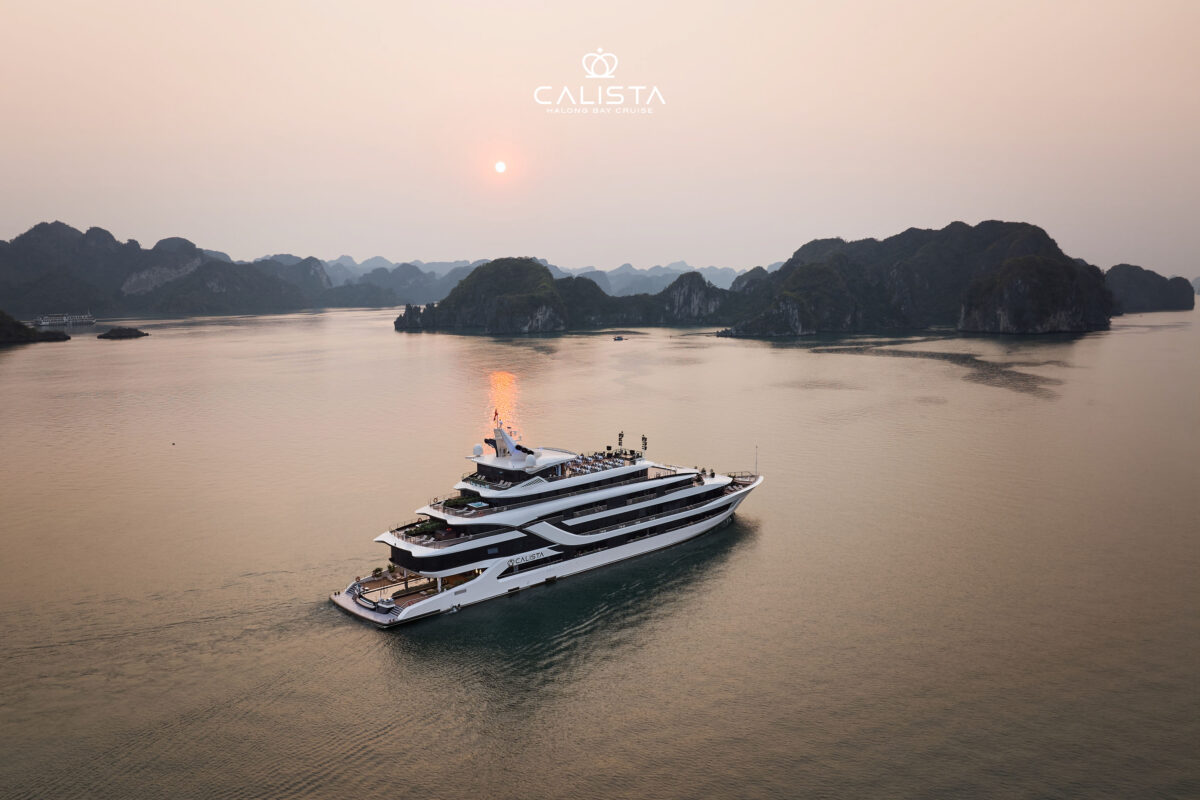
| 🚢 Cruise: | Calista Cruise (6★) |
| 🛏️ Suites: | 26 eco-suites, private balcony |
| 🗺️ Route: | Halong Bay – Lan Ha Bay |
| 💵 Price: | From $180/person |
| 📞 Contact: | +84 962261687 | |
Ha Long Bay Lux Cruises – Best Price for 6★ Luxury Cruises
⭐ Ha Long Bay 6-Star Luxury Cruises
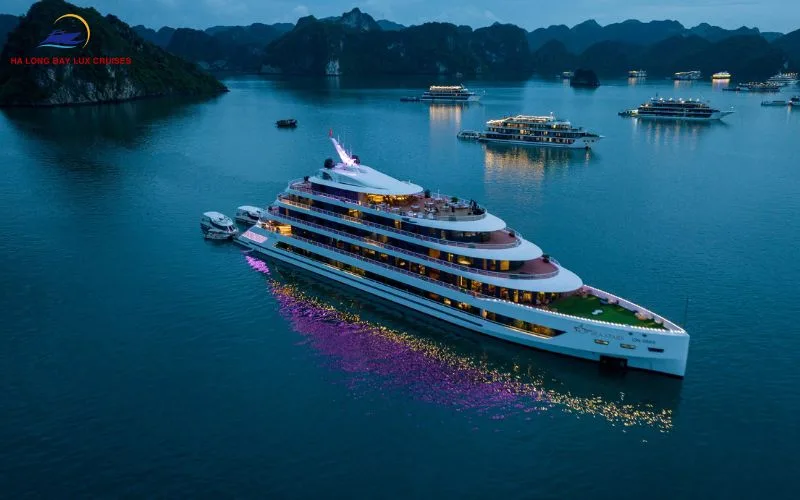
| 🚢 Cruises: | New 6★ Luxury Cruise Collection |
| 🛏️ Cabins: | Large suites, private balcony & jacuzzi |
| 🗺️ Route: | Halong Bay – Lan Ha Bay – Bai Tu Long |
| 💵 Price: | From $180/person |
| 📞 Contact: | +84 962 261 687 | |
Catherine Cruise – Best Price for 6★ Luxury Cruises
⭐ Catherine Cruise – 6★ Luxury Halong Bay
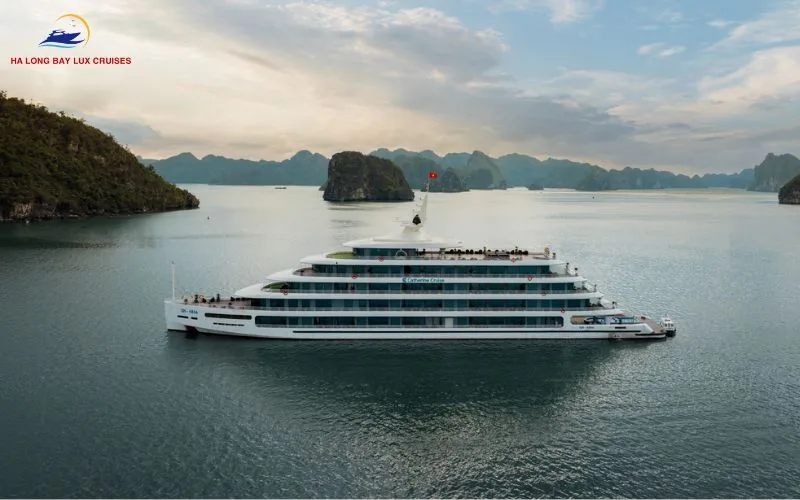
| 🚢 Cruise: | Catherine Cruise – 6★ Luxury |
| 🛏️ Cabins: | 39 luxury suites with balconies |
| 🗺️ Route: | Halong Bay – Lan Ha Bay – Bai Tu Long |
| 💵 Price: | From approx $210+ |
| 📞 Contact: | +84 962 261 687 | |
Grand Pioneers Cruise – Best Price for 6★ Luxury Cruises
⭐ Grand Pioneers Cruise – 6★ Luxury Halong Bay
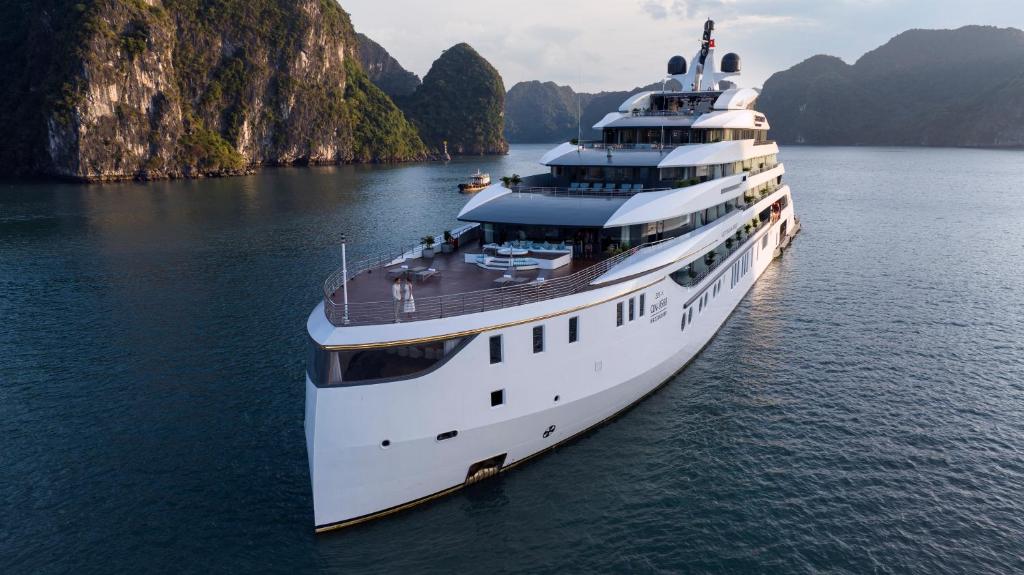
| 🚢 Cruise: | Grand Pioneers Cruise (6★) |
| 🛏️ Cabins: | Luxury suites with private balcony |
| 🗺️ Route: | Halong Bay – Lan Ha Bay |
| 💵 Price: | From $220/person |
| 📞 Contact: | +84 962 261 687 | |
Scarlet Pearl Cruise – Best Price for 6★ Luxury Cruises
⭐ Scarlet Pearl Cruise – 6★ Luxury Lan Ha Bay
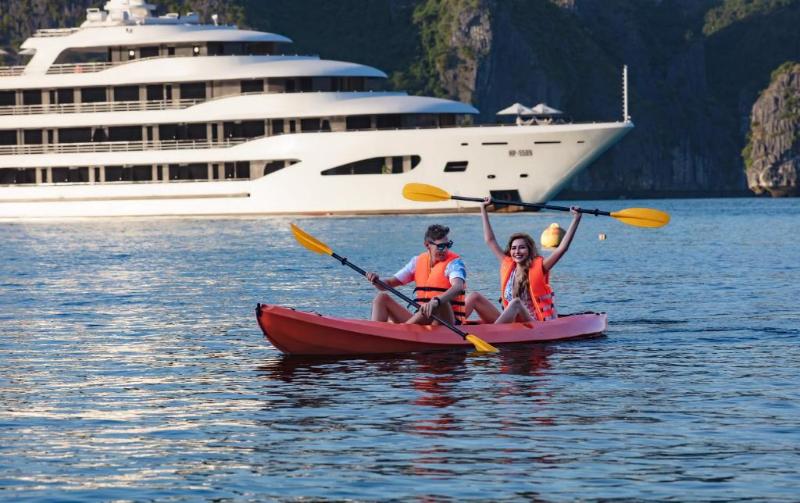
| 🚢 Cruise: | Scarlet Pearl Cruise (6★) |
| 🛏️ Cabins: | Luxury suites with private balcony |
| 🗺️ Route: | Lan Ha Bay – Cat Ba Archipelago |
| 💵 Price: | From $210/person |
| 📞 Contact: | +84 962 261 687 | |
Elite Of The Seas Cruise – Best Price for 6★ Luxury Cruises
⭐ Elite of the Seas – 6★ Ultra Luxury Cruise
| 🚢 Cruise: | Elite of the Seas (6★) |
| 🛏️ Cabins: | Ultra-luxury suites with private balcony |
| 🗺️ Route: | Halong Bay – Lan Ha Bay |
| 💵 Price: | From $210/person |
| 📞 Contact: | +84 962 261 687 | |
Athena Premium Cruise – Best Price for 6★ Luxury Cruises
⭐ Athena Premium Cruise – 6★ Luxury Halong Bay
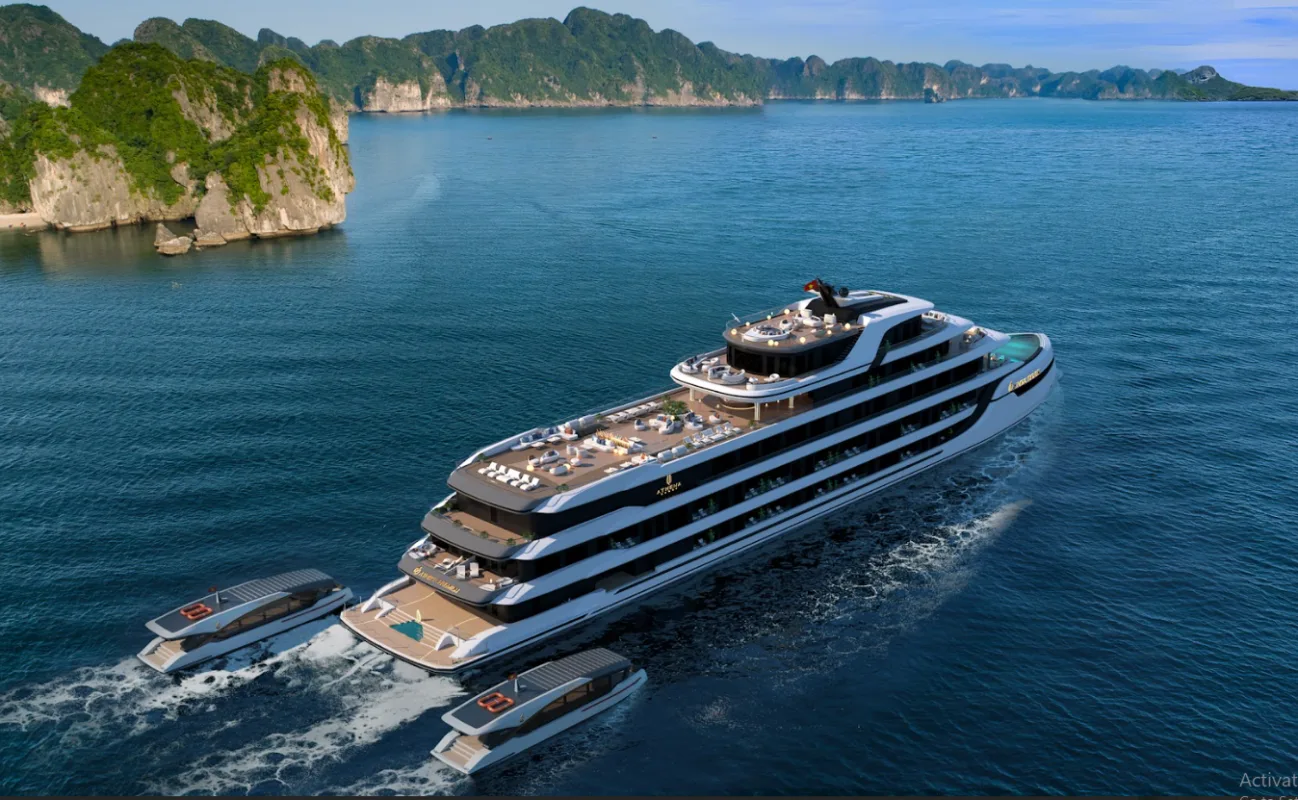
| 🚢 Cruise: | Athena Premium Cruise (6★) |
| 🛏️ Cabins: | Luxury suites with private balcony |
| 🗺️ Route: | Halong Bay – Lan Ha Bay |
| 💵 Price: | From $190/person |
| 📞 Contact: | +84 962 261 687 | |
Orient Legacy Cruise – Best Price for Luxury Cruises
⭐ Orient Legacy Cruise – Luxury Halong Bay
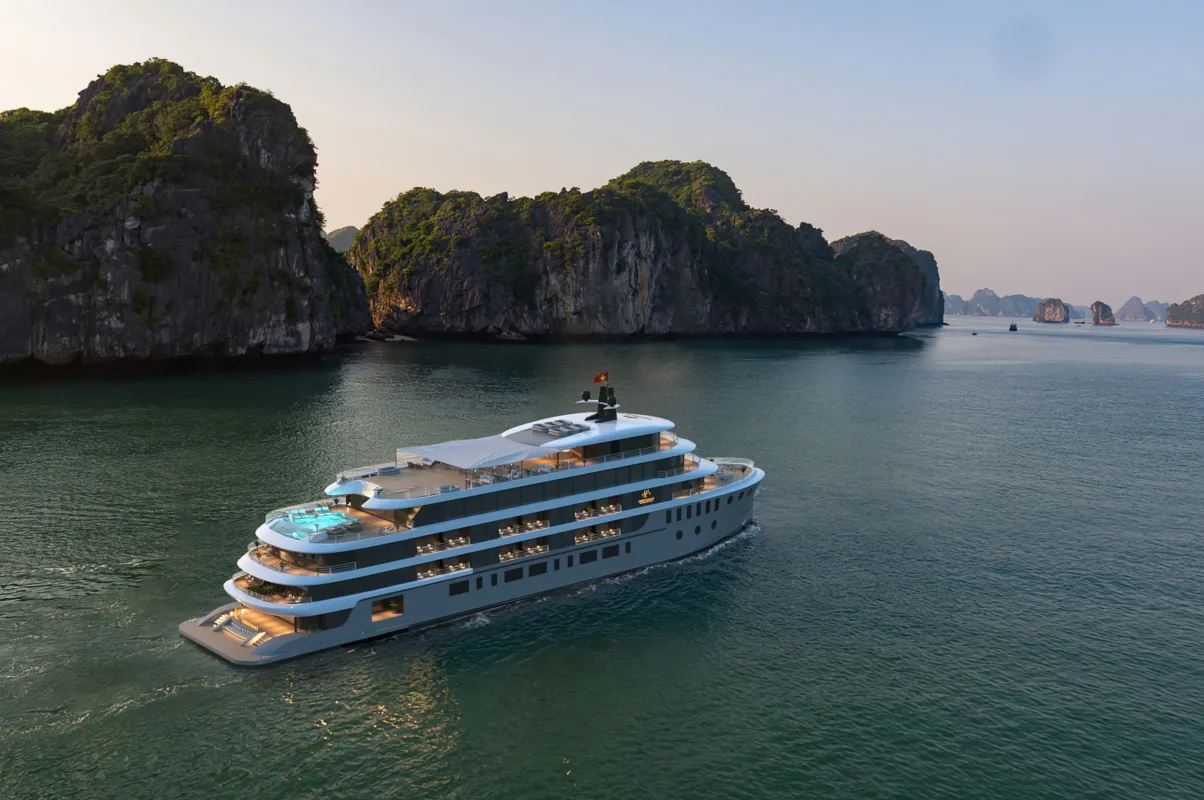
| 🚢 Cruise: | Orient Legacy Cruise |
| 🛏️ Cabins: | Luxury cabins with balcony |
| 🗺️ Route: | Halong Bay – Lan Ha Bay |
| 💵 Price: | From $190/person |
| 📞 Contact: | +84 962 261 687 | |
Cycad Cruise – Ha Long Bay New Cruises
⭐ Cycad Cruise – Luxury Halong Bay
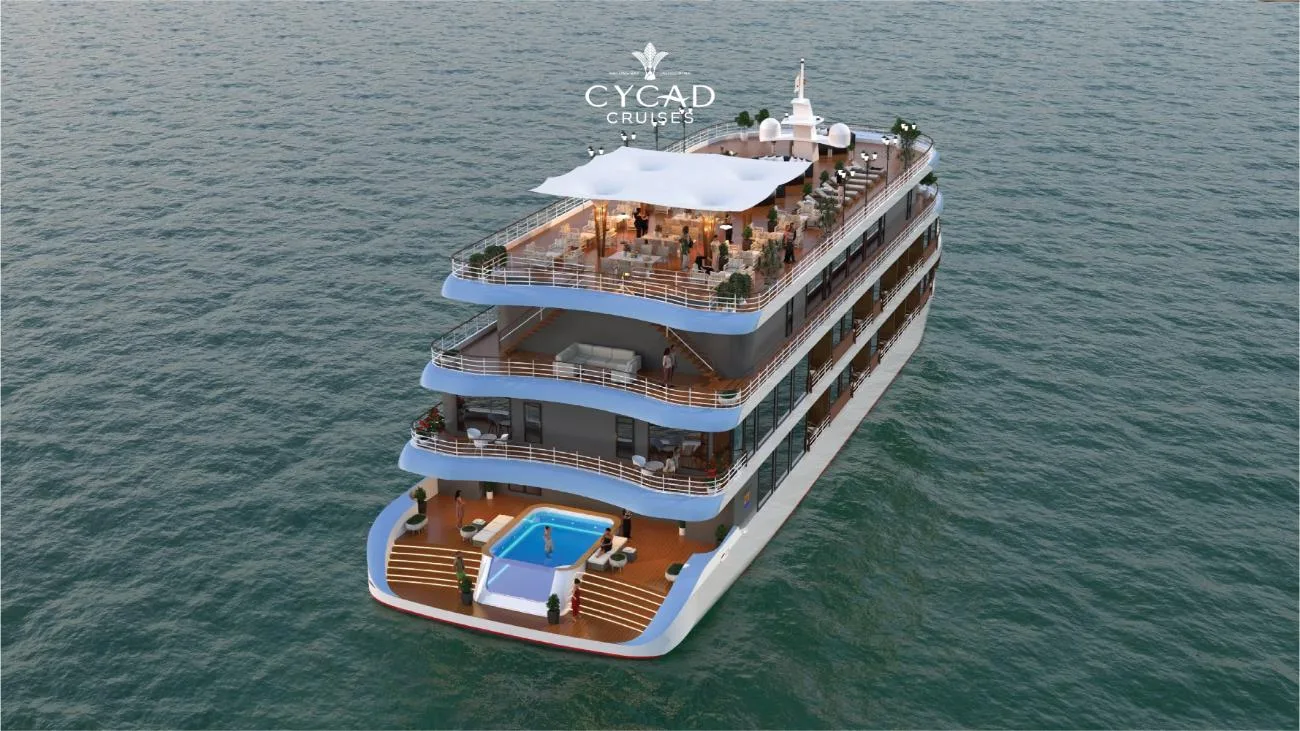
| 🚢 Cruise: | Cycad Cruise |
| 🛏️ Cabins: | Luxury cabins with private balcony |
| 🗺️ Route: | Halong Bay – Lan Ha Bay |
| 💵 Price: | From $190/person |
| 📞 Contact: | +84 962 261 687 | |
La Casta Star – Ha Long Bay New Cruises
⭐ La Casta Star Cruise – Luxury Halong Bay

| 🚢 Cruise: | La Casta Star Cruise |
| 🛏️ Cabins: | Luxury cabins with private balcony |
| 🗺️ Route: | Halong Bay – Lan Ha Bay |
| 💵 Price: | From $180/person |
| 📞 Contact: | +84 962 261 687 | |
Azura Cruise – Ha Long Bay New Cruises
⭐ Azura Cruise – Luxury Halong Bay
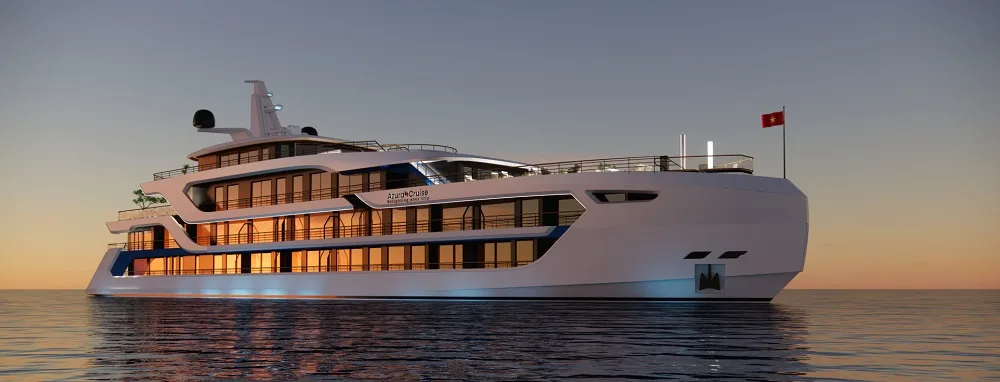
| 🚢 Cruise: | Azura Cruise |
| 🛏️ Cabins: | Luxury cabins with private balcony |
| 🗺️ Route: | Halong Bay – Lan Ha Bay |
| 💵 Price: | From $180/person |
| 📞 Contact: | +84 962 261 687 | |
Aqua Luxury Cruises – Best Price for Luxury Cruises
⭐ Aqua Luxury Cruise – Halong & Lan Ha Bay
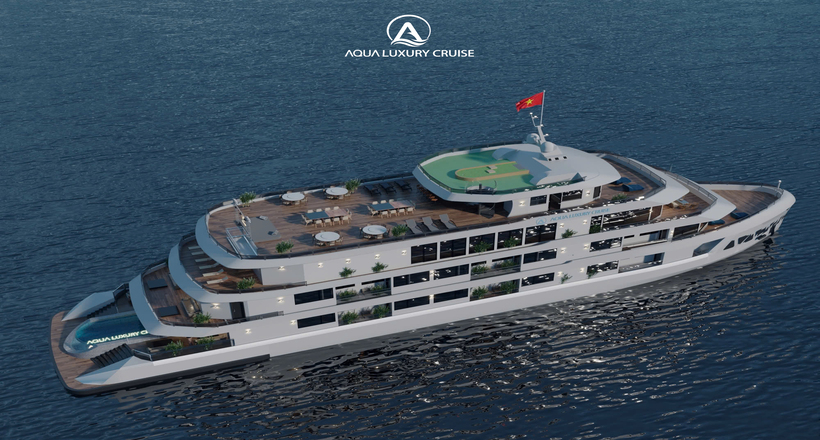
| 🚢 Cruise: | Aqua Luxury Cruise |
| 🛏️ Cabins: | Luxury cabins with private balcony |
| 🗺️ Route: | Halong Bay – Lan Ha Bay |
| 💵 Price: | From $170/person |
| 📞 Contact: | +84 962 261 687 | |
When to Go: Seasons, Light, and Weather in Ha Long
Choosing the right time to visit Ha Long makes a measurable difference to the quality of your photography and the comfort of your experience. Ha Long has a subtropical monsoon climate with four distinct seasonal moods, each offering different photographic conditions.
March to April — Spring Clarity
The period from March through April is widely regarded as one of the best times to visit Ha Long for photography. The weather is warm but not hot (average temperatures of 20–25°C), rainfall is low, and the bay often has excellent visibility with soft, diffused light that’s ideal for landscape photography. Occasional morning mist adds an atmospheric, ethereal quality to bay shots.
May to August — Summer Colors and Storms
Summer in Ha Long brings warm to hot temperatures (peaking at around 35°C in July) and the region’s highest annual rainfall. The bright green jungle vegetation and intensely blue water create vibrant, saturated colors on good weather days. However, Typhoon season runs from approximately July through September, and cruise itineraries can be disrupted or cancelled by severe weather. Travelers planning summer visits should purchase travel insurance and monitor weather forecasts closely.
September to November — The Peak Season for Cruises
Autumn is widely considered the best overall season for Ha Long Bay travel. Temperatures moderate to a comfortable 22–27°C, rainfall drops significantly after mid-September, and the sky becomes remarkably clear and blue. The combination of ideal weather, excellent visibility, and relatively comfortable sea conditions makes this period the most popular for luxury cruises. Book well in advance for the October–November window.
December to February — Winter Mist and Atmospheric Beauty
Winter in Ha Long brings cooler, occasionally cold temperatures (as low as 12–15°C in January) and increased mist and drizzle. While these conditions are less comfortable for outdoor activities, they produce some of the most atmospherically beautiful photography of the year. The misty bay scenes — limestone karsts partially shrouded in low cloud, cruise vessels emerging from fog — have a painterly, almost ink-wash quality that is unique to this season.
Golden Hours — Daily Light Windows
Regardless of season, the best daily light windows for Ha Long photography are:
- Sunrise (approximately 5:30–7:00 AM): Calm water, minimal boat traffic, soft warm light. Best from a cruise sundeck or elevated island viewpoint.
- Late afternoon (approximately 4:00–5:30 PM): Warm golden light on limestone surfaces and beaches. Best at Ti Top Island, Bai Chay Beach, and bay islands.
- Blue hour and evening (approximately 6:00–7:30 PM): Best for Bai Chay Bridge, Sun World Ha Long, and Hon Gai Seafront.
Sample Itineraries to Maximize Your Ha Long Check-In Collection
1-Day City and Bay Introduction
For travelers with a tight schedule or a single day in Ha Long, this compact route covers the most visually distinctive check-in points:
- Morning: Ha Long International Cruise Port or Tuan Chau Marina — arrive early for pre-cruise photos
- Mid-morning to early afternoon: Half-day bay tour including Thien Cung Cave and Hon Trong Mai
- Late afternoon: Bai Chay Beach for sunset photography
- Evening: Bai Chay Bridge for night photography and the Quang Ninh Museum exterior
This route is suitable for travelers staying one night in Ha Long City before continuing to another destination.
2-Day 1-Night Cruise — The Classic Ha Long Experience
The overnight cruise format is the most popular way to experience Ha Long Bay’s check-in spots, combining convenience with immersive scenery:
- Day 1: Board at Tuan Chau Marina → Sung Sot Cave → Luon Cave kayaking → Cua Van Floating Village → Sunset from cruise sundeck → Ti Top Island (if early morning on Day 2)
- Day 2: Sunrise photography from sundeck → Ti Top Island (morning) → return cruise → Bai Chay or city attractions in the afternoon
For this itinerary, the 2-Day Ha Long & Lan Ha Bay 5-Star Cruise from Halong Bay Lux Cruises offers a premium overnight experience with beautifully appointed cabins, gourmet meals, and a route that extends into the quieter waters of Lan Ha Bay.
3-Day 2-Night Extended Bay Route — For Photographers and Slow Travelers
For travelers who want to photograph Ha Long Bay in full depth — including quieter areas, secluded beaches, and sunrise and sunset conditions on multiple days:
- Day 1: Tuan Chau Marina departure → Sung Sot Cave → Ti Top Island → Sundeck sunset → Anchor overnight in Ha Long Bay
- Day 2: Sunrise from sundeck → Luon Cave kayaking → Lan Ha Bay → Ba Trai Dao Beach → Kayaking lagoons → Evening cruise → Anchor overnight in Lan Ha Bay
- Day 3: Dawn photography → Minh Chau Beach or Quan Lan Island stop (if extended route) → Return to port → City check-ins at Bai Chay Bridge and Quang Ninh Museum
The 3-Day 5-Star Lan Ha Bay and Ha Long Bay Cruise provides this extended itinerary in exceptional comfort, with professional guides, spa services, cooking classes, and Tai Chi sessions on the sundeck to enhance the overall experience.
Practical Photography Tips for Ha Long
Getting the most from your Ha Long photography involves more than good equipment — preparation, timing, and awareness of the environment make a significant difference to the final results.
Choose the right cruise itinerary:
Not every cruise visits the same attractions. Before booking, confirm whether your itinerary includes Sung Sot Cave, Ti Top Island, Luon Cave, Cua Van Floating Village, and whether it enters Lan Ha Bay or Bai Tu Long Bay. These details are the most important factor determining which check-in spots are actually accessible to you.
Waterproofing is non-negotiable:
Ha Long involves boat transfers, kayaking, bamboo boat rides, beach walks, and cave visits. A waterproof phone pouch or dry bag for your camera equipment should be packed for every cruise day, not just kayaking sessions.
Wear photogenic, location-appropriate clothing:
Neutral tones — white, ivory, navy, olive, soft blue — photograph beautifully against Ha Long’s limestone grey and emerald green. Avoid wearing colors that compete with the natural palette. Cave visits involve uneven stone floors and modest lighting; practical footwear matters as much as aesthetics.
Manage your time on popular stops:
Sung Sot Cave and Ti Top Island receive large volumes of visitors, particularly between 9:00 AM and 11:00 AM. Cruises that depart from Tuan Chau at 7:30 AM or earlier tend to reach these stops ahead of the main traffic, giving you a cleaner and less crowded experience.
Work with the weather, not against it:
Overcast days produce even, shadow-free light that’s often better for cave interiors and jungle paths. Clear sunny days are best for beach and bay panoramas. Misty or foggy conditions — particularly in winter months — create uniquely atmospheric images of limestone formations emerging from cloud.
Respect access regulations:
Bai Tho Mountain has experienced access restrictions. Always confirm current local regulations with your accommodation or a reputable local travel agency before attempting any viewpoint climb.
Enable maximum storage and battery capacity before boarding: Many travelers exhaust their phone battery by Day 1 afternoon of a cruise. Bring a fully charged portable power bank, and clear sufficient photo and video storage before departure. The morning of Day 2 — sunrise on the bay — is often the most photogenic moment of the entire trip.
Plan Your Ha Long Check-In Journey with Halong Bay Lux Cruises
The most beautiful check-in spots in Ha Long Bay are most accessible and most rewarding when experienced from the right vessel with a well-designed itinerary. Halong Bay Lux Cruises specializes in curating premium cruise experiences across Ha Long Bay, Lan Ha Bay, and Bai Tu Long Bay, with routes designed to include the bay’s most photogenic and culturally significant stops.
Whether you’re planning a focused 2-day photography itinerary to capture Sung Sot Cave, Ti Top Island, and Lan Ha Bay, or a 3-day immersive journey through Ha Long’s quieter northeast waters aboard a six-star vessel, the right cruise transforms a good trip into an unforgettable one.
- For a first-rate 2-day experience combining Ha Long and Lan Ha Bay, the 2-Day Ha Long & Lan Ha Bay 5-Star Cruise is an outstanding starting point.
- For travelers who want more time in the bay’s quieter areas with a wider variety of experiences, the 3-Day 5-Star Lan Ha Bay and Ha Long Bay Cruise offers three days of curated exploration in exceptional comfort.
- For the most discerning travelers seeking the pinnacle of Ha Long cruise luxury, the Ha Long Bay 6-Star Cruise – 3 Days delivers an ultra-premium experience across the bay’s most impressive waters.
Frequently Asked Questions About Ha Long Check-In Spots
What is the single most photographed location in Ha Long Bay?
Ti Top Island is consistently the most photographed single location inside Ha Long Bay, combining a beach-level setting and a panoramic summit view that collectively cover the full visual range of Ha Long Bay’s scenery. Hon Trong Mai (Fighting Cocks Islet) and Sung Sot Cave are also among the most photographed and are typically included on the same cruise itinerary.
Which viewpoint provides the best panoramic photo of the entire bay?
Ti Top Island’s summit provides the most accessible and reliable panoramic bay view available on a standard cruise itinerary. Bai Tho Mountain in Hon Gai offers a superior elevated perspective but has experienced access restrictions — verify current local access regulations before planning a visit.
Is Ha Long better for sunrise or sunset photography?
Both have their strengths. Sunrise from a cruise sundeck is arguably the most photographically rewarding experience in Ha Long, particularly in calm seasons when the water is still and reflections of the limestone formations are crisp and mirror-clear. Sunset is better suited to beach and viewpoint photography from land-based locations like Bai Chay Beach, Ti Top Island, and the cruise sundeck during the return journey.
Can I visit Ha Long check-in spots without booking a cruise?
Absolutely. Ha Long City offers a substantial number of check-in spots that require no boat access: Bai Chay Beach, Bai Chay Bridge, Sun World Ha Long, the Queen Cable Car, Quang Ninh Museum, Long Tien Pagoda, Ha Long International Cruise Port, Tuan Chau Marina, and Hon Gai Seafront are all accessible independently. However, the bay’s most iconic natural attractions — including Sung Sot Cave, Ti Top Island, Luon Cave, Cua Van Floating Village, and Hon Trong Mai — require a boat trip and are most comfortably visited as part of a cruise itinerary.
How many days are realistically needed to cover all the major check-in spots in Ha Long?
A focused 4-day itinerary — combining a 2-night cruise on Ha Long Bay and Lan Ha Bay with 2 days of city and extended island exploration — allows enough time to visit the main bay attractions, the key city landmarks, and at least one outer island such as Quan Lan or Minh Chau. For most leisure travelers, a 2-day 1-night cruise combined with one city day covers the core highlights comfortably.
What is the best season to visit Ha Long for photography in 2026?
October and November 2026 represent the single best window for Ha Long photography — clear skies, comfortable temperatures, calm sea conditions, and excellent atmospheric visibility combine to create ideal conditions for both bay and city photography. The March to April window is a close second, particularly for travelers who prefer to avoid the peak tourist season.
Are caves in Ha Long suitable for photography with a standard smartphone?
Yes, most smartphones perform reasonably well in Ha Long’s caves, particularly in Night Mode or with the camera’s AI scene optimization enabled. The caves are lit with artificial colored lighting that creates dramatic and visually interesting ambient conditions. For best results, brace your phone against a railing or stable surface to minimize motion blur in low light, and avoid using the built-in flash, which tends to overexpose nearby rock surfaces while leaving the background dark.
- Hotline | WhatsApp: +84.978.358.422
- Phone | WhatsApp: +84.962.261.687
- Email: halongbayluxcruises@gmail.com or vietnammarveltravel@gmail.com
- Website: halongbayluxcruises.com
- Reviews: Top Halong Bay Cruise Reviews on TripAdvisor
- Fanpage: https://www.facebook.com/halongbayluxcruises
Book Your Luxury Halong Bay Experience
Contact Halong Bay Lux Cruises now via Hotline | WhatsApp: +84.978.358.422 for pricing and special offers!
Thousands of travelers from Europe, UK, USA, and Australia have rated us 5-stars for our exceptional service and unforgettable Halong Bay luxury experience.