








History and Legends of Halong Bay – The Dragon’s Descendants: 7 Ancient Myths Revealed
Embark on a mythical journey through Vietnam’s most enchanted seascape, where limestone karsts tell stories of celestial dragons, ancient heroes, and the birth of a nation. Our comprehensive guide uncovers the captivating history and legendary tales that have shaped Halong Bay for millennia.

Introduction to Halong Bay’s Mystical Legacy
When you first gaze upon the emerald waters and towering limestone formations of Halong Bay, you’re witnessing more than just natural beauty – you’re looking at the physical manifestation of Vietnam’s most enduring myths. Covering approximately 1,553 square kilometers with 1,969 limestone islands and islets, this UNESCO World Heritage Site has captivated travelers for centuries not just with its visual splendor, but with its rich tapestry of legends that intertwine with Vietnamese cultural identity.
In 2025, Halong Bay has become increasingly recognized as a living museum where geology, archaeology, and mythology converge. According to the latest visitor statistics from Vietnam National Administration of Tourism, over 7.8 million visitors explored these mystical waters in 2024, with cultural and historical tours seeing a 34% increase compared to previous years.
The bay’s mystique extends far beyond its stunning vistas – each cave, islet, and hidden cove holds stories passed down through countless generations, offering glimpses into Vietnam’s spiritual connection with dragons, seas, and celestial protectors. As modern Vietnam embraces technological advancement, these ancient narratives remain fundamental to understanding the Vietnamese spirit and worldview.
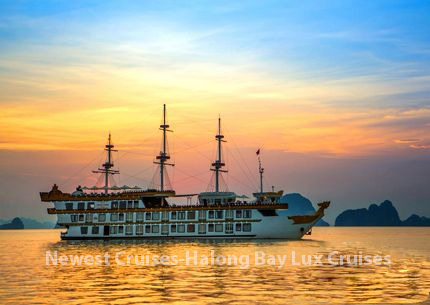
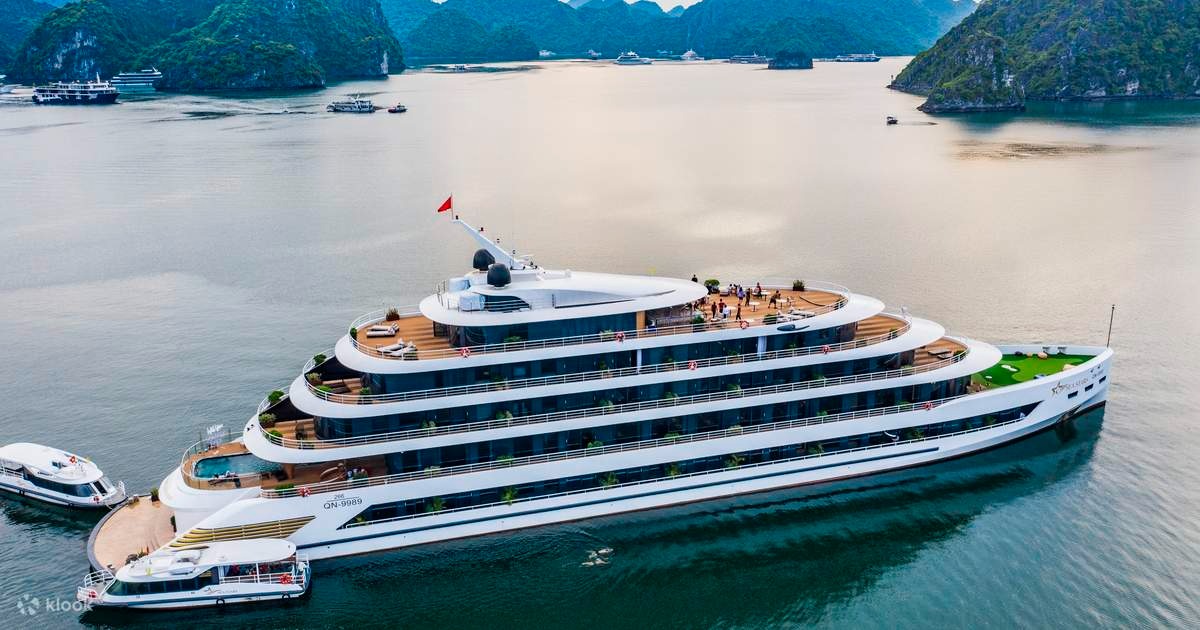
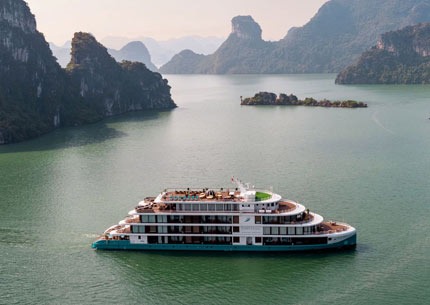
Before planning your journey through this legendary seascape, explore our luxury cruise options designed to immerse you in both natural wonder and cultural heritage.

The Name “Halong” – Birth of the Descending Dragon Legend
The very name “Halong” (Hạ Long in Vietnamese) translates to “descending dragon” – a direct reference to the bay’s central creation myth. According to Vietnamese tradition dating back to the 12th century, the country faced a severe threat from northern invaders attempting to conquer Vietnam by sea.
In Vietnam’s hour of need, the Jade Emperor sent a mother dragon and her children to defend the country. As enemy ships approached, the dragons descended from heaven and spewed not fire, but jade and precious jewels across the waters. These mystical stones transformed into the thousands of islands and islets we see today, creating a defensive maze that shattered the invaders’ ships upon jagged rocks.
Historical linguists note that this name first appeared in official Vietnamese court documents around 1149 CE, though oral traditions likely predate this written record by centuries. The legend beautifully merges Vietnam’s historical struggles against foreign invasion with its mythological worldview, where divine intervention protects the righteous.
Contemporary archaeological research conducted in 2023 by the Vietnam Institute of Archaeology has uncovered remnants of naval battles in the bay dating to various periods of Chinese invasion attempts, suggesting historical events that may have inspired the legendary narrative.
The Dragon’s Descendants and the Origins of the Vietnamese People
The dragon legend of Halong Bay connects directly to Vietnam’s national origin myth – the story of Lạc Long Quân (Dragon Lord) and Âu Cơ (Mountain Fairy). According to this foundational tale, the Vietnamese people are direct descendants of dragons, born from the union of these mythical beings.
The legend tells that Âu Cơ gave birth to a sac containing 100 eggs, which hatched into 100 children. Unable to remain together due to their different natures (one of water, one of mountains), the dragon lord took 50 children to the coast while Âu Cơ raised the remaining 50 in the mountains. This symbolic division explains the Vietnamese people’s connection to both highlands and coastal regions while emphasizing their unified origin.
In 2025, genetic studies by the Vietnam Genome Institute have revealed fascinating connections between this myth and Vietnam’s diverse regional populations, showing distinct genetic markers between highland and lowland communities despite their shared ancestry – a scientific echo of the ancient tale.
The dragon motif remains Vietnam’s most potent cultural symbol, appearing on everything from temple architecture to national emblems. As Dr. Nguyen Van Huy, Director of the Vietnam Museum of Ethnology, explains: “The dragon represents not just power but also benevolence and prosperity – qualities Vietnamese people have long aspired to embody.”
Seven Famous Legends of Halong Bay Every Visitor Should Know
1. The Jade Emperor and the Heavenly Dragon Mother
The primary creation myth of Halong Bay centers on the Jade Emperor’s divine intervention during Vietnam’s time of need. According to local storytellers in Quảng Ninh Province, the mother dragon (known as Mẹ Long) descended at what is now Bãi Cháy Beach – a 2.5-kilometer stretch that has become a pilgrimage site for those seeking to understand the bay’s origins.
Recent cultural preservation efforts have established a Dragon Mother Shrine at this location, completed in late 2024, where visitors can learn about the legend through interactive displays and participate in traditional offerings. The shrine features a 12-meter jade dragon sculpture, symbolizing the original divine protector.
What makes this legend particularly significant is its connection to Vietnamese resilience – the dragon mother represents not just divine protection but the Vietnamese people’s unwavering spirit in the face of invasion throughout their history.
2. The Legend of Bai Tu Long and Lan Ha Bay Sisters
While Halong Bay gets most international attention, it actually forms part of a trinity with its “sister bays” – Bai Tu Long to the northeast and Lan Ha to the southeast. According to legend, these three distinct areas were created by the mother dragon’s children.
“Bai Tu Long” translates to “The dragon children returning,” referring to the young dragons who remained to protect the coast after the invaders were defeated. The islets here are said to be the resting places of these dragon offspring.
Lan Ha Bay, with its 367 islands spread across approximately 7,000 hectares, is named after the most beautiful of the dragon daughters who was said to have extraordinary healing powers. Local fishermen still maintain shrines on several islands where they offer incense to Lan Ha’s spirit before setting out to sea.
Our 3-day luxury cruise through Lan Ha and Halong Bay allows you to experience both these legendary seascapes, with expert guides sharing these ancient tales at each significant location.
3. The Story of Fighting Roosters (Hon Ga Choi)
Among Halong’s most distinctive formations are the Hon Ga Choi islets – two limestone rocks rising approximately 12 meters from the sea that remarkably resemble roosters locked in combat. Located in the Dau Go area of the bay, these formations have inspired one of Halong’s most beloved legends.
According to local folklore, two roosters fell in love with the same beautiful hen. After years of fighting for her affection, they became so weary they turned to stone, forever frozen in their eternal battle. Fishermen considered this site auspicious, believing that witnessing the “roosters” at sunrise would bring good fortune.
Marine geologists from Hanoi University of Mining and Geology have determined these formations are approximately 250-300 million years old, formed through limestone erosion – yet the uncanny resemblance to fighting roosters continues to defy purely scientific explanation.
Travelers in 2025 can view these formations illuminated by state-of-the-art lighting during evening cruises, highlighting their distinctive silhouettes against the night sky.
4. The Tale of the Virgin Cave (Hang Trinh Nu)
Perhaps the most poignant of Halong’s legends is the story of Hang Trinh Nu (Virgin Cave), located on Bồ Hòn Island approximately 15 kilometers south of the tourist harbor. This limestone cave, measuring about 700 meters in length, contains a rock formation resembling a young woman with flowing hair.
The legend tells of a beautiful fisherman’s daughter who was forced to marry a wealthy mandarin. Rather than submit, she fled to this cave where she turned to stone while awaiting her true love – a poor fisherman sent to a distant sea by the jealous mandarin.
When her lover finally returned and discovered her fate, he too turned to stone in a nearby cave now called Hang Trống (Male Cave), located just 700 meters away. Together, they remain forever separated yet eternally connected through their enduring love.
This cave has become especially popular for couples, with many proposing marriage at this site. In 2025, the Quảng Ninh Tourism Department has introduced a special “Eternal Love” visitation package that includes traditional blessing ceremonies inside the cave.
5. Dau Go Cave and General Tran Hung Dao’s Secret
Dau Go Cave (Wooden Stakes Cave) connects myth with authenticated Vietnamese history. This massive grotto, spanning 5,000 square meters with ceilings reaching 25 meters high, played a crucial role in one of Vietnam’s greatest military victories.
According to historical records and local legend, the great General Trần Hưng Đạo used this cave in 1288 CE to prepare hardened wooden stakes to be planted in the Bach Dang River. When the Mongol fleet pursued Vietnamese forces during high tide, they were impaled on these hidden underwater defenses as the tide receded – a brilliant strategy that secured Vietnamese independence.
Archaeologists from the Vietnam Institute of Archaeology have recovered carbonized wooden stakes from the riverbed dating to this period, confirming aspects of this legend. Inside Dau Go Cave, visitors can now view a detailed diorama depicting this historic battle alongside recovered artifacts.
The cave’s three chambers feature spectacular stalactite formations that locals believe represent the spirits of Vietnamese soldiers still standing guard over their homeland.
6. The Legend of Me Cung Cave (Maze Cave)
Me Cung Cave on Lom Bo Island earns its name (“Bewitching Cave”) from its complex network of chambers and passages that form a natural labyrinth. According to local legend, this cave served as the playground for the youngest dragon children, who created its disorienting tunnels to confuse and trap evil spirits.
Archaeological discoveries have added another layer to this mystical site – excavations in 2023 uncovered 7,000-year-old human remains and tools from the Hạ Long Culture period, making it one of the oldest confirmed human settlements in Northern Vietnam.
Legend holds that those with pure hearts can navigate the cave’s confusing passages without difficulty, while those harboring ill intentions become hopelessly lost. Modern cave guides share that before the installation of lighting in 2022, visitors would sometimes experience disorientation even on marked paths – a phenomenon attributed to the lingering magic of the dragon children.
The cave’s main chamber opens to a hidden lagoon surrounded by stone walls, creating a perfectly enclosed ecosystem that locals call “the dragon’s hidden garden.”
7. The Thien Cung Cave Dragon Palace
Thien Cung (Heavenly Palace) Cave ranks among Halong’s most spectacular grottos, with its 10,000 square meters of chambers adorned with spectacular formations. According to legend, this magnificent cave served as the royal palace for the Dragon King who fell in love with a human maiden.
Their elaborate wedding ceremony, attended by creatures from across the land and sea, is said to be depicted in the cave’s natural rock formations. With minimal imagination, visitors can discern figures of dragons, phoenixes, and celebrants eternally preserved in stone.
When the couple returned to the Dragon King’s underwater kingdom, they left this palace frozen in time as a testament to their love. Fishermen report that during certain moon phases, ethereal music can be heard emanating from the cave – believed to be echoes of the eternal celebration.
In 2025, the cave features an enhanced lighting system that illuminates different formations in sequence, creating a storytelling experience for visitors. Advanced audio installations now recreate the legendary music and wedding sounds at specific times daily.
Historical Context – Halong Bay Through the Ages
Halong Bay in Ancient Times
While legends provide spiritual context, archaeological evidence confirms Halong Bay’s importance to human civilization for millennia. The bay’s earliest confirmed inhabitants belonged to the Soi Nhu culture (approximately 18,000-7,000 BCE), who left behind stone tools and shell middens in caves throughout the region.
These prehistoric inhabitants adapted perfectly to the marine environment, developing sophisticated fishing techniques and boat-building skills that allowed them to thrive among the limestone karsts. Excavations at Tuan Chau Island in 2024 uncovered remarkably preserved wooden boat fragments carbon-dated to approximately 8,000 years ago.
The subsequent Cai Beo culture (7,000-5,000 BCE) established more permanent settlements and created distinctive stone tools and pottery, examples of which are displayed at the Quang Ninh Museum in Ha Long City. These artifacts demonstrate a sophisticated understanding of the marine environment and resource management.
By the Halong Culture period (3,500-1,500 BCE), complex communities had developed throughout the bay, with evidence of trade networks extending to what is now southern China and other parts of Southeast Asia. The discovery of bronze implements suggests these early inhabitants had mastered metallurgy and maintained sophisticated social structures.
Halong in Chinese Chronicles
Halong Bay appears in Chinese historical documents dating back to the Han Dynasty (206 BCE-220 CE), where it is described as “the place where dragons dive into the sea.” Chinese admirals navigating the Gulf of Tonkin documented the bay’s treacherous waters and distinctive limestone formations.
The Tang Dynasty chronicle Jiu Tang Shu (completed 945 CE) contains detailed descriptions of the “maze of stone mountains rising from the sea” encountered by Chinese naval expeditions. These accounts often blend observation with fantastical elements, describing sea monsters and dragon sightings that reinforced the region’s mystical reputation.
During the Ming Dynasty (1368-1644 CE), Chinese geographers produced more scientifically accurate maps of the region, though these still incorporated references to the “dragon teeth stones” and “gateway to the underworld” – demonstrating how deeply mythology had become entwined with geographical understanding.
These historical records provide invaluable insights into how Halong Bay was perceived by neighboring civilizations and confirm its long-standing reputation as a place of mystery and spiritual significance.
Archaeological Discoveries and Evidence of Early Life
Modern archaeological work has identified over 30 significant sites across Halong Bay and its surrounding islands. The most notable include:
- Tien Ong Cave: Excavations completed in 2023 uncovered human remains dating back approximately 10,000 years, along with sophisticated tools suggesting early ritualistic practices.
- Ngoc Vung Island: A major excavation in 2024 revealed a workshop for stone tool production dating to the Neolithic period, with over 2,500 artifacts recovered.
- Cua Van Floating Village: Underwater archaeology beneath this ancient floating community has yielded ceramics from the Ly Dynasty (1009-1225 CE), confirming the antiquity of floating settlements in the bay.
Perhaps most fascinating is the Dao Go Cave archaeological complex, where distinct cultural layers document continuous human habitation from approximately 7,500 BCE through the medieval period. The discovery of Chinese coins, Vietnamese ceramics, and Japanese trading goods demonstrates Halong’s importance as a maritime crossroads for centuries.
In 2025, visitors can explore the newly opened Halong Archaeological Center on Tuan Chau Island, featuring over 8,000 artifacts and interactive displays explaining the bay’s human history alongside its geological formation.
Cultural Significance of Halong Bay’s Legends in Modern Vietnam
Influence on Art, Folklore, and Vietnamese Festivals
The dragon motif inspired by Halong’s legends permeates virtually every aspect of Vietnamese cultural expression. From the imperial dragon robes of the Nguyen Dynasty to contemporary art installations at the Hanoi Museum of Fine Arts, this powerful symbol represents Vietnam’s spiritual connection to its mythical protectors.
In traditional Vietnamese water puppet performances (Múa rối nước), the Halong Bay creation story features prominently, with puppets depicting the mother dragon and her children emerging from beneath the water’s surface to defend Vietnam. These performances, dating back to the 10th century, continue to captivate audiences with updated 2025 productions incorporating modern lighting and sound effects while preserving traditional puppet-making techniques.
The annual Halong Carnival, scheduled for April 30-May 2, 2025, has expanded to include a spectacular “Dragon Descent” ceremony where performers on illuminated boats reenact the legendary arrival of the celestial dragons. Drawing over 120,000 spectators in 2024, this festival has become Vietnam’s largest celebration of marine mythology.
Contemporary Vietnamese musicians like Trần Mạnh Hùng have composed symphonic works inspired by Halong’s legends, including his 2024 “Dragon’s Breath Symphony” performed by the Vietnam National Symphony Orchestra, which incorporates traditional instruments and natural sounds recorded within Halong’s caves.
Halong Legends in Local Tourism and Education
Since 2021, Vietnam’s Ministry of Education has incorporated Halong Bay mythology into the national curriculum, ensuring all Vietnamese students understand these foundational cultural narratives. The latest 2025 textbooks include augmented reality elements that bring these legends to life through smartphone applications.
Tour guides throughout Halong Bay must now complete a 68-hour certification program in cultural interpretation, ensuring accurate and consistent storytelling about the bay’s legends. This initiative, launched by the Vietnam National Administration of Tourism, has standardized the cultural experience while preserving regional storytelling variations.
The recently completed Quang Ninh Cultural Heritage Center features a 360-degree immersive theater where visitors can experience “Dragon Vision” – a multi-sensory presentation of Halong’s creation myth combining projection mapping, scent technology, and environmental effects.
Most innovative is the 2025 introduction of “Legend Mapping” – an augmented reality experience available on our luxury cruises that superimposes animated legends over the actual landscape when viewed through special viewers or smartphone applications. This technology transforms passive sightseeing into interactive storytelling, bringing ancient myths into the digital age.
How to Experience the History and Legends of Halong Bay
Cruise Tours with Historical Storytelling and Guides
The most immersive way to experience Halong Bay’s legendary landscape is through specialized cruise experiences focusing on cultural heritage. Leading the way in historical interpretation is our Halong Bay Lux Cruises fleet, which has partnered with the Vietnam Institute of Culture and Arts to develop exclusive narrative journeys.
Our flagship “Dragon’s Tale” cruise program features onboard cultural specialists who provide contextual storytelling at each significant location. Unlike standard tours that merely point out geological features, these experts weave together archaeology, history, and mythology to create a rich tapestry of understanding.
The newly launched “Legends After Dark” evening program utilizes cutting-edge projection technology to animate cliff faces with scenes from Halong’s mythology. These nighttime excursions, available on our 2-day luxury cruises, transform the natural landscape into an immersive storytelling canvas under the stars.
For travelers seeking deeper engagement, the “Scholar’s Journey” package includes onboard lectures by professors from Vietnam National University’s Department of Cultural Studies, offering academic perspectives on Halong’s legends and their anthropological significance.
Best Caves, Islands, and Stops with Legendary Ties
To fully appreciate Halong Bay’s legendary dimensions, these key locations should be included in your 2025 itinerary:
- Sung Sot Cave (Surprise Cave): This massive 10,000-square-meter cavern on Bo Hon Island features three chambers with formations said to represent the Dragon King’s throne room. New lighting installed in 2025 highlights the “royal court” formations.
- Titop Island: Named after Russian cosmonaut Gherman Titov, this island offers a 360-degree panorama from its 220-meter summit. Local guides share how this was supposedly the first place the mother dragon touched down, with the distinctive beach formed by her tail.
- Cua Van Floating Village: One of the bay’s last authentic floating communities, dating back approximately 700 years. Village elders maintain oral histories connecting their community to the “dragon children” who taught humans to live harmoniously with the sea.
- Me Cung Cave Archaeological Site: Beyond its mythological significance, the newly expanded archaeological excavation (opened to visitors in late 2024) offers a glimpse into prehistoric life in the bay, with careful preservation of 7,000-year-old cultural artifacts.
- Tuan Chau Island Dragon Performance: This spectacular water-based show combines traditional Vietnamese performance with modern technology to recreate the dragon’s descent. The 90-minute evening performance uses 200 performers and elaborate pyrotechnics.
Local Museums and Cultural Sites to Visit
Complement your on-water experience with these essential cultural institutions:
- Quang Ninh Museum: This architectural marvel in Ha Long City houses over 5,000 artifacts related to Halong’s cultural and natural history. The dedicated “Dragon Gallery” traces the evolution of dragon imagery in Vietnamese culture through centuries of art and artifacts.
- Bai Tho Mountain Viewpoint: This 106-meter limestone outcrop in Ha Long City features ancient poems carved into the rock face, including works by Emperor Lê Thánh Tông from 1468. The poems describe the magical qualities of the bay and reference its dragon origins.
- Yen Tu Mountain Complex: Located 40km from Halong Bay, this sacred Buddhist site connects to the bay’s spiritual landscape. According to legend, the mountain was where the dragon children would rest after protecting the coastline. The 13th-century monastery preserves ancient scrolls referencing the bay’s creation myths.
- Cai Bau Pagoda: Recently restored in 2024, this ancient temple on Cai Bau Island contains Vietnam’s oldest known artistic depiction of the Halong creation myth, a stone relief dating to approximately 1680.
- Halong Cultural Heritage Center: Opened in January 2025, this state-of-the-art facility uses interactive technology to bring legends to life. The centerpiece is a massive 3D topographical model of the bay that illuminates different islands while narrating their associated stories.
Final Thoughts – Tying the Past with Present Serenity
As you glide between the limestone sentinels of Halong Bay aboard our luxury vessels, you’re experiencing more than just natural splendor – you’re sailing through living mythology. Each island, each cave, each ripple in the emerald waters carries echoes of dragons, heroes, and ancient peoples who have shaped this remarkable seascape physically and spiritually.
The power of Halong Bay lies precisely in this seamless blending of natural wonder and cultural significance. The limestone formations aren’t merely geological curiosities; they’re manifestations of divine protection. The caves aren’t simply erosive features; they’re ancient shelters where human civilization took root thousands of years ago.
In 2025, as Vietnam carefully balances tourism development with cultural preservation, Halong Bay stands as a model for how ancient legends can be honored while embracing modern interpretations. The introduction of digital storytelling, archaeological discovery, and immersive experiences has revitalized these ancient narratives for contemporary travelers.
Whether you’re captivated by archaeological evidence of ancient civilizations or enchanted by tales of celestial dragons, Halong Bay offers a multi-dimensional journey through time and mythology. The bay’s enduring legends remind us that landscapes are not merely physical places but cultural canvases where human imagination, spiritual belief, and natural beauty converge.
As the Vietnamese proverb states: “The mountains will wear away, the rivers will run dry, but the stories of our ancestors remain eternal.” Nowhere is this more evident than in the mystical waters of Halong Bay.
Frequently Asked Questions (FAQs)
-
What scientific evidence supports the historical aspects of Halong Bay’s legends?
Archaeological excavations have uncovered human settlements dating back approximately 18,000 years, confirming long-term human presence in the bay. The discovery of wooden stakes in the Bach Dang River provides physical evidence supporting the legend of General Tran Hung Dao’s naval victory. While dragons remain mythological, these findings confirm the historical contexts in which many legends developed.
-
When is the best time to visit Halong Bay for cultural experiences in 2025?
April-May coincides with the Halong Carnival (April 30-May 2, 2025), featuring dragon boat races and cultural performances. October-November offers ideal weather conditions and the Mid-Autumn Festival celebrations. December features the Ha Long Winter Carnival with spectacular light installations based on the bay’s legends.
-
Are any of Halong’s legendary sites restricted to visitors?
Most major sites are accessible, though some archaeologically significant caves have limited daily visitor quotas to preserve sensitive remains. The newly discovered “Dragon’s Footprint” site on Cong Do island requires special permits as excavation continues through 2025.
-
How do local fishermen incorporate these legends into their daily lives?
Many traditional fishing families maintain small shrines aboard their vessels dedicated to the Dragon Mother and perform rituals before major fishing expeditions. Some communities observe fishing restrictions around certain islands believed to be dragon resting places, particularly during lunar festivals.
-
Are there accommodations themed around Halong’s legends?
Yes, several luxury properties have embraced mythological themes. Our Halong Bay Lux Cruises feature cabins named after legendary figures and locations, with artwork depicting scenes from the bay’s mythology. The newly opened Dragon’s Descent Resort on Tuan Chau Island incorporates architectural elements resembling dragon scales and tails.
-
How have Halong Bay legends influenced Vietnamese cuisine?
Several traditional dishes reference the bay’s mythology, including Chả Mực (squid cake) said to be the favorite food of the dragon children, and Gỏi Ngọc Thạch (jade salad) representing the jewels spat by the dragons. Our 3-day cruise package includes special “Legends Dining” experiences featuring these mythologically-inspired dishes.
-
Are there any legends specifically about the limestone caves?
Each major cave system has associated myths. Beyond those already mentioned, lesser-known legends include the Cave of Whispers (Hang Tham Tham) where the dragon mother supposedly taught human children the Vietnamese language, and the Golden Heart Cave (Hang Tim Vang) believed to contain a hidden chamber with the dragon’s treasures.
Book your luxury Halong Bay experience
Contact Halong Bay Lux Cruises now via Hotline | WhatsApp: +84.978.358.422 for pricing and special offers!
Thousands of travelers from Europe, UK, USA, and Australia have rated us 5-stars for our exceptional service and unforgettable Halong Bay luxury experience.
- Hotline | WhatsApp: +84.978.358.422
- Phone | WhatsApp: +84.962.261.687
- Email: halongbayluxcruises@gmail.com or vietnammarveltravel@gmail.com
- Website: halongbayluxcruises.com
- Reviews: Top Halong Bay Cruise Reviews on TripAdvisor
- Fanpage: https://www.facebook.com/halongbayluxcruises