
15 Spectacular Halong Bay Caves You Must Visit in 2026-2027: Complete Explorer’s Guide
Venture into Vietnam’s geological masterpieces as we unveil the 15 most breathtaking Halong Bay caves for your 2026-2027 adventure. From the magnificent 10,000-square-meter Sung Sot Cave to hidden gems only accessible by kayak, discover prehistoric formations, legendary tales, and natural wonders that have captivated travelers for centuries. This comprehensive guide provides everything you need to plan an unforgettable underground journey through Vietnam’s most treasured UNESCO World Heritage Site.
The Geological Wonders of Halong Bay: Nature’s Underground Masterpieces
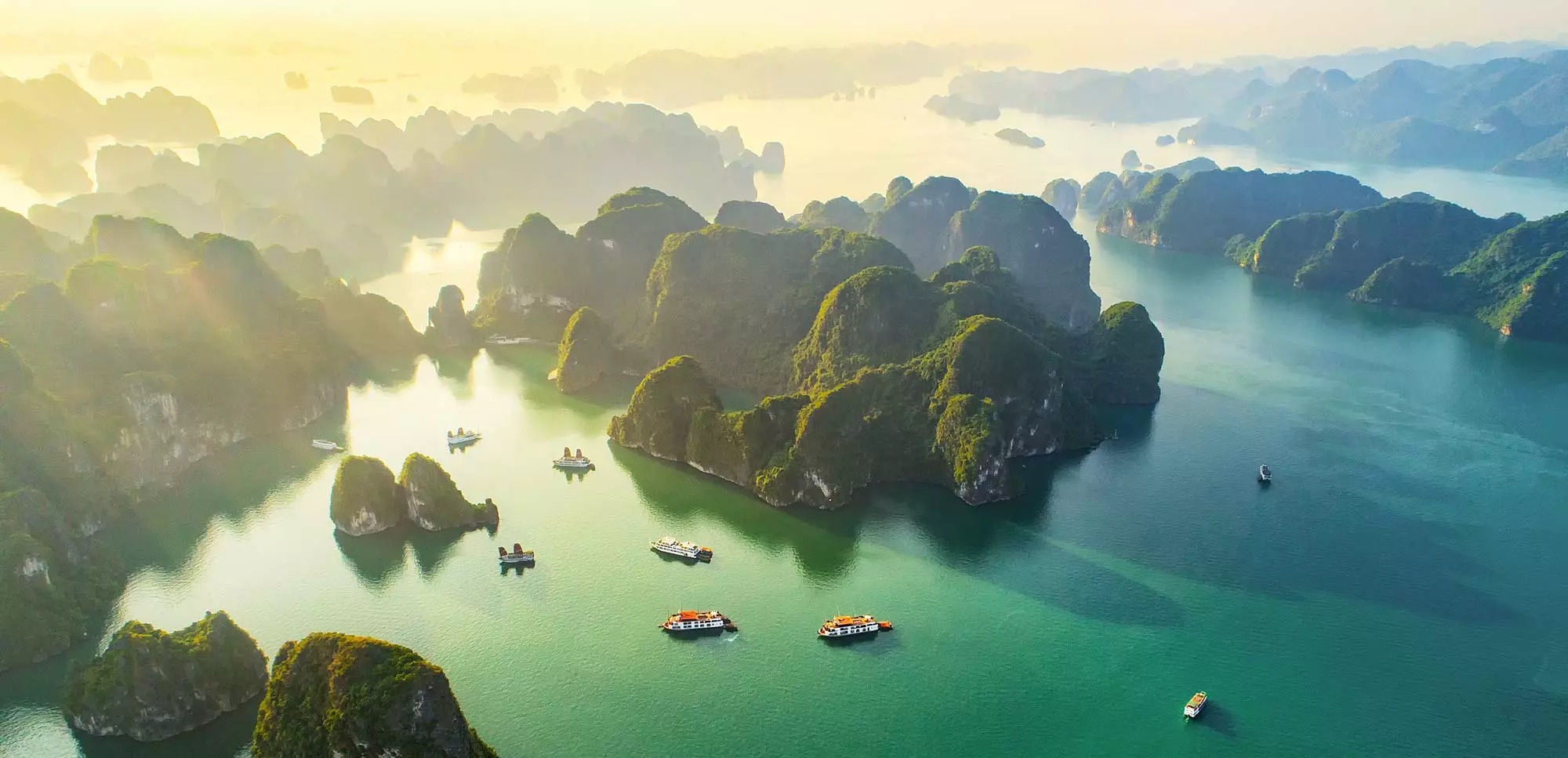
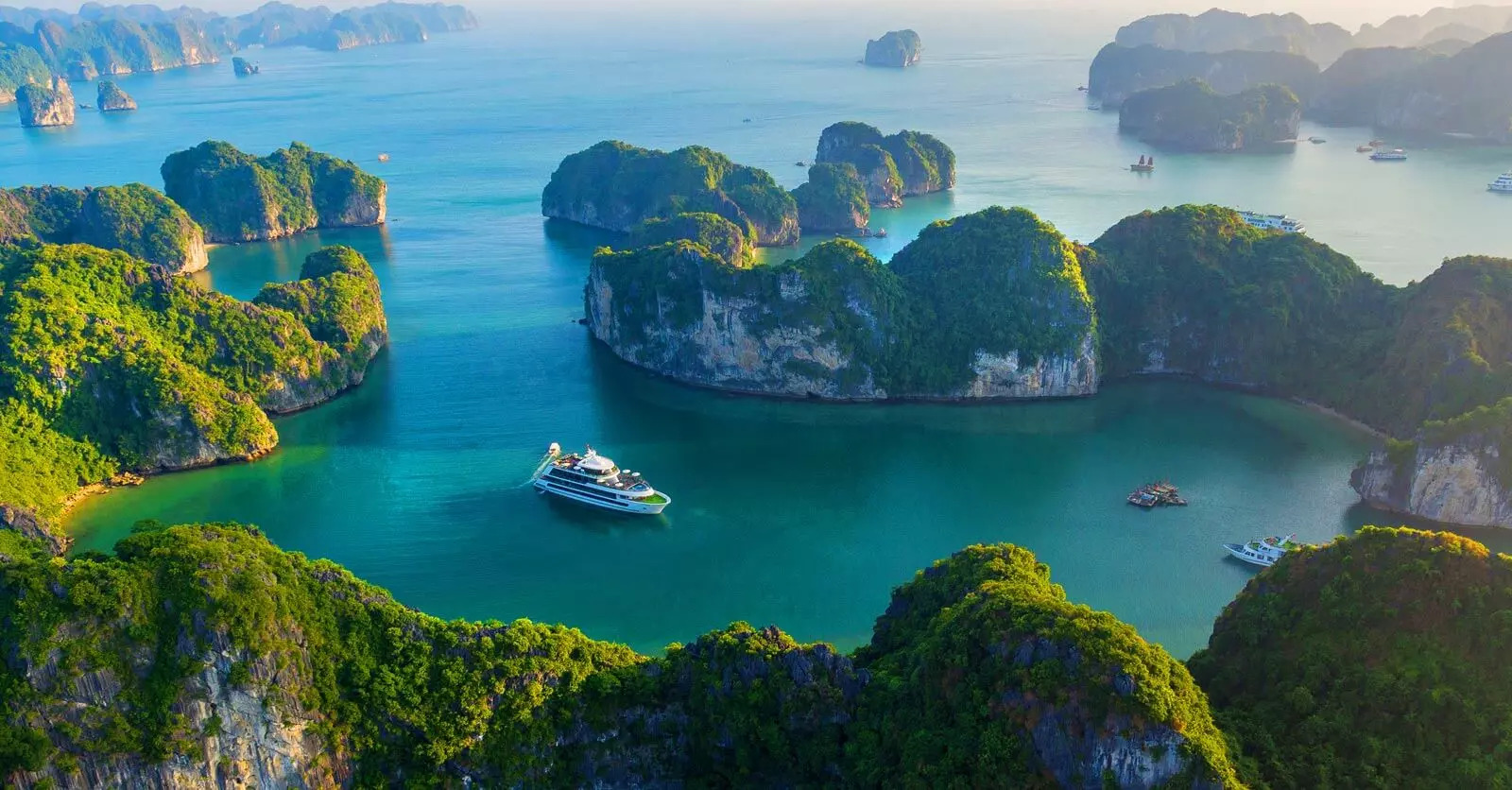
Halong Bay’s landscape is defined by approximately 1,969 limestone islands and islets, many of which conceal spectacular cave systems formed over 500 million years. These natural caverns represent some of Vietnam’s most precious geological heritage, offering visitors a glimpse into Earth’s ancient past through stunning stalactite and stalagmite formations.
According to recent geological surveys completed in 2025, Halong Bay houses over 59 documented caves, but only a select few are accessible to tourists. The caves highlight a remarkable karst evolution process, where acidic rainwater slowly dissolved limestone over millions of years, creating hollow chambers adorned with otherworldly formations.
For travelers planning their 2026 Halong Bay adventure, these underground palaces provide a perfect balance to the bay’s famous seascape. Let’s explore the most magnificent caves you shouldn’t miss during your visit.

1. Sung Sot Cave (Surprise Cave) – The Bay’s Magnificent Crown Jewel
Extraordinary Scale and Features
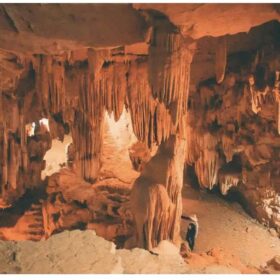
Discovered by French explorers in 1901, Sung Sot Cave spans an impressive 10,000 square meters across two massive chambers. Located on Bo Hon Island, this cave features ceilings soaring up to 30 meters high, creating a natural cathedral that leaves visitors in awe—hence its apt name, “Surprise Cave.”
The entrance requires climbing 50 stone steps, but the effort is immediately rewarded. The first chamber spans approximately 5,000 square meters, functioning as a grand “waiting room” with smooth floors and natural light filtering through cracks in the ceiling.
The second chamber—even more spectacular—showcases a “royal garden” of stone formations, including what locals call the “royal throne” and a formation resembling a general commanding his troops. Scientists have confirmed these structures took over 100 million years to form.
Visitor Experience and Photography Opportunities
According to 2024 visitor surveys, Sung Sot Cave ranks as the most photographed location in Halong Bay, with professional-quality illumination installed in 2023 highlighting the intricate formations. Designated photography platforms were added in early 2024, providing optimal angles for capturing the cave’s majesty.
Best time to visit: Early morning (before 9 AM) or late afternoon (after 3 PM) to avoid peak crowds of 500-700 daily visitors.
Photography tip: The “royal garden” area offers the most dramatic lighting between 10-11 AM when sunlight penetrates through ceiling apertures.
2. Thien Cung Cave (Heavenly Palace) – Where Legends Come Alive
Mythological Significance and Formations
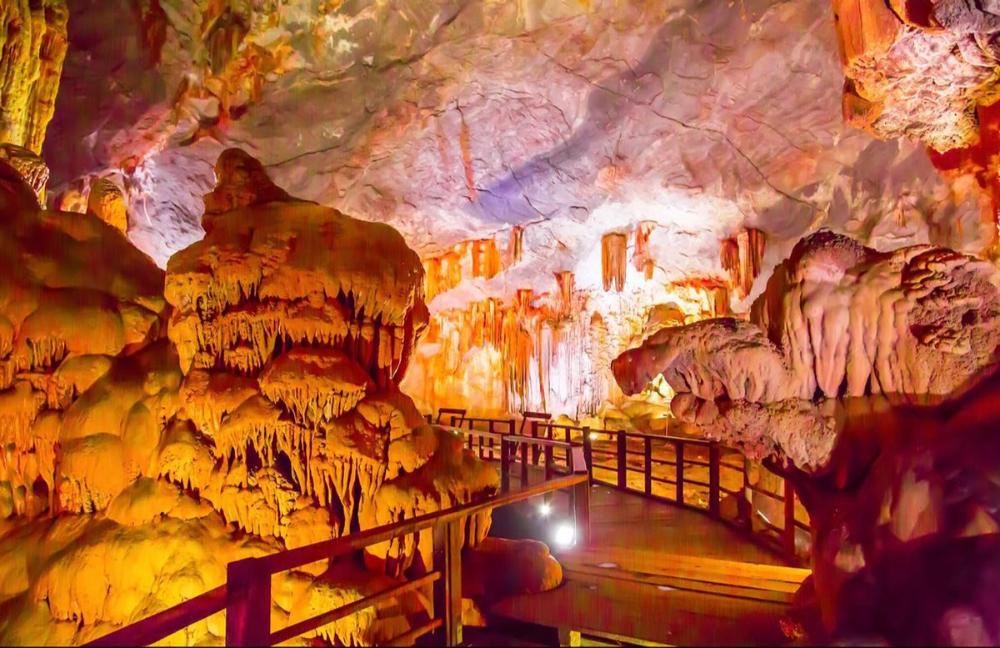
Thien Cung Cave, spanning 130 meters in length with its highest point reaching 20 meters, ranks among Vietnam’s most culturally significant cave systems. Located on Dau Go Island, just 4 kilometers from the tourist wharf, this “Heavenly Palace” earns its name from the celestial beauty of its interior.
What distinguishes Thien Cung is its connection to Vietnamese folklore. According to legend, this was where the Dragon King celebrated his wedding, and many rock formations seem to depict this mythical celebration. The most famous formation, “The Dragon King’s Throne,” stands 6 meters tall and is surrounded by what appear to be stone courtiers frozen in time.
Enhanced Visitor Experience
Following a 2023 renovation, Thien Cung now features a 250-meter elevated walkway system that guides visitors through four distinct chambers, each representing different elements of the Dragon King’s story. Multi-colored LED lighting installed in 2024 accentuates the cave’s natural beauty while protecting the formations from heat damage.
The cave now includes interactive information panels with QR codes linking to audio guides in 12 languages, providing detailed explanations of both geological features and associated legends.
Best photography spot: The “Crystal Palace” section near the northern exit offers spectacular views of formations resembling dragons in flight, illuminated by emerald and azure lighting.
Planning a multi-day expedition? The 3-day luxury cruise experience allows adequate time to fully appreciate these magnificent caves at a relaxed pace.
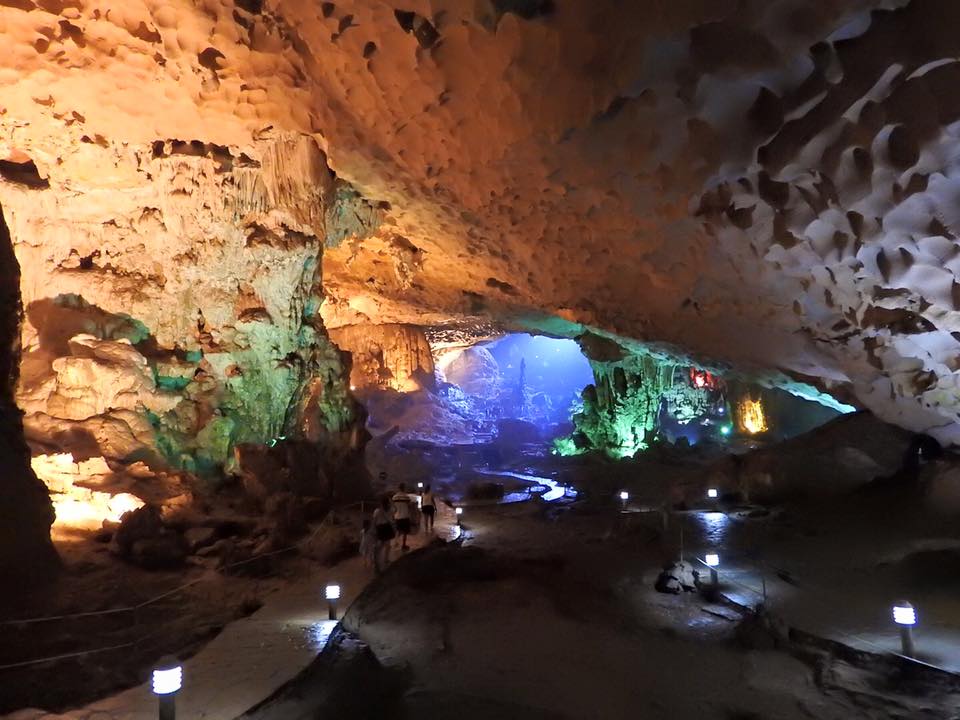
3. Dau Go Cave (Wooden Stakes Cave) – A Cavern Steeped in Vietnamese History
Historical Significance and Layout
Dau Go Cave derives its name from a pivotal moment in Vietnamese history—when General Tran Hung Dao used the cave to store wooden stakes (Dau Go) that would later be used to impale Kublai Khan’s Mongol fleet in 1288. This national pride point attracts history enthusiasts year-round.
Perched 27 meters above sea level on Dau Go Island, the cave extends approximately 500 meters into the limestone. Recent archaeological excavations completed in 2024 discovered remnants of ancient tools dating back to 3500 BCE, suggesting human use long before the famous battle.
The cave features three connected chambers spanning a total area of 5,000 square meters. The entrance, measuring 12 meters wide and 17 meters high, provides dramatic sea views before visitors enter the mysterious interior.
Natural Formations and Atmosphere
Inside Dau Go Cave, visitors encounter hundreds of stalactites hanging like stone chandeliers from heights of up to 20 meters. The central chamber, often called the “Cathedral Hall,” measures approximately 1,000 square meters with ceiling heights reaching 25 meters—large enough to accommodate 100 people comfortably.
The cave maintains a constant temperature of 18-22°C year-round, with humidity levels between 85-90%. This climate has created perfect conditions for the formation of delicate crystalline structures that resemble marine life, particularly in the third chamber where formations look remarkably like shrimp, fish, and octopi.
Unique feature: The “Stone Waterfall,” a 15-meter-wide calcite formation cascading down the eastern wall, appears to flow when illuminated by the cave’s strategic lighting.
Historical tour option: Specialized guides offer 45-minute historical tours focusing on General Tran Hung Dao’s military strategy and the archaeological significance of the cave for an additional 150,000 VND.
4. Bo Nau Cave (Pelican Cave) – Nature’s Perfect Ocean Viewpoint
Natural Features and Wildlife
Bo Nau Cave, while modest in size at approximately 200 square meters, offers one of Halong Bay’s most spectacular viewpoints. Named after the pelicans (Bo Nau in Vietnamese) that historically nested here, the cave’s wide entrance faces directly toward the bay, creating a natural frame for the seascape beyond.
The cave’s location on Bo Hon Island places it 2.5 kilometers from the main tourist port, making it accessible yet often less crowded than larger caverns. Recent wildlife surveys conducted in 2024 documented 27 bird species still using the cave entrance and surrounding areas as resting points during migration.
Photography and Atmospheric Elements
What makes Bo Nau unique is its perfect natural lighting. The 25-meter-wide entrance allows sunlight to penetrate deep inside, highlighting honey-colored limestone walls adorned with wave-like patterns formed by ancient sea levels.
The cave floor rises gradually from sea level to 15 meters above the water, creating natural terraces that serve as perfect viewpoints. From the highest accessible point, visitors enjoy a 180-degree panorama of Halong Bay’s emerald waters and limestone karsts.
Best time to visit: Late afternoon (4-5 PM) when the lowering sun bathes the cave entrance in golden light, creating optimal conditions for silhouette photography.
Visitor tip: The cave features a natural echo chamber where sounds reverberate up to 7 times—a popular spot for guides to demonstrate the acoustic properties of the limestone.
5. Trinh Nu Cave (Virgin Cave) – A Tragic Love Story Frozen in Stone
Legendary Tale and Atmospheric Setting
Trinh Nu Cave embodies one of Vietnam’s most poignant love legends, making it a must-visit for romantic travelers. According to local folklore, a beautiful fisherman’s daughter was forced to marry a wealthy mandarin. Refusing this arrangement, she fled to this cave and eventually turned to stone while waiting for her true love to rescue her.
The cave spans approximately 700 square meters, with a ceiling height of 15 meters at its tallest point. What makes Trinh Nu truly special is a remarkable rock formation resembling a young woman with flowing hair, which locals believe is the petrified maiden herself. This formation, standing 4.5 meters tall, appears to face toward Trong Cave across the water, where her lover reportedly also turned to stone.
Enhanced Experience for Couples
Recognizing the romantic significance of this site, Halong Bay authorities established a special “Lovers’ Lantern” ceremony in 2023. For an additional fee (350,000 VND), couples can float traditional paper lanterns from the cave entrance at sunset while a local guide recites the full love legend in Vietnamese and English.
The cave’s entrance chamber features newly installed seating areas where visitors can contemplate the bay view. The inner chamber, where the maiden formation stands, maintains minimal artificial lighting to preserve the contemplative atmosphere.
Romantic highlight: A heart-shaped opening in the cave ceiling allows a shaft of natural light to illuminate the maiden formation for approximately 20 minutes each day (between 1-2 PM during summer months).
Photography tip: The contrast between the dark cave interior and the bright bay outside creates challenging but rewarding photography conditions. Guides recommend using HDR settings for best results.
Combine this romantic cave with other spectacular locations on a 2-day Halong and Lan Ha Bay luxury cruise for the perfect romantic getaway.
6. Trong Cave (Male Cave) – The Other Half of Halong’s Epic Love Story
Complementary Legend and Features
Situated directly across from Trinh Nu Cave on Hang Trai Island, Trong Cave (meaning “Male Cave”) completes Halong Bay’s famous love story. According to legend, when the young fisherman learned his beloved had been forced to marry a mandarin, he searched for her tirelessly before taking shelter in this cave during a storm. Hearing his lover’s cries from across the water but unable to reach her, he too turned to stone while calling out to her.
The cave measures approximately 300 square meters with a distinctive bell-shaped chamber. Its most remarkable feature is a 3-meter-tall rock formation resembling a man with his hand cupped around his mouth, positioned to face directly toward Trinh Nu Cave 800 meters across the water.
Acoustic Phenomena and Experience
What makes Trong Cave truly special is its unique acoustic properties. When the wind passes through specific narrow passages, it creates sounds resembling human calls or cries. Local guides have identified three specific locations within the cave where this phenomenon is most pronounced, especially during the winter months when northeastern winds prevail.
A newly constructed viewing platform (completed in December 2024) at the cave entrance offers perfect views of both the bay and Trinh Nu Cave, allowing visitors to visualize the tragic separation of the lovers.
Visitor experience: Unlike most Halong Bay caves that feature colored lighting, Trong Cave is illuminated only by soft, natural-colored lights that preserve its solemn atmosphere. Photography inside requires specialized equipment due to the low light conditions.
Cultural note: Local tradition suggests that couples who visit both caves on the same day will enjoy lasting devotion. Approximately 30% of cruise itineraries now include both caves specifically for this romantic significance.
7. Me Cung Cave (Maze Cave) – An Archaeological Wonder and Prehistoric Time Capsule
Ancient Human Habitation and Labyrinthine Structure
Me Cung Cave, located on Lom Bo Island, stands out for its extraordinary archaeological value and complex structure. Archaeological excavations between 2022-2024 uncovered evidence of human habitation dating back approximately 10,000 years, including stone tools, food processing implements, and fossilized remains of ancient meals.
True to its name (“Maze Cave”), Me Cung features an intricate network of narrow passages and chambers spanning approximately 400 meters in total length. Unlike the grand, open spaces of Sung Sot or Thien Cung, Me Cung’s passages rarely exceed 2 meters in width and 3 meters in height, creating an intimate exploration experience.
Hidden Lake and Biodiversity
What truly distinguishes Me Cung is its hidden lake—a 1,000-square-meter freshwater body completely enclosed by limestone walls reaching 30 meters high. Scientists have identified 12 unique fish species in this isolated ecosystem, including two found nowhere else in the world.
The lake maintains a constant temperature of 22-24°C year-round and features remarkable clarity, with visibility extending to 7-8 meters in depth. Recent studies completed in 2024 suggest the lake formed approximately 8,000 years ago when sea levels changed, trapping a portion of the bay that gradually transitioned to freshwater.
Archaeological highlight: A dedicated exhibition space at the cave entrance displays replicas of artifacts discovered here, including a remarkably preserved fishing net dating back 7,500 years.
Exploration note: Due to its narrow passages and archaeological importance, Me Cung limits daily visitors to 200, with tours operating on a strict schedule. Advanced booking through Halong Bay Lux Cruises is recommended to secure your spot.
8. Tien Ong Cave – Where Science Meets Legend
Archaeological Significance and Recent Discoveries
Tien Ong Cave has emerged as one of Halong Bay’s most scientifically valuable sites following extensive archaeological excavations completed in 2024. Covering approximately 1,000 square meters with a wide entrance measuring 50 meters across, this cave on Tien Ong Island has yielded remarkable discoveries.
Archaeologists have uncovered evidence of three distinct prehistoric cultures occupying the cave between 10,000-4,000 years ago. The findings include a complete human skeleton carbon-dated to approximately 8,500 BCE, making it one of the oldest human remains discovered in northern Vietnam.
The cave also contains exceptionally well-preserved middens (ancient trash heaps) that provide insights into prehistoric diets, with evidence showing consumption of 25 different shellfish species, various fish, and both terrestrial and marine mammals.
Cultural and Mythological Elements
According to local tradition, Tien Ong (meaning “Fairy Old Man”) was named after a hermit who lived in the cave and was believed to possess magical powers. The cave’s central chamber, measuring 40 meters across with a domed ceiling reaching 15 meters high, features a distinctive rock formation resembling a seated elderly man that locals associate with this legendary figure.
The cave’s exceptional acoustics—where sounds reverberate for up to 8 seconds—contributed to its spiritual significance. Until the mid-20th century, local fishermen would visit the cave before embarking on long fishing expeditions to seek blessings.
Scientific value: Temperature-controlled display cases installed in 2024 showcase actual artifacts discovered in the cave, including bone fishhooks, ceramic fragments, and stone tools, making this the only on-site archaeological exhibition in Halong Bay.
Visitor experience: Unlike most commercial caves, Tien Ong maintains minimal artificial lighting to preserve its archaeological integrity. Visitors are provided with individual LED lanterns to explore the cave’s features while minimizing environmental impact.
9. Luon Cave – The Ultimate Kayaking Adventure Through Nature’s Gateway
Unique Access and Landscape
Luon Cave offers perhaps the most distinctive experience among Halong Bay’s caves, functioning as a natural limestone tunnel connecting the open bay to a hidden lagoon. Unlike walk-in caves, visitors must navigate this 100-meter-long, 2-4 meter-wide passage by kayak or traditional Vietnamese bamboo boat (sampan).
The cave’s ceiling varies between 2.5-4 meters above water level, depending on tides, with spectacular stalactites descending from above. The tunnel itself was formed approximately 1.5 million years ago when sea erosion penetrated completely through a limestone karst.
Hidden Lagoon and Wildlife Sanctuary
Beyond the tunnel lies the true treasure—a secluded circular lagoon spanning approximately 8,000 square meters, completely encircled by vertical limestone cliffs reaching heights of 100 meters. This protected ecosystem supports remarkable biodiversity, including a troupe of approximately 20 rhesus macaques that frequently approach kayakers.
Recent marine surveys completed in 2024 identified 67 fish species and 12 varieties of coral within the lagoon, which maintains exceptional water clarity due to its protected position. The lagoon’s depth varies between 3-7 meters depending on tides.
Adventure option: For experienced kayakers, guides can direct you to a small, hidden secondary tunnel on the lagoon’s western edge. This narrow passage (requiring navigating a 1-meter-wide opening) leads to a smaller, even more secluded pool rarely visited by tourists.
Best time to visit: Early morning (7-9 AM) offers the best wildlife viewing opportunities and avoids the peak tourist hours when up to 50 kayaks might occupy the lagoon simultaneously.
10. Hanh Cave – Halong’s Longest Subterranean Marvel
Record-Breaking Dimensions and Exploration Challenges
Stretching an impressive 1,300 meters into Da Chong Island, Hanh Cave holds the distinction of being Halong Bay’s longest accessible cave system. Unlike most caves that offer walking paths, Hanh Cave can only be explored via small boat or kayak, and only during low tide when water levels permit safe passage.
The cave’s unique hydrology creates challenging exploration conditions. The entrance, measuring just 3 meters wide and 2.5 meters high during optimal conditions, completely disappears during high tide. Inside, the passage expands dramatically to form three large chambers connected by narrower corridors.
Pristine Formations and Scientific Value
What makes Hanh Cave extraordinary is its remarkably pristine state. Limited access has protected delicate formations, including rare helictites (gravity-defying stalactites that grow in multiple directions) and cave pearls—spherical formations created when water droplets cause calcite to accumulate around small nuclei.
Scientific expeditions in 2023-2024 documented over 200 distinct speleothem (cave formation) types within Hanh Cave, making it one of Vietnam’s most diverse cave ecosystems. Researchers also discovered five invertebrate species previously unknown to science, including a translucent cave-adapted crustacean.
Adventure note: Exploration requires specialized equipment, including waterproof headlamps, as the cave receives minimal natural light. Visitors must be comfortable in confined spaces with ceiling heights occasionally dropping to 1.2 meters in connecting passages.
Limited access: Due to conservation concerns and tidal dependencies, only 20 visitors per day are permitted to enter Hanh Cave. Specialized tours must be booked at least 60 days in advance through authorized providers like Halong Bay Lux Cruises.
11. Kim Quy Cave (Golden Turtle Cave) – Ancient Legends Carved in Stone
Mythological Significance and Historical Context
Kim Quy Cave draws its name from a cornerstone of Vietnamese mythology—the tale of the golden turtle (Kim Quy) who helped legendary King An Duong Vuong construct the ancient Co Loa Citadel near present-day Hanoi. According to folklore, this cave served as the turtle’s dwelling after completing its mission.
Located on Dam Nam Island, the cave opens with a dramatic entrance measuring 15 meters wide and 12 meters high. The interior extends approximately 250 meters, featuring two main chambers connected by a narrow passage adorned with formations resembling turtle shells.
Cultural Artifacts and Natural Features
What distinguishes Kim Quy Cave are the ancient carvings visible on its walls. Archaeological studies completed in 2024 confirmed that some of these markings date back to the 10th-12th centuries, suggesting the cave served as a sacred site during Vietnam’s independence struggles against Chinese domination.
The cave’s second chamber features a remarkable acoustic property—a specific point where voices produce a resonance similar to a giant bell. Historical records indicate this phenomenon was utilized during religious ceremonies held in the cave during the Ly Dynasty (1009-1225 CE).
Cultural highlight: A small shrine dedicated to the turtle deity remains active near the cave entrance, where local fishermen still leave offerings before embarking on long journeys.
Natural wonder: The cave features a 6-meter-high stalagmite with a flattened top resembling a turtle’s carapace. When water drips onto this formation during rainy seasons, it creates patterns that appear to move across the surface like ripples on a shell.
12. Thien Canh Son Cave – The Serene Beauty of Bai Tu Long Bay
Location and Tranquil Atmosphere
Thien Canh Son Cave offers a peaceful alternative to Halong Bay’s more frequented caverns. Located in Bai Tu Long Bay, approximately 25 kilometers northeast of the main Halong Bay area, this cave benefits from significantly lower visitor numbers (averaging 150 daily compared to 900+ at Sung Sot).
Accessible after climbing 108 stone steps (a number with Buddhist significance), the cave opens into a serene chamber measuring approximately 400 square meters. Its location on Cong Do Island provides spectacular elevated views across Bai Tu Long Bay from the cave entrance.
Unique Formations and Spiritual Significance
What distinguishes Thien Canh Son are its unusually delicate formations. The cave features translucent white stalactites resembling silk curtains and stalagmites shaped like lotus flowers—both highly significant in Vietnamese Buddhist symbolism.
The main chamber, known as “Heaven’s Garden,” contains a circular formation of stone pillars surrounding a central stalagmite resembling a lotus throne. Local Buddhist tradition holds that meditating in this space is particularly auspicious, especially during the full moon.
Photography highlight: A natural skylight in the cave ceiling creates a dramatic spotlight effect for approximately 30 minutes each day (timing varies by season), illuminating the central formations.
Cruise advantage: Many premium itineraries from Halong Bay Lux Cruises include Thien Canh Son specifically because of its tranquil atmosphere and lower visitor numbers.
13. Tam Cung Cave – The Three-Palace Wonder
Magnificent Three-Chamber Structure
Discovered only in 1997 and opened to tourism in 2006, Tam Cung Cave has quickly established itself as one of Halong Bay’s most architecturally impressive cave systems. As its name suggests (“Three Palaces”), the cave features three distinct chambers, each with its own character and formations.
Located on May Den Island, approximately 5 kilometers from the main tourist port, Tam Cung spans a total of 600 meters in length with its largest chamber measuring 50 meters wide and 15 meters high. What makes this cave exceptional is the clear separation between its three sections, connected by narrow passages that create distinct environmental zones.
Extraordinary Formations and Colors
Tam Cung stands out for its unusually vibrant natural colors. The first chamber, known as the “Palace of Jade,” features predominantly green-tinted formations created by copper mineral content in the water. The second chamber, the “Palace of Red,” displays striking crimson and orange hues from iron oxide deposits. The final chamber, the “Palace of Gold,” contains honey-colored formations rich in calcium carbonate.
Scientific analysis conducted in 2024 confirmed that Tam Cung possesses some of Vietnam’s most diverse mineral compositions within a single cave system, with 23 distinct minerals identified throughout its chambers.
Geological highlight: The central chamber contains a remarkable 8-meter-tall formation resembling a petrified waterfall, consisting of flowstone that has formed over approximately 300,000 years as mineral-rich water flowed consistently along the same path.
Visitor note: To protect the delicate formations, Tam Cung implemented a new limited-ticket system in 2024, allowing only 300 visitors daily with advanced reservations required.
14. Ho Dong Tien – The Fairy Lake Cave System
Dual Cave-Lake Experience
Ho Dong Tien offers perhaps the most unique geological combination in Halong Bay—a cave system that opens directly onto a completely enclosed freshwater lake. Located on Hang Trai Island, this remarkable feature begins with a 40-meter-long tunnel that suddenly reveals an emerald lake spanning approximately 3,000 square meters.
The lake, surrounded by vertical limestone cliffs reaching 100 meters high, maintains exceptional water clarity with visibility extending to 6 meters depth. Scientific studies completed in 2024 determined the lake formed approximately 12,000 years ago when sea levels dropped, isolating this body of water that gradually transitioned to freshwater through rainwater accumulation.
Biodiversity and Natural Features
What makes Ho Dong Tien extraordinary is its isolated ecosystem. Researchers have identified 5 fish species and 12 aquatic plant varieties that have evolved in isolation, developing unique characteristics. The lake also supports a population of golden-headed turtles, a threatened species rarely seen elsewhere in Vietnam.
The cave portion extends approximately 300 meters beyond the lake entrance, featuring unusual horizontal stalactites that project from the walls rather than hanging from the ceiling—a rare formation type created by wind-driven water spray.
Adventure option: For certified divers, a specialized diving program was introduced in 2024 allowing exploration of the lake’s underwater features, including submerged cave entrances and unusual limestone formations beneath the surface.
Conservation note: Strict environmental protocols limit visitors to observing the lake from designated platforms, with swimming and watercraft prohibited to protect the fragile ecosystem.
15. Dark & Bright Cave – The Ultimate Kayaking Adventure
Distinctive Tunnel System and Hidden Lagoons
Representing one of Halong Bay’s newest additions to tourist itineraries (opened in 2019), Dark & Bright Cave (Hang Sang Tối) offers an extraordinary kayaking adventure through a network of water tunnels connecting three distinct lagoons. Located in the Lan Ha Bay area, this complex spans approximately 2 kilometers in total length.
As its name suggests, the experience alternates between dark cave passages and bright, open lagoons. The first tunnel, measuring 120 meters in length with ceiling heights occasionally dropping to just 2 meters, opens into a circular lagoon completely surrounded by 200-meter-high limestone walls.
Ecological Significance and Wildlife Encounters
What distinguishes Dark & Bright Cave is its remarkable biodiversity. The protected lagoons serve as nurseries for numerous marine species, with 2023-2024 surveys documenting 47 fish species, 15 types of crustaceans, and abundant birdlife.
The cave’s final lagoon, accessible only through a narrow 80-meter tunnel, features a small beach area where visitors can disembark. This secluded spot offers opportunities to observe langur monkeys that inhabit the surrounding cliffs and are frequently seen in early morning hours.
Adventure highlight: At specific tidal conditions (approximately 60 days per year), adventurous kayakers can explore a fourth “hidden passage” that becomes accessible only when water levels are perfectly aligned with a small opening in the limestone.
Best experience: The 3-day Halong Bay luxury cruise provides adequate time to fully experience this kayaking adventure along with Halong’s other remarkable cave systems.
Essential Tips for Visiting Halong Bay Caves in 2026-2027
Best Seasons for Exploration
October to December offers the ideal combination of clear skies, moderate temperatures (averaging 22-28°C), and low humidity (60-70%) for cave exploration. Water visibility typically exceeds 5 meters during these months, optimal for kayaking adventures to water-access caves.
January to March provides the coolest conditions (15-20°C) with excellent visibility but occasional drizzle that can make cave entrances slippery. This period typically sees 30% fewer visitors than peak seasons.
April to September brings warmer temperatures (28-35°C) with June-August experiencing occasional heavy rainfall that can temporarily restrict access to certain caves due to water level changes.
What to Bring and Wear
- Footwear: Non-slip, closed-toe shoes with good grip are essential. Many caves have installed new walkways in 2024, but natural surfaces remain slippery.
- Clothing: Quick-dry, breathable fabrics. Cave temperatures average 18-24°C year-round with humidity levels of 80-95%.
- Equipment: Small backpack, water bottle (500ml minimum), personal flashlight/headlamp as backup, waterproof phone case or camera protection.
- For kayaking caves: Quick-dry clothes, waterproof bag for electronics, hat, sunscreen (SPF 50+), and sunglasses with retention strap.
Accessibility Considerations
Recent improvements have enhanced accessibility for visitors with mobility concerns:
- Sung Sot Cave: Following 2024 renovations, now features ramp access for the first 30% of the cave with rest areas every 50 meters.
- Thien Cung Cave: Most accessible major cave with expanded walkways (1.2 meters wide) and handrails throughout.
- Dau Go Cave: Partially accessible with assistance, featuring new rest platforms at 50-meter intervals.
Visitors with severe mobility limitations should consider Bo Nau Cave and the entrance chambers of Thien Cung, which offer spectacular views with minimal navigation challenges.
Responsible Tourism Practices
Halong Bay implemented enhanced conservation measures in 2024 to protect cave ecosystems:
- Touch restriction: Touching formations is strictly prohibited as skin oils can permanently damage stalactites and stalagmites.
- Photography guidelines: Flash photography is restricted in biologically sensitive areas (clearly marked).
- Waste management: All caves operate under a “carry in, carry out” policy with zero waste tolerance.
By following these guidelines, you help ensure these magnificent formations will remain pristine for future generations.
Planning Your Ultimate Halong Bay Cave Experience for 2026-2027
Choosing the Right Cruise Itinerary
The most efficient way to experience Halong Bay’s caves is through a well-designed cruise itinerary. Halong Bay Lux Cruises offers specialized packages tailored to cave exploration:
- 1-day excursions: Typically include 1-2 major caves (usually Sung Sot and Thien Cung)
- 2-day/1-night cruises: Allow exploration of 3-4 caves with less crowded timing
- 3-day/2-night experiences: Optimal for comprehensive cave exploration, including less-visited gems like Tam Cung and Ho Dong Tien
Cave enthusiast tip: Based on 2024 visitor satisfaction surveys, the 3-day itinerary offers the highest satisfaction rates (94%) for cave enthusiasts, allowing time for both major sites and hidden gems.
Specialized Cave Experiences
Several enhanced cave experiences will be available:
Geological Focus Tours: Led by specialists with geological training, these tours offer in-depth explanations of formation processes and unique features.
Photography Expeditions: Timed to optimal lighting conditions with extended stays at key photographic locations and special permits for tripod use.
Family Cave Adventures: Child-friendly exploration focusing on legends, wildlife, and interactive elements appropriate for young explorers.
Maximizing Your Cave Photography
Recent lighting improvements in major caves have enhanced photography opportunities, but challenges remain. Consider these 2025 tips:
- Equipment: Cameras with good low-light performance (ISO 1600+ without significant noise)
- Lenses: Wide-angle (14-24mm) for chambers, standard zoom (24-70mm) for formations
- Settings: Tripods allowed in designated areas only; otherwise, use image stabilization with slightly higher ISO
- Timing: Book early morning or late afternoon tours when possible for fewer crowds
- Technique: Bracket exposures (±2 stops) to capture both dark interiors and bright entrance areas
Conservation Support Opportunities
Visitors can contribute to cave conservation through several initiatives:
Adopt-a-Formation: Launched in 2024, this program allows visitors to “adopt” specific formations, with funds supporting conservation.
Citizen Science: Participate in seasonal monitoring programs where visitors help document changes in specific cave formations.
Conservation Fund: A voluntary 100,000 VND contribution added to cruise packages directly supports technical conservation work.
Conclusion: The Timeless Allure of Halong Bay’s Underground Wonders
Halong Bay’s caves represent more than geological curiosities—they embody the intersection of natural history, human culture, and ecological wonder. From the grand chambers of Sung Sot to the hidden lagoons of Dark & Bright Cave, these underground realms offer experiences that complement the bay’s famous seascape.
As visitor management systems improve and conservation efforts expand, the 2026-2027 season promises to offer the most sustainable and rewarding cave experiences yet. Whether you’re capturing dramatic photographs, learning about geological processes, or simply marveling at nature’s artistry, Halong Bay’s caves provide unforgettable moments in one of Earth’s most remarkable landscapes.
To ensure the best possible experience exploring these magnificent caves, consider booking through Halong Bay Lux Cruises, where expert guides and thoughtfully designed itineraries make the difference between a standard tour and a truly extraordinary underground adventure.
Book your luxury Halong Bay experience
Contact Halong Bay Lux Cruises now via Hotline | WhatsApp: +84.978.358.422 for pricing and special offers!
Thousands of travelers from Europe, UK, USA, and Australia have rated us 5-stars for our exceptional service and unforgettable Halong Bay luxury experience.
- Hotline | WhatsApp: +84.978.358.422
- Phone | WhatsApp: +84.962.261.687
- Email: halongbayluxcruises@gmail.com or vietnammarveltravel@gmail.com
- Website: halongbayluxcruises.com
- Reviews: Top Halong Bay Cruise Reviews on TripAdvisor
- Fanpage: https://www.facebook.com/halongbayluxcruises