









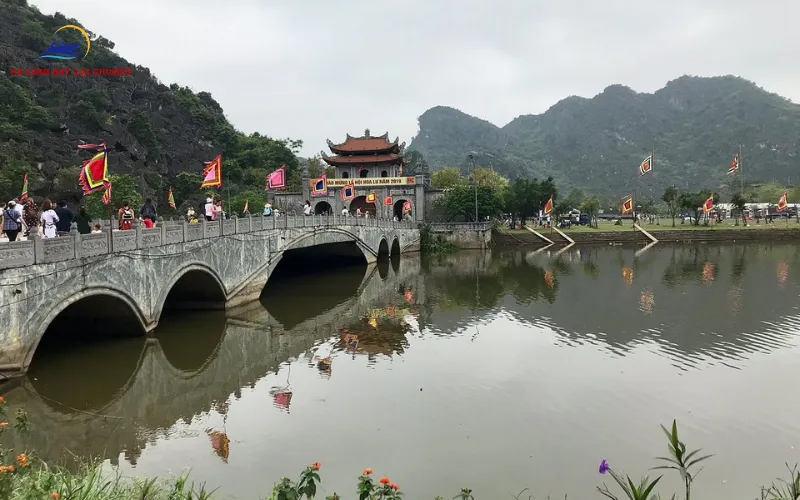
Planning a journey to the ancient capital at hoa lu in Ninh Binh requires balancing deep historical discovery with practical travel logistics. As the first official royal seat of Vietnam established in the 10th century, this historic landmark offers an immersive look into royal origins, architectural mastery, and ancient military strategy.
Whether organizing a day excursion from Hanoi or pairing historic landmarks with a luxury coastal voyage, this guide by Ha Long Bay Luxcruises provides detailed insights—from archaeological significance and entrance fees to hidden cultural etiquette and optimized itineraries.
The Strategic History of the Ancient Capital at Hoa Lu
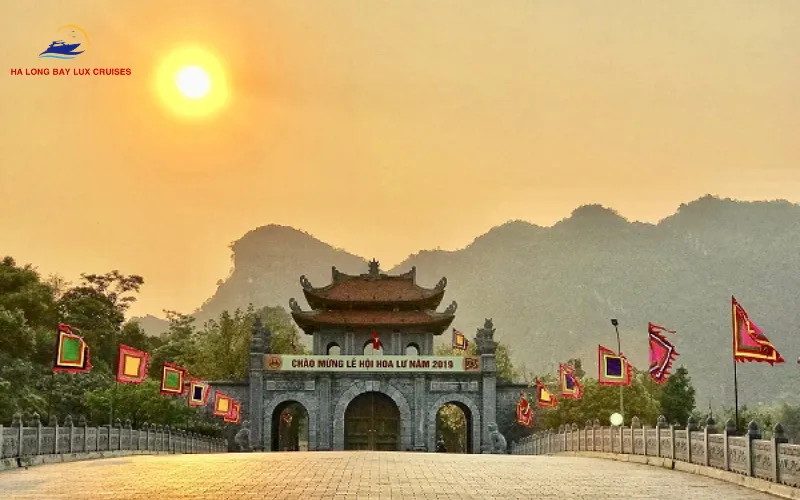
Understanding regional history transforms a standard sightseeing trip into a rich, narrative-driven cultural experience. Nestled among sheer limestone karsts and interconnected water systems, the citadel served as the heart of Vietnam during a transformative era.
The 10th-Century Royal Citadel & Military Fortress
In 968 AD, after defeating twelve rebellious warlords, Emperor Dinh Tien Hoang unified the nation under the name Dai Co Viet. He strategically chose the ancient capital at hoa lu over open lowland plains due to its natural defensive advantage. Towering limestone cliffs acted as impassable stone walls, while the Sao Khe River provided both a freshwater supply and an inner naval transport route.
The citadel covered roughly 300 hectares, divided into:
-
The Inner Citadel (Thanh Noi): Housed the royal palaces, courtrooms, and central administrative quarters.
-
The Outer Citadel (Thanh Ngoai): Served as the primary military garrison, training grounds, and frontline defense ring.
Dynastic Continuity & Strategic Relocation
Following the Dinh Dynasty, King Le Dai Hanh established the Early Le Dynasty in 980 AD, fortifying the grounds and successfully repelling foreign invasions. However, by 1010 AD, King Ly Thai To recognized that the mountain-bound citadel restricted economic expansion and maritime trade.
He issued the famous Edict of Capital Transfer (Chieu Doi Do), shifting the seat of power to Thang Long (modern-day Hanoi). Consequently, the ancient capital at hoa lu transitioned into a sacred historical sanctuary, preserving ancient shrines and ceremonial grounds across centuries.
Essential Visitor Information

Navigating the grounds smoothly requires keeping key practical guidelines in mind before arrival:
Entrance Fee & Logistics
-
Ticket Pricing: Standard entry to the main historic complex costs 20,000 VND (~$0.80 USD) per adult. Entry remains free for children under 1.2 meters.
-
Vehicle Parking: Official parking lots near the main entrance archway charge approximately 10,000 VND for bicycles and 20,000 VND for motorbikes or cars.
-
Avoiding Scams: Ignore unverified sellers outside the main gate claiming entry requires purchasing mandatory incense sets or paper offerings.
Opening Hours & Ideal Timing
-
Daily Schedule: The main historical grounds and temple inner sanctums open daily from 07:00 AM to 05:00 PM.
-
Best Time of Day: Arriving early between 07:30 AM and 09:30 AM allows visitors to explore the open courtyards before mid-day sun and tour buses arrive. Late afternoon visits (03:30 PM to 05:00 PM) offer soft golden-hour lighting across ancient stone gateways.
Temple Dress Code & Sacred Etiquette
Because these shrines remain active spiritual places of worship for local villagers, adhering to proper temple etiquette is mandatory:
-
Attire Requirements: Knees and shoulders must be fully covered. Avoid wearing sheer tops, short skirts, or sleeveless shirts.
-
Inner Sanctum Behavior: Remove hats, caps, and sunglasses before stepping across raised wooden thresholds. Avoid stepping directly on temple door sills out of respect for local traditions.
Key Attractions in the Complex
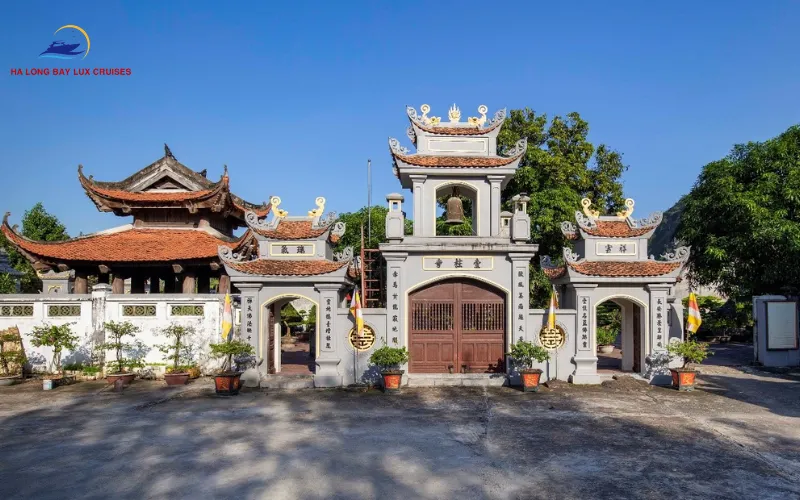
Exploring this historic region reveals magnificent architectural monuments set against dramatic karst backdrops:
King Dinh Tien Hoang Temple (Den Vua Dinh)
Built on the original foundation of the 10th-century main palace, the current temple complex dates back to the 17th century. Key features include:
-
The Dragon Bed (Sap Rong): Situated in the main courtyard, this monolithic stone carving features intricate dragon reliefs symbolizing royal authority.
-
The Sanctuary & Altars: The inner sanctuary houses bronze and wooden statues of King Dinh Tien Hoang and his three sons, surrounded by ancient ceremonial weapons and bronze bells.
King Le Dai Hanh Temple (Den Vua Le)
Located roughly 500 meters away inside the complex, this temple mirrors classical 17th-century wood and stone craftsmanship:
-
Historical Murals & Lacquerware: The shrine features ancient lacquered wood panels, stone pillars, and historical artifacts excavated from 10th-century palace foundations.
-
Honored Figures: The central altar honors King Le Dai Hanh, flanked by Empress Duong Van Nga and his successor, Le Long Dinh.
Nhat Tru Pagoda (The One Pillar Pagoda of Ninh Binh)
Constructed in the 10th century by King Le Dai Hanh, this temple houses an extraordinary National Treasure: an octagonal stone sutra pillar (Cot Kinh) standing over 3 meters tall, inscribed with ancient Buddhist scriptures carved directly into stone.
Am Tien Cave (Tuyet Tinh Coc)
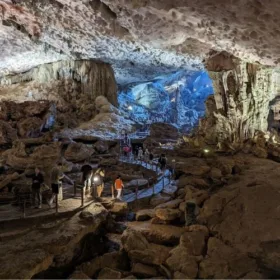
Situated roughly 2 kilometers from the central temples, this secluded mountain valley served as a royal dragon pond and prison site during the 10th century. Today, visitors can walk through a stone mountain tunnel to discover a tranquil, turquoise lake completely enclosed by sheer cliffs.
How Long Do You Need for Exploration?
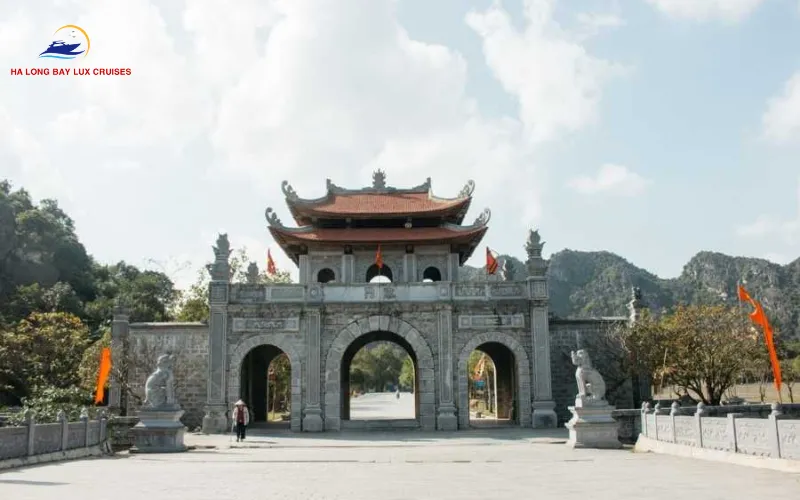
When planning daily schedules, travelers can select from several primary tour options:
-
Standard Tour (1.5 Hours): A 90-minute visit covers the main entrance bridge, King Dinh Temple, and King Le Temple with a brief guided tour.
-
Extended Cultural Tour (2.5 to 3 Hours): A longer visit allows you to explore inner sanctuaries, visit Nhat Tru Pagoda, and climb 265 stone steps up Ma Yen Mountain to pay respects at Emperor Dinh’s hilltop tomb while enjoying panoramic views over the ancient capital at hoa lu.
Experiencing the Region at Night

While the primary temple gates close strictly at 05:00 PM, travelers looking for evening activities can head to nearby Hoa Lu Old Town (Pho Co Hoa Lu), located around Ky Lan Lake (10 minutes away).
Built to replicate 10th-century traditional architecture, this vibrant night zone offers a magical atmosphere:
-
Lantern-Lit Strolls: Thousands of handcrafted lanterns illuminate traditional wooden shops, craft stalls, and stone bridges.
-
Sampan Boat Rides: Evening boat trips glide across Ky Lan Lake beneath lit pagodas and floating flower lanterns.
-
Local Culinary Treats: Street food stalls offer traditional Northern delicacies, crispy rice treats (Com Chay), and herbal teas until 11:00 PM.
How to Get to the Historical Site

Accessing the ancient capital at hoa lu from surrounding travel hubs is straightforward across multiple transit options:
-
From Hanoi (~90 km): The most comfortable route involves taking a luxury limousine van or private car via Highway CT01, reaching the destination in approximately 1.5 to 2 hours.
-
From Tam Coc or Trang An (~8–10 km): Travelers staying locally can rent a bicycle or scooter for a scenic 20-to-30-minute ride along flat countryside roads framed by rice paddies and karst mountains.
For detailed routing across the region, read our comprehensive 👉 Trang An Boat Tour Guide to combine land and river excursions seamlessly.
Recommended Tour Combos by Ha Long Bay Luxcruises
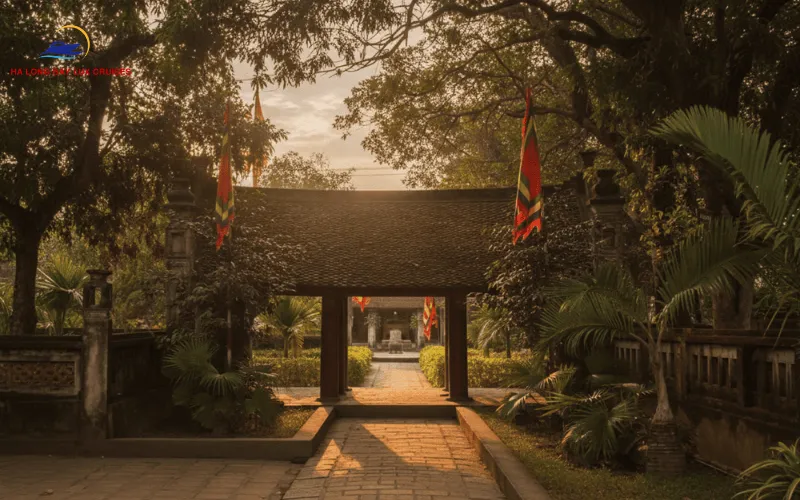
Maximizing a Vietnam holiday involves connecting historic countryside discoveries with luxury coastal cruising. Ha Long Bay Luxcruises specializes in seamless overland and marine itineraries tailored for discerning international travelers:
-
Single-Day Overland Highlights: Combine historic temples, river boat trips, and mountain viewpoints through our curated 👉 Ninh Binh Tour Packages.
-
Comprehensive Multi-Day Voyages: Explore full regional routes featuring top landmarks across our 👉 Packages Tours Archive.
-
Signature Heritage & Cruise Combos: Transition smoothly from 10th-century royal shrines to an overnight 5-star voyage across Halong or Lan Ha Bay:
Conclusion
A journey to the ancient capital at hoa lu provides an unforgettable look into the imperial foundations, natural defense architecture, and enduring spiritual heritage of ancient Vietnam. By reviewing admission fees, dressing respectfully, and understanding local history, visitors can enjoy a seamless cultural journey through this historic region.
To complete your Northern Vietnam travel plans, read our expert guide on 👉 How to Choose the Best Halong Bay Cruise. Explore top-rated 👉 Halong Bay Cruises Deals Hot 2026 and book a custom luxury itinerary at 👉 Ha Long Bay Luxcruises today!
- Address: Dang Xa, Gia Lam District, Hanoi, Vietnam
- Hotline | WhatsApp: +84.978.358.422
- Phone | WhatsApp: +84.962.261.687
- Email: halongbayluxcruises@gmail.com
- Email: vietnammarveltravel@gmail.com