



Should I Visit Ha Long Bay? 15 Honest Reasons to Go
If you have been going back and forth on whether to add Ha Long Bay to your Vietnam itinerary, you are not alone. Ha Long Bay is one of the most searched travel destinations in Southeast Asia, and yet plenty of travelers still arrive unsure of what to expect — or worse, they leave feeling like the experience did not match the hype.
This guide cuts through the noise. Not a promotional brochure. Not a rushed listicle. Just an honest, detailed answer to the question that keeps coming up: should I visit Ha Long Bay?
The short answer is yes — but the longer answer is more interesting, more useful, and ultimately what will help you decide whether Ha Long Bay deserves a spot on Vietnam trip, and more importantly, how to make sure it is actually worth every hour you spend there.

More details Halong Bay Information – Halongbay.com.vn
What Exactly Is Ha Long Bay — And Why Does Everyone Talk About It?
Before diving into the reasons to go or skip, it helps to understand what Ha Long Bay actually is — not just as a scenic backdrop for Instagram, but as a destination with real geological, cultural, and experiential substance.
Ha Long Bay is located in Quang Ninh Province in northeastern Vietnam, roughly 155 to 170 kilometers east of Hanoi depending on your departure point. The bay covers a UNESCO-protected core area of approximately 434 square kilometers, featuring an estimated 1,969 limestone islands and islets, most of them uninhabited and draped in dense jungle vegetation.
These limestone karsts were formed over 500 million years through a combination of tectonic activity, erosion, and sea-level changes. What you see from the deck of a cruise boat — those towering, jagged pillars of rock rising directly from calm green water — is the result of geological time on a scale that is genuinely difficult to comprehend standing in front of it.
Ha Long Bay received its first UNESCO World Heritage designation in 1994 for outstanding natural beauty, followed by a second designation in 2000 recognizing its geological and geomorphological significance. More recently, in 2023, UNESCO expanded the recognized area to include the Cat Ba Archipelago, officially naming the combined region the Ha Long Bay – Cat Ba Archipelago World Heritage Site. This expanded recognition covers a total area of approximately 334,000 hectares and acknowledges the region as one of the most important limestone karst landscapes in the world.
That context matters. Ha Long Bay is not simply a famous place because travel magazines say so. It has earned its reputation through geology, biodiversity, and a landscape that genuinely exists nowhere else on Earth in quite the same form.

15 Honest Reasons You Should Visit Ha Long Bay
1. The Limestone Karst Scenery Is Unlike Anything Else in the World
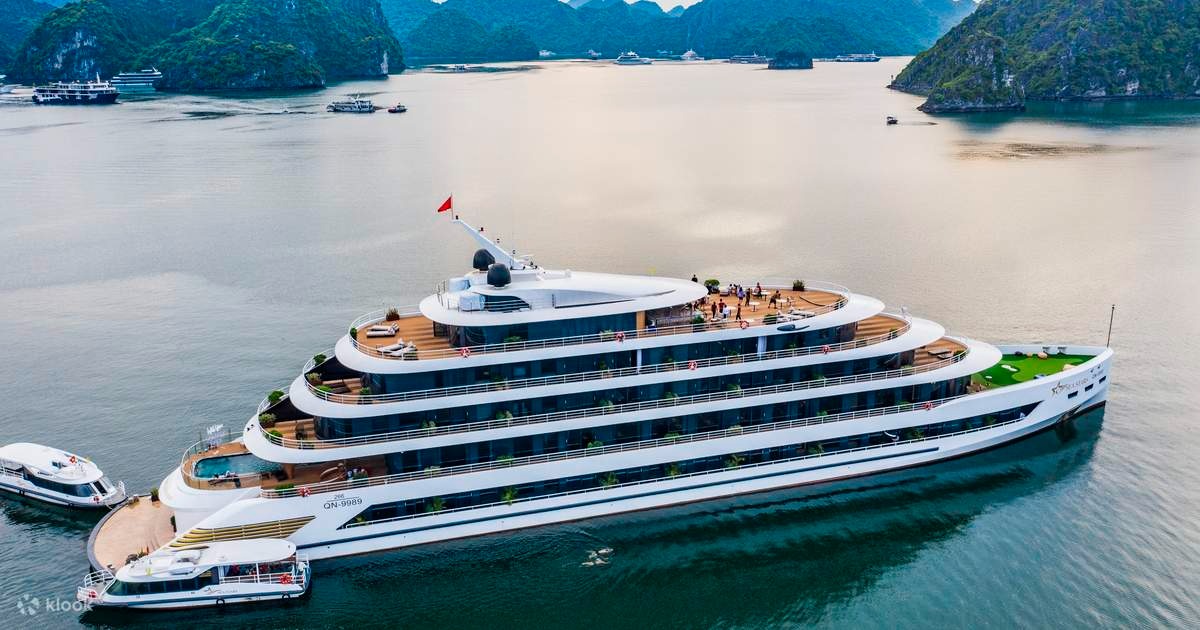
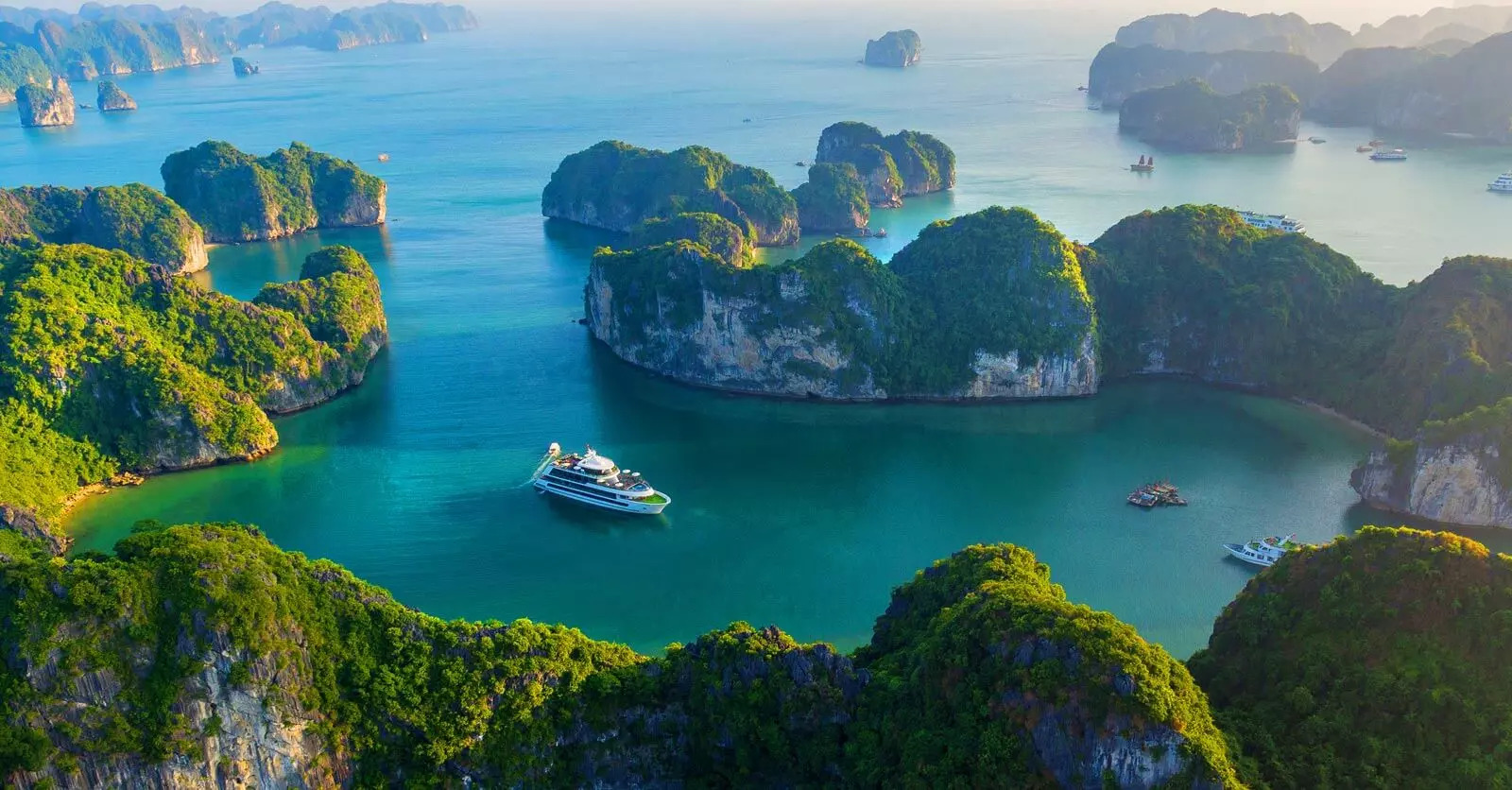
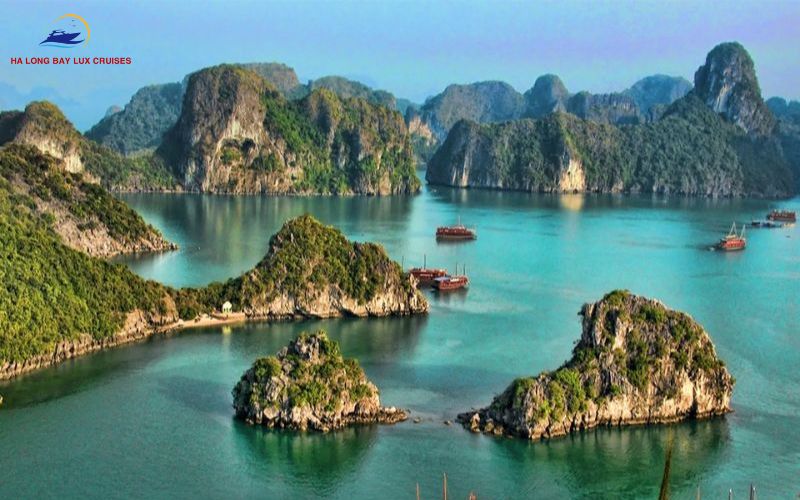
There is a reason Ha Long Bay photographs are immediately recognizable even to people who have never been to Vietnam. The landscape is genuinely singular. Thousands of limestone towers rising vertically from the water, some reaching over 100 meters in height, draped in green, reflected in water that shifts between jade and turquoise depending on the time of day and cloud cover.
What photographs cannot fully communicate is the scale and the silence. When your cruise enters quieter sections of the bay — especially early in the morning before most other boats are moving — the stillness is striking. The water reflects the karsts like a mirror. The air smells clean. There are no cars, no roads, no urban noise. Just water, rock, and sky.
Travelers who arrive expecting a nice view and leave having described it as one of the most beautiful places they have ever seen are not exaggerating. The scenery is the central reason to visit Ha Long Bay, and it consistently delivers.
2. Ha Long Bay Is a UNESCO World Heritage Site with Real Scientific Significance
The UNESCO recognition is not simply a label. Ha Long Bay’s geological formations represent one of the world’s most complete and accessible examples of marine-invaded tower karst topography — a landscape type so rare that only a handful of comparable formations exist globally, including parts of southern China and a few areas in Thailand and the Philippines.
The bay is also home to significant biodiversity. The caves and grottos within the limestone islands shelter rare species, the waters support diverse marine life, and the surrounding forests contain endemic plant and animal species. The Ha Long Bay – Cat Ba UNESCO expansion in 2023 specifically recognized the importance of protecting not just the iconic surface scenery but the ecological systems underneath and around it.
Visiting Ha Long Bay in 2026 means experiencing a site that is actively being studied, protected, and appreciated by the scientific community — not simply a tourist backdrop.

3. Overnight Cruises Turn the Bay Into a Full Immersive Experience
One of the most important things to understand about Ha Long Bay is that how you visit matters more than whether you visit. A day trip gives you a glance. An overnight cruise gives you the full experience.
On a 2-day, 1-night cruise, you typically get:
- A full afternoon of cruising among the karsts
- Visits to caves, kayaking routes, or viewpoints in the late afternoon
- Sunset from the sundeck with drinks
- An evening on board — dinner, stargazing, squid fishing for those who want it
- A quiet morning on the water before most day trippers arrive
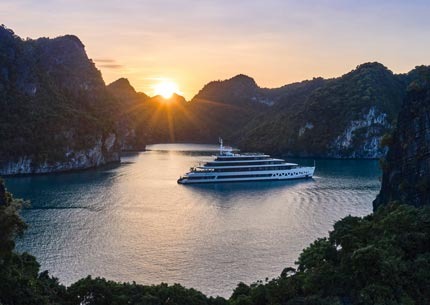
- A sunrise that, on a clear day, turns the limestone orange and gold
- One or two morning activities before the cruise returns to port
The morning hours — roughly 5:30 AM to 8:00 AM — are when Ha Long Bay is at its most peaceful. Overnight cruise guests have that time on the water while day trippers are still on the road from Hanoi. This alone is one of the strongest arguments for booking at least one night onboard.
If you want to go deeper, a 3-day, 2-night cruise gives you even more distance from the busiest areas, usually reaching quieter zones of Lan Ha Bay or Bai Tu Long Bay, where the boat-to-water ratio feels far more manageable.
4. Kayaking Through Limestone Lagoons Is a Genuinely Thrilling Activity
Sea kayaking in Ha Long Bay and the neighboring Lan Ha Bay is not a gimmick activity tacked onto cruise itineraries. When done in the right location, it is legitimately one of the best water activities in Vietnam.
The most impressive kayaking spots involve paddling through tidal caves — low archways in the limestone that open into hidden lagoons enclosed entirely by karst walls. These lagoons, known locally as “hồ” or enclosed lake formations, are only accessible by kayak or small bamboo boat. Inside, the water is calm, the light filters down through openings in the rock, and the enclosed space creates a sense of complete removal from the outside world.
Some of the most praised kayaking locations in the Lan Ha Bay area include Dark and Bright Cave (Hang Toi and Hang Sang), Ba Hang Floating Village, and various unnamed lagoons that appear on different cruise routes. In Ha Long Bay proper, Luon Cave is a classic kayaking destination, though it sees heavier traffic due to its accessibility.
Active travelers, couples, and photographers often describe the kayaking portions of their cruise as the highlight — particularly when the guide paddles ahead and lets you explore at your own pace.
5. Visiting Ancient Caves Reveals a Hidden World Beneath the Limestone
Ha Long Bay’s caves are not just dark holes in the rock. The most impressive ones are cathedral-sized chambers filled with stalactites and stalagmites that have been forming for tens of thousands of years, illuminated dramatically by installed lighting systems that, when done well, showcase the scale and texture of the formations.
Sung Sot Cave (also written as Sửng Sốt, meaning “Surprise Cave” in Vietnamese) is the most visited. It has two main chambers covering a total area of approximately 10,000 square meters, making it one of the largest cave systems in the bay. The formations inside are genuinely impressive, including stalactites that reach several meters in length and stalagmite columns that have been growing since before recorded history.
Thien Cung Cave (Heavenly Palace Cave) is another standout. Located on Dau Go Island, it extends approximately 130 meters in length and features extraordinarily detailed ceiling and wall formations. The colored lighting can feel theatrical, but the geological features themselves are remarkable.
Dau Go Cave is one of the oldest known caves in the bay and holds historical significance — it was reportedly used to store wooden stakes during the Battle of Bach Dang River in the 13th century, when Vietnamese forces defeated the Mongol fleet.
Premium cruise itineraries often include less-visited caves to avoid the crowds that form at the most famous sites during peak hours.
6. The Experience Is Easy to Access from Hanoi
Convenience matters. One of the reasons Ha Long Bay is so popular with international travelers is that it is genuinely accessible without requiring complicated logistics.
By private car or limousine bus, the journey from central Hanoi to the main Ha Long Bay cruise ports takes approximately 2.5 to 3.5 hours via the Hanoi–Hai Phong–Ha Long expressway. Most reputable cruise operators include this transfer in the total package price, meaning you are picked up from your Hanoi hotel, driven to the port, and returned at the end of your cruise — all without arranging separate transport.
For travelers combining Ha Long Bay with Cat Ba Island, some cruise routes now depart from Hai Phong rather than Ha Long, which cuts down the road journey and shifts more of the travel time to the water. This option is growing in popularity, particularly for Lan Ha Bay-focused itineraries.
The point is: adding Ha Long Bay to a northern Vietnam itinerary does not require special arrangements, remote travel, or significant additional planning. For the kind of scenery it delivers, it is one of the most accessible natural wonders in Southeast Asia.
7. Floating Fishing Villages Offer a Cultural Layer Beyond the Scenery
Ha Long Bay’s appeal is not only geological. The bay has been inhabited for centuries, and several floating fishing villages still exist within the bay, giving travelers a glimpse of a way of life that has largely disappeared elsewhere in Vietnam.
Cua Van Floating Village is the largest and most visited, with a registered population of several hundred people living on houses built on floating platforms. The community has its own school, community buildings, and fishing operations. While the number of permanent residents has decreased due to government relocation programs in recent years, Cua Van remains a significant cultural and historical site.
Vung Vieng Village and Ba Hang Village are also frequently included on cruise itineraries. At these villages, travelers can take small bamboo boats paddled by local residents through the village waterways — a calm, unhurried experience that provides context for the human relationship with this extraordinary landscape.
Understanding that Ha Long Bay is not simply an empty scenic backdrop but a place where people have fished, farmed, and built communities for generations adds a meaningful layer to the cruise experience.
8. Watching Sunrise Over the Karsts Is One of Vietnam’s Most Memorable Moments
This is a simple reason, but it deserves its own space. Sunrise on Ha Long Bay from the deck of an overnight cruise is extraordinary.
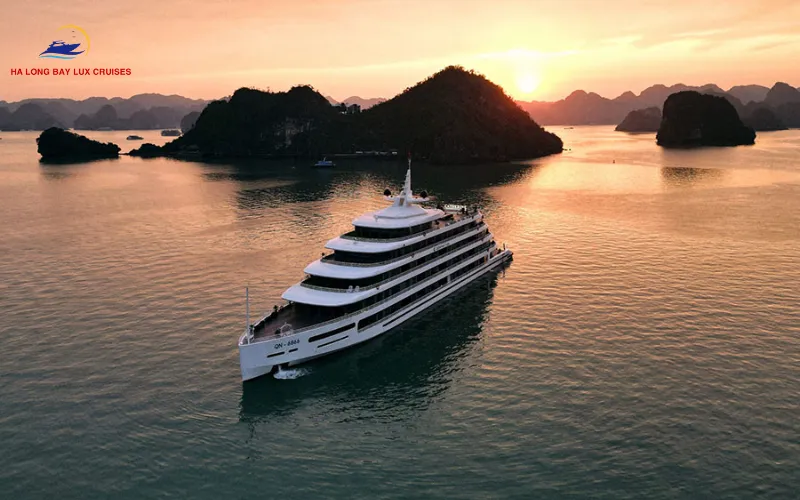
In the early morning, when the light is soft and the water is still, and the limestone formations are silhouetted against a sky moving from dark blue to orange to gold, the bay looks like a painting. On clear mornings, the reflections in the water are nearly perfect. On misty mornings, the karsts appear and disappear through the fog in a way that many travelers describe as otherworldly.
This is the moment that convinces many people that staying overnight was absolutely the right decision. No day trip can replicate it. You cannot rush to the bay from Hanoi in time for sunrise. The only way to see it is to spend the night on the water.
Reputable luxury cruise operators generally encourage guests to set an alarm for 5:30 to 6:00 AM and offer hot tea, coffee, or breakfast on the sundeck for early risers. On a good day, this is the single most memorable hour of the entire trip.
9. Luxury Cruise Options Have Significantly Improved in Recent Years
Ha Long Bay has evolved considerably as a travel destination. The era of bare-bones, poorly-maintained cruise boats is not entirely gone, but the premium and luxury cruise segment has grown dramatically over the past decade, and the options available in 2026 are genuinely impressive.
High-end cruise operators now offer:
- Cabins and suites ranging from 25 to over 50 square meters, many with private balconies overlooking the water
- Restaurant-quality dining with fresh seafood, Vietnamese cuisine, and international options
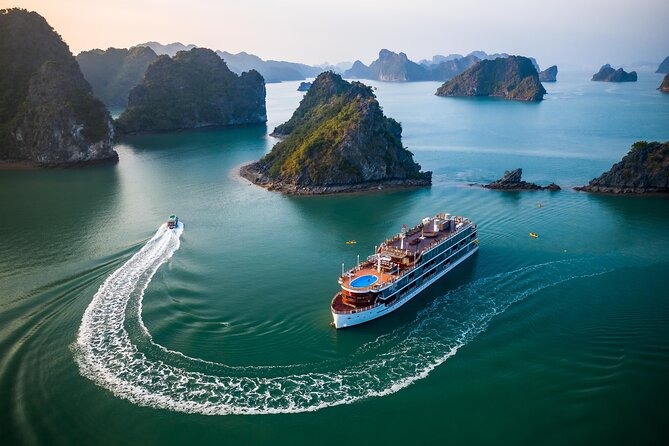
- Outdoor pools on larger vessels
- Spa and wellness facilities
- Curated itineraries that avoid the most congested areas
- Smaller boats carrying fewer guests to create a more intimate atmosphere
- 24-hour butler service on top-tier cruises
- Dedicated photography spots and guided photography tours
- Wine cellars and craft cocktail menus on premium vessels
For couples celebrating honeymoons or anniversaries, families looking for a special experience, or travelers who simply value comfort and quality, the luxury cruise options in Ha Long Bay are comparable in standard to premium cruise experiences elsewhere in the world — often at a fraction of the price.
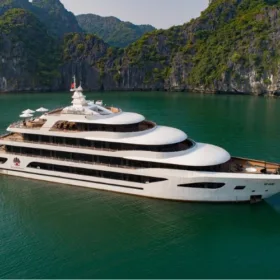
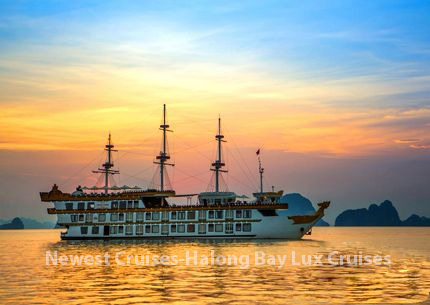
If you are interested in exploring the most refined Ha Long Bay experiences available in 2026, Halong Bay Lux Cruises offers carefully curated options across different routes, durations, and comfort levels to help you find the right match.
10. Ha Long Bay Is the Perfect Base for Exploring Lan Ha Bay and Cat Ba Island
One of the strongest practical arguments for visiting Ha Long Bay in 2026 is that it serves as the gateway to a wider region that includes Lan Ha Bay and Cat Ba Island — two destinations that are each outstanding in their own right.
Cat Ba Island is the largest island in the Ha Long Bay area, covering approximately 285 square kilometers. It has a functioning town with accommodation and restaurants, a national park covering around 15,200 hectares, a growing rock climbing scene, jungle hiking trails, and beaches. Cat Ba National Park is home to the Cat Ba langur, one of the world’s most critically endangered primates, with an estimated wild population of only 60 to 70 individuals as of recent surveys.
Lan Ha Bay lies directly southeast of Ha Long Bay, adjacent to Cat Ba Island. It has approximately 400 islands and islets, many of them completely uninhabited, with cleaner water in many sections and significantly fewer day-trip boats. Kayaking routes through Lan Ha Bay are considered by many cruise guides and travelers to be superior to the equivalent Ha Long routes simply because of the greater sense of space and solitude.
A 3-day cruise itinerary that combines Ha Long Bay, Lan Ha Bay, and time near Cat Ba Island covers three genuinely distinct experiences in a single organized journey.
11. Vietnam’s Northern Itinerary Is Incomplete Without Ha Long Bay
Practically speaking, if you are traveling through northern Vietnam — spending time in Hanoi, visiting Ninh Binh, perhaps heading north to Sapa or Ha Giang — Ha Long Bay fits logistically and thematically as a complement to the inland landscapes you have already seen.
Ninh Binh offers limestone karst scenery surrounded by rice paddies and rivers. Ha Long Bay offers the same geological drama surrounded by ocean. They are related experiences, but different enough that seeing both does not feel repetitive.
Ha Long Bay also pairs naturally with Hoi An, Hue, and the rest of a classic Vietnam itinerary. Many travelers structure their trip as Hanoi → Ha Long Bay → Central Vietnam → South Vietnam, which creates a clear geographic and experiential journey through the country from north to south.
Skipping Ha Long Bay from a northern Vietnam trip is entirely possible — there are other rewarding choices — but it means leaving out the destination that arguably best represents the northern coastline and the UNESCO natural heritage of the region.
12. Ha Long Bay Photographs Are Extraordinary — and Worth the Trip for Visual Travelers
This is an honest reason. If you love photography, travel content creation, painting, drawing, or any visual art form, Ha Long Bay is an extraordinary subject.
The combination of vertical limestone formations, calm reflective water, mist in the morning, golden light at sunrise and sunset, small fishing boats, isolated beaches, and cave interiors creates a location that offers almost unlimited visual material across different lighting conditions, weather patterns, and times of day.
Some cruise operators in 2026 now offer dedicated photography cruises or itineraries that include early-morning departures to specific viewpoints. Titop Island, for example, provides a panoramic view from approximately 200 meters above sea level that captures the surrounding karst landscape in all directions. Ha Long Bay from this height at sunrise is a photograph that genuinely looks like a professional image even when shot on a smartphone.
13. Ha Long Bay Is Safe and Well-Organized for International Travelers
Safety is a legitimate concern when visiting any destination abroad, and Ha Long Bay has made significant improvements in tourism infrastructure and regulation in recent years.
Cruise operators in Ha Long Bay are regulated by Quang Ninh Province tourism authorities and must comply with national maritime safety standards. Reputable cruise companies maintain lifejackets and emergency equipment, conduct safety briefings, operate within designated bay areas, and communicate with port authorities during weather alerts.
Vietnam’s Ha Long Bay cruises are generally considered safe for international travelers, including families with children, seniors, and travelers without previous boating experience. The water in the bay is relatively calm compared with open ocean conditions, and the enclosed nature of the karst landscape means the boat is always near land.
The practical advice is straightforward: book with a licensed, well-reviewed cruise operator rather than the cheapest option found at a street-level travel desk. The price difference is usually modest compared with the overall trip cost, and the improvement in safety, comfort, and experience is significant.
14. Ha Long Bay Can Be Tailored to Your Budget and Travel Style
Not everyone visiting Ha Long Bay needs to book a luxury suite with a private balcony and a Champagne dinner. The destination works across a range of budgets and travel styles, provided expectations are matched to investment.
A mid-range overnight cruise typically costs between USD $150 to USD $250 per person for a 2-day, 1-night package including transfer from Hanoi, meals, activities, and cabin. Within this budget, you can find well-maintained boats with comfortable cabins, good food, and professional guides.
A luxury or 5-star cruise typically starts from around USD $250 to USD $500+ per person for a similar duration and includes larger cabins, superior dining, spa access, exclusive itinerary routes, and a higher staff-to-guest ratio.
Private charter options are increasingly popular for couples, families, and small groups who want total flexibility in their itinerary without sharing the boat with strangers.
The key insight: Ha Long Bay rewards spending a little more than the minimum. A budget day trip will give you the landscape. An overnight cruise on a quality boat will give you the full experience — the morning light, the quiet coves, the meals on deck, and the memories that last well beyond the journey home.
15. Ha Long Bay Will Leave You Talking About Vietnam for Years
This is perhaps the least quantifiable reason, but it is the most consistent feedback from travelers who have made the trip.
Ha Long Bay is one of those places that stays with people. Not every famous destination lives up to its reputation — but Ha Long Bay, when visited properly, with an overnight cruise on a good boat during a reasonable weather period, has an extremely high rate of delivering experiences that travelers describe as genuinely unforgettable.
The combination of the unique geology, the silence of the water, the cave interiors, the kayaking through hidden lagoons, and the sunrise from the deck creates a travel memory with texture and depth rather than just a visual impression.
Travelers who visit Vietnam and skip Ha Long Bay sometimes return years later specifically to experience it. Travelers who go once frequently find themselves recommending it as one of the most impressive natural destinations they have ever seen.
Reasons Ha Long Bay Might Disappoint — And How to Avoid Them
Understanding the destination honestly means acknowledging what can go wrong. These are not reasons to skip Ha Long Bay. They are reasons to plan more carefully.
Crowding Is Real on Certain Routes and at Certain Times
Ha Long Bay receives millions of visitors annually. On the most popular day-trip routes, during peak holiday periods, the number of boats on the water can make certain areas feel more like a floating traffic jam than a peaceful natural landscape.
The main crowding points are:
- Sung Sot Cave: The most visited cave in the bay, which can see hundreds of visitors per hour during peak morning times
- Titop Island Beach: Extremely popular with day trippers, especially from late morning to early afternoon
- Standard day-trip routes: The most common itineraries run by budget operators cover the same route as dozens of other boats simultaneously
The solution is not to avoid Ha Long Bay. The solution is to book an overnight cruise that either operates in less-visited zones or departs early enough that you experience the popular sites before the day-trip rush begins. Lan Ha Bay and Bai Tu Long Bay routes naturally avoid much of this problem because fewer operators run itineraries there.
Weather Can Be Unpredictable — Especially Outside Peak Season
Ha Long Bay weather is genuinely variable. Unlike destinations in central or southern Vietnam that have more predictable dry seasons, northern Vietnam’s weather is influenced by a sub-tropical monsoon climate with distinct seasonal patterns that are not always neatly defined.
- October to November and March to April are generally considered the most reliable months for good visibility, comfortable temperatures, and calm water.
- December to February brings cooler temperatures (sometimes as low as 12–15°C on cold days) and frequent mist or light rain. The scenery can look atmospheric, but swimming is uncomfortable.
- May to September is warmer but sees increased rainfall and occasional typhoons, particularly from July through September.
Cruises can be delayed or temporarily suspended by local port authorities when weather conditions are deemed unsafe. This is not common on a daily basis, but it is a reality that travelers booking during less favorable months should understand and plan for by leaving flexibility in their itinerary.
Budget Cruises Often Fail to Deliver What They Advertise
This is probably the most common source of Ha Long Bay disappointment. A significant number of negative reviews about the destination are not actually about Ha Long Bay itself — they are about poor-quality cruise experiences that could have been avoided with better research.
Common issues with low-cost cruises include:
- Cabins smaller than advertised, with limited natural light and inadequate ventilation
- Meals that are repetitive, basic, or not freshly prepared
- Guides who speak limited English and provide minimal context for the sites
- Hidden fees for activities listed as included during booking
- Old or poorly maintained boats
- Crowded public areas with too many passengers relative to deck space
The remedy is straightforward: read recent reviews, check the boat age and maintenance records if possible, compare what is explicitly included in the price, and be cautious of any offer that seems significantly cheaper than the market average. A Ha Long Bay cruise priced at USD $50 per person for a 2-day itinerary should raise immediate questions about what is being cut to reach that price point.
Ha Long Bay vs. Lan Ha Bay vs. Bai Tu Long Bay — Which One Is Right for You?
This is one of the most practical and genuinely useful questions a traveler can ask, and the answer depends entirely on travel priorities.
Ha Long Bay: The Classic, Iconic Choice
Ha Long Bay is what most travelers picture when they think of Vietnam’s most famous natural landmark. It contains the most famous caves, the most-photographed karst formations, and the largest concentration of cruise operators. It is the right choice if:
- This is your first time visiting the area
- You want the most recognized scenery and the traditional Ha Long Bay experience
- Your time is limited to a 2-day, 1-night itinerary
- You are less concerned about crowds and more focused on seeing the UNESCO highlights
Ha Long Bay is still magnificent even with its tourist traffic, and a well-chosen overnight cruise can make the experience feel far less commercial than the reputation suggests.
Lan Ha Bay: The Better Choice for Quiet Luxury and Kayaking
Lan Ha Bay, located southeast of Ha Long Bay near Cat Ba Island, has emerged in recent years as the preferred choice for many experienced travelers and premium cruise operators. It has approximately 400 islands with similar karst geology but significantly fewer organized tour boats, particularly on weekdays and outside peak holiday periods.
Lan Ha Bay is the better choice if:
- You prioritize kayaking and swimming over cave sightseeing
- You want a luxury cruise experience with more exclusivity
- You are traveling as a couple or on a honeymoon and want a quieter atmosphere
- You plan to spend 3 days in the bay area
- You prefer water that is cleaner in certain sections due to fewer vessels
Many of the most respected luxury cruise operators now operate exclusively or primarily in Lan Ha Bay for these reasons. If the idea of waking up to calm water and no other boats on the horizon appeals to you more than proximity to famous caves, Lan Ha Bay is the right choice.
Bai Tu Long Bay: The Quietest and Most Remote Option
Bai Tu Long Bay lies northeast of Ha Long Bay and is the least visited of the three main bay areas. It has spectacular karst scenery, clean water, and very few cruise boats — but also the fewest cruise operators and a more limited selection of onboard options.
Bai Tu Long Bay is the right choice if:
- You genuinely want to see almost no other tourist boats
- Nature immersion and solitude are more important than amenities
- You are comfortable with fewer organized activities and a more independent experience
The tradeoff is that luxury options are more limited compared with Ha Long Bay or Lan Ha Bay routes.
For first-time visitors, Ha Long Bay or Lan Ha Bay will almost always be the right starting point. Bai Tu Long Bay is best suited to experienced Southeast Asia travelers who have been to the more visited bays and want something different.
Day Trip vs. 1-Night vs. 2-Night Cruise — Which Should You Book?
Ha Long Bay Day Trip: Possible, But Not Recommended
A Ha Long Bay day trip is technically possible but is widely regarded as the least satisfying way to visit. The round-trip road journey from Hanoi takes approximately 5 to 7 hours, leaving only 4 to 6 hours on the water. Activities are rushed, the most memorable moments — sunrise, sunset, early-morning calm — are impossible to experience, and the overall feeling is that you have seen the view without actually being in it.
Day trips are acceptable only if you have genuinely no other option due to schedule constraints.
2-Day, 1-Night Cruise: The Standard Recommendation for Most Travelers
For most international travelers, a 2-day, 1-night cruise is the ideal balance of experience, time, and cost. You get:
- An afternoon and evening on the water
- Sunset from the deck
- At least two sets of activities — typically cave visits and kayaking
- One night sleeping on the bay
- Sunrise from the sundeck
- A morning activity before returning to port
- Return transfer to Hanoi arriving in the early afternoon
This itinerary fits comfortably into a standard Vietnam trip without monopolizing too many days. It delivers the essential Ha Long Bay experience including the overnight moments that day trips cannot provide.
3-Day, 2-Night Cruise: The Best for Depth, Luxury, and Quiet
A 3-day, 2-night cruise is the best choice for travelers who want to go beyond the standard experience, explore quieter sections of Lan Ha Bay or Bai Tu Long Bay, and simply slow down without the pressure of turning around the next morning.
These longer itineraries typically include:
- More time in remote lagoons with fewer other boats
- Additional kayaking routes and beach stops
- A visit to Cat Ba Island in some cases
- Extra onboard meals and dining experiences
- More time on the sundeck, in the spa, or simply relaxing
For couples on a honeymoon, families wanting a meaningful travel experience, or anyone who genuinely wants Ha Long Bay to be a highlight rather than a quick stop, the 3-day option is the superior choice.
You can explore the Ha Long Bay 6-Star Cruise 3 Days for a detailed look at what a luxury multi-day itinerary in this region actually includes — from cabin specifications and dining menus to kayaking routes and exclusive bay access.
The Best Time to Visit Ha Long Bay
Understanding when to go is as important as deciding to go. Ha Long Bay’s weather changes significantly across the year, and choosing the right travel window can dramatically affect the quality of your experience.
October and November — Most Consistently Recommended
October and November are widely considered the best months to visit Ha Long Bay. Temperatures are pleasant, typically ranging from 20°C to 28°C, the summer rains have largely ended, and the dry northeast monsoon brings clear skies and good visibility.
The water is calm enough for comfortable cruising, the karsts look their sharpest under clear light, and swimming conditions are still acceptable in the warmer parts of October. November brings slightly cooler water but excellent clarity.
March and April — Second Best Window
March and April offer another excellent opportunity. Winter cold has passed, temperatures climb back to approximately 22°C to 30°C, and the bay is generally sunny with manageable humidity before the summer monsoon arrives.
Spring travel in March–April also coincides with a period of lower domestic tourism compared with peak holiday weeks, which can mean slightly less congestion on popular routes.
December to February — Atmospheric but Cooler
Winter visits to Ha Long Bay have their own appeal. The bay frequently fills with a soft mist in the early morning, creating an ethereal, almost monochrome atmosphere that many photographers love. Temperatures can drop to 12°C to 18°C on cold winter days, which means swimming is rarely comfortable.
This period is fine for cruising and cave visits, but travelers should pack a light jacket and adjust expectations around water activities.
Tet (Vietnamese Lunar New Year) typically falls in late January or early February. During Tet week, Ha Long Bay sees very high domestic tourism traffic and prices increase significantly. Book well in advance if your travel overlaps with this period.
May to September — Higher Risk, Still Possible
The summer months bring warmth, humidity, and increased rainfall. Typhoon risk rises between July and September. While many travelers visit during this period without issues, weather-related cruise delays or cancellations are more common, and the bay can look less vibrant under overcast skies.
If you must travel in summer, May and early June are generally better than July through September. Bringing flexibility in your schedule helps significantly.
How to Choose the Right Ha Long Bay Cruise
This section matters more than almost anything else in this guide. The right cruise turns Ha Long Bay into a lasting memory. The wrong cruise turns it into a forgettable or frustrating experience.
Check the Cruise Route — Not Just the Bay Name
Cruises marketed as “Ha Long Bay cruises” may actually operate primarily in Lan Ha Bay or Bai Tu Long Bay, or cover a combination of areas. Neither is worse — in many cases, a Lan Ha Bay route is preferable — but you should know exactly where the boat is sailing so your expectations match the itinerary.
Ask the operator to specify which areas the cruise covers and confirm whether the route visits Ha Long Bay’s core UNESCO area, Lan Ha Bay near Cat Ba, or the Bai Tu Long Bay sector to the northeast.
Prioritize Boat Age, Maintenance, and Cabin Quality
A cruise boat that was launched in 2016 or later and has maintained regular inspections will generally offer significantly better standards than a vessel launched in the early 2000s without major refurbishment.
For cabin quality, look specifically for:
- Cabin size in square meters — premium overnight cabins should generally be at least 20 to 25 square meters, with luxury cabins ranging from 30 to 50+ square meters
- Private balcony or ocean-view window — waking up to the bay through your own balcony door is a meaningfully different experience from a porthole
- Air conditioning that actually works
- Private en-suite bathroom with hot water
- Storage space for luggage during the trip
Verify What Is Included vs. What Costs Extra
Before booking any Ha Long Bay cruise, confirm in writing exactly what is included in the price. This should cover:
- Round-trip transfer from Hanoi (if applicable)
- All meals listed on the itinerary
- Entrance fees for caves, islands, and national park areas
- Kayaking or bamboo boat rides
- English-speaking guide service
- Travel insurance coverage, if applicable
Anything not explicitly listed should be treated as a potential extra charge. Some operators include welcome drinks but charge for all subsequent beverages. Others have a complimentary minibar. Others charge resort-level prices for water at dinner. Understanding this in advance prevents unpleasant surprises.
Read Reviews from the Last 12 Months Specifically
A cruise that was exceptional five years ago may have changed management, reduced maintenance spending, or shifted its pricing model since then. When reading reviews on platforms such as TripAdvisor, Google, or specialized travel forums, filter specifically for reviews from 2024 and 2025 to get an accurate picture of current standards.
Look for consistency across reviews in categories such as: cleanliness, food quality, guide knowledge, cabin comfort, safety briefing standards, and responsiveness to problems.
Consider Luxury if Ha Long Bay Is a Priority Destination for Your Trip
If Ha Long Bay is one of the main reasons you are going to Vietnam — not just a box to tick but a destination you have genuinely been looking forward to — then choosing a luxury cruise significantly increases the likelihood that it lives up to your expectations.
Luxury operators in Ha Long Bay and Lan Ha Bay typically offer smaller boats with fewer guests, which creates a calmer atmosphere and more personalized service. The food, cabin quality, itinerary design, and guide professionalism are all generally superior to mid-range and budget operators.
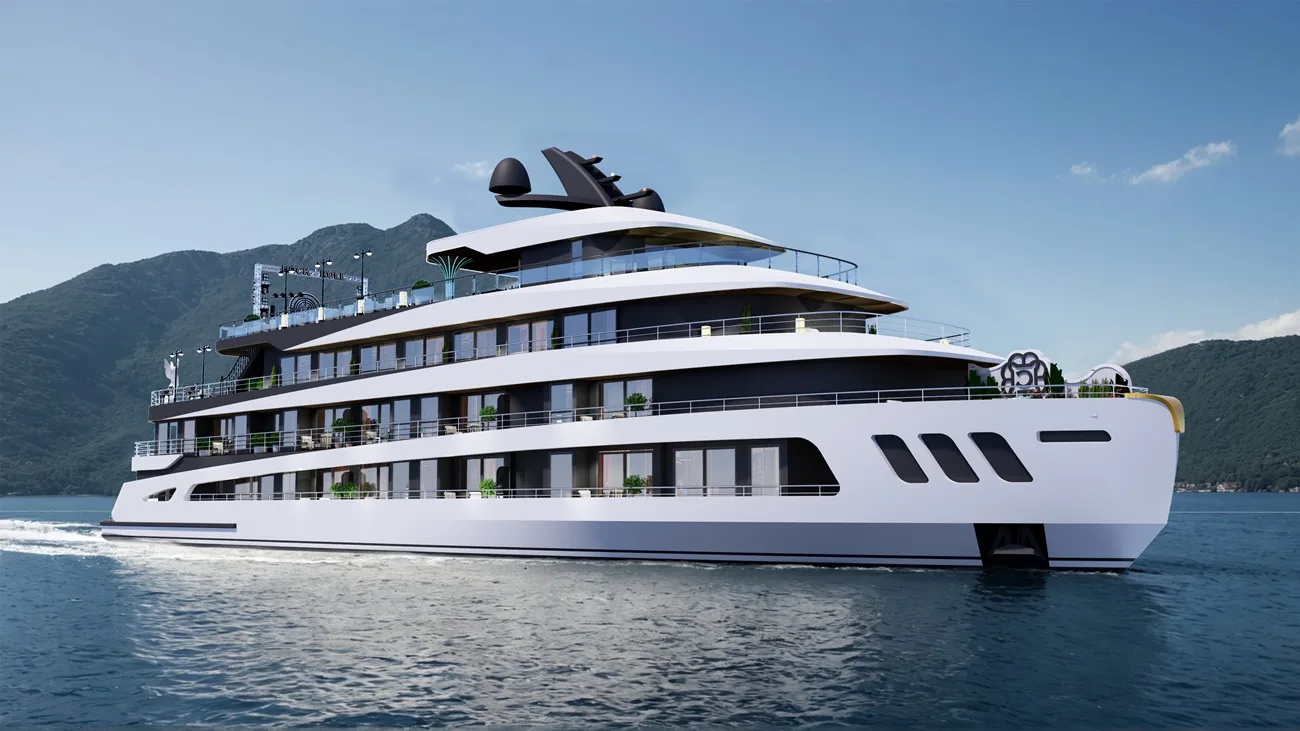
Explore the Ha Long Bay 6-Star Cruise to see what a top-tier Ha Long Bay experience looks like in terms of amenities, route, and overall design — it is a useful benchmark regardless of which cruise you ultimately book.
Who Should Definitely Visit Ha Long Bay?
First-Time Vietnam Travelers
If this is your first trip to Vietnam and you are spending any time in Hanoi or northern Vietnam, Ha Long Bay belongs on the itinerary. It is the most internationally recognized natural landmark in the north, and seeing it in person gives you a reference point for understanding why Vietnam is considered one of Southeast Asia’s most scenically diverse countries.
Couples and Honeymooners
Ha Long Bay — particularly on a luxury overnight cruise — is one of the most romantic travel experiences in Southeast Asia. The combination of dramatic scenery, private balcony cabins, sunset cocktails, and quiet mornings on the water creates an atmosphere that is genuinely difficult to replicate elsewhere.
Families with Children
Ha Long Bay is well-suited to families. Children typically love the kayaking, the cave exploration, the seafood dinners, and the novelty of sleeping on a boat. Many cruise operators offer connecting cabins or family suites, and the bay’s calm waters make it safe for children with basic swimming ability.
Photography Enthusiasts
As discussed earlier, the visual material available in Ha Long Bay across different light conditions, weather patterns, and activity types is exceptional. If photography is a serious part of how you travel, Ha Long Bay will reward you with images that are among the best you will take in Vietnam.
Travelers Who Want a Relaxing Break from City Travel
Vietnam is a country that rewards slow travel, but the pace of moving between Hanoi, Ho Chi Minh City, markets, temples, and museums can be tiring. Ha Long Bay — specifically an overnight cruise — is the most natural decompression point in a northern Vietnam itinerary. Two days on the water with nothing urgent to do except eat, kayak, and watch the scenery is genuinely restoring.
Who Might Be Better Served by a Different Destination?
Ha Long Bay is excellent for most travelers, but it is not the right choice for everyone.
- Travelers on an extremely tight budget who cannot afford at least a mid-range overnight cruise may find the experience underwhelming on a basic day trip. Ninh Binh offers comparable karst scenery for far less cost and effort.
- Travelers who strongly dislike organized group tours will find Ha Long Bay frustrating because almost all access to the bay is through organized cruise packages. Independent access is not practical.
- Travelers visiting during peak typhoon season (July to September) with no schedule flexibility run the risk of weather disruptions affecting their cruise.
- Budget backpackers spending USD $30 or less per night will find that even budget Ha Long Bay cruises push the cost significantly above their usual daily travel spend, which may not align with their travel style.
For any of the above, Ninh Binh offers limestone karst landscapes, boat rides through flooded cave systems at Trang An, and a more independent, flexible travel format — often at a fraction of the cost.
Practical Tips Before You Book Your Ha Long Bay Cruise
Book at Least 4 to 6 Weeks in Advance for Peak Periods
Luxury cabins, particularly those with private balconies and sea views, sell out quickly during October–November and March–April. Tet and Christmas–New Year periods can be fully booked 2 to 3 months in advance for popular operators. Booking early is not just about price — it is about securing the room type and cruise operator you actually want.
Bring the Right Clothing for the Season
For October to April, a light waterproof layer and a medium-weight jacket for evenings are useful, especially from December through February. For May to September, light breathable clothing is sufficient, but a compact rain jacket is worth having given the afternoon shower patterns.
Footwear matters more than many travelers expect. Non-slip sandals or shoes with grip are recommended for cave visits, which often have wet, uneven stone surfaces. Flip-flops are fine on the boat deck but less suitable for hiking up to viewpoints.
Keep Your Expectations Realistic About Weather
Ha Long Bay does not guarantee perfectly blue skies. Mist, cloud cover, and occasional rain are part of the experience in certain seasons. Some of the most beautiful photographs taken in Ha Long Bay feature misty conditions rather than bright sunshine. Traveling with this understanding means the weather is less likely to feel like a disappointment.
Leave Your Large Luggage in Hanoi
Most Ha Long Bay cruise itineraries involve boarding with only what you need for the cruise duration. Many hotels in Hanoi offer free luggage storage, which means you can board with a small bag or backpack rather than dragging a full-sized suitcase onto the boat.
Use a Trusted Booking Platform to Compare Options
The Ha Long Bay cruise market is large and fragmented, with hundreds of operators offering everything from USD $50 day trips to USD $1,000+ luxury charter experiences. Using a reputable booking platform or travel consultant who specializes in Ha Long Bay helps you compare options accurately and avoid operators who do not deliver what they advertise.
At Halong Bay Lux Cruises, the focus is specifically on helping travelers identify the right cruise based on their group size, travel dates, comfort expectations, and budget — without having to spend hours comparing operators independently.
Final Verdict: Should You Visit Ha Long Bay ?
Yes. Unequivocally, yes — with the right preparation.
Ha Long Bay is one of those rare places where the reputation is not an exaggeration. The limestone karsts rising from calm water, the morning light on the bay, the silence of a hidden lagoon reached by kayak, the feeling of waking up on the water surrounded by rock and sky — these are experiences with genuine, lasting impact.
The destination has its imperfections. It can be crowded in the wrong spots at the wrong times. Budget cruises can disappoint. Weather in certain months is unpredictable. These are real factors, but none of them are reasons to skip Ha Long Bay. They are reasons to plan it properly.
Book an overnight cruise with a reputable operator. Travel in October–November or March–April if your schedule allows. Consider Lan Ha Bay if you want fewer crowds and superior kayaking. Choose a 3-day itinerary if Ha Long Bay is a destination rather than a stopover.
Do those things, and Ha Long Bay will almost certainly rank among the best experiences of your Vietnam trip — and possibly your entire travel history.
FAQs About Visiting Ha Long Bay
Is Ha Long Bay worth visiting in 2026?
Yes. Ha Long Bay remains one of the most visually extraordinary natural destinations in Southeast Asia. In 2026, the bay’s UNESCO World Heritage status has been expanded to include the Cat Ba Archipelago, making the overall region even more significant. The key to a rewarding visit is choosing a quality cruise rather than the cheapest available option.
Is Ha Long Bay too crowded to enjoy?
Certain areas and certain times of day are genuinely crowded — particularly famous caves and popular beaches during peak morning hours on day-trip routes. However, an overnight cruise that departs before the day-trip rush or operates in Lan Ha Bay or Bai Tu Long Bay significantly reduces the crowding problem. The issue is manageable with proper planning.
Is Lan Ha Bay better than Ha Long Bay?
Lan Ha Bay offers similar limestone karst scenery with fewer tourist boats, cleaner water in many sections, and better conditions for kayaking and swimming. For travelers prioritizing a quieter, more exclusive experience — particularly couples or luxury travelers — Lan Ha Bay is often the better choice. For first-time visitors who want the iconic UNESCO landmarks and famous caves, Ha Long Bay remains the classic starting point.
How many days should I spend in Ha Long Bay?
A 2-day, 1-night cruise is the minimum recommended for a meaningful experience. A 3-day, 2-night cruise is ideal for travelers who want to explore more remote areas, relax fully, and see both Ha Long Bay and Lan Ha Bay within a single itinerary.
What is the best time of year to visit Ha Long Bay?
October, November, March, and April are consistently the most recommended months based on weather conditions, temperature, and visibility. December through February is possible but cooler. July through September carries the highest risk of weather disruptions.
Can you visit Ha Long Bay from Hanoi in a single day?
Yes, but it is not recommended. The round-trip journey takes approximately 5 to 7 hours, leaving only a few hours on the water. The most memorable aspects of Ha Long Bay — sunrise, overnight calm, evening on the deck — are only accessible with an overnight cruise.
How do I choose the best Ha Long Bay cruise?
Focus on: the cruise route and which bay areas are covered, cabin size and whether a private balcony is included, what activities and meals are explicitly included in the price, the age and maintenance record of the boat, and reviews from the past 12 months specifically. Avoid choosing based on price alone.
Option 1: Book with Ha Long Bay Lux Cruises : halongbayluxcruises.com
Option 2: You can choice best OTA Getyourguide, TripAdvisor, Viator
⭐ Top Rated Cruises & Tours – Getyourguide
⭐ Top Rated Luxury Cruises & Tours – Viator and TripAdvisor
Is Ha Long Bay safe for families and children?
Yes. Ha Long Bay is generally safe and well-suited for families. The bay water is calm, reputable cruises operate within safety regulations, and activities such as kayaking, cave visits, and beach time are appropriate for children. Look for cruise operators that offer family cabins or connecting rooms and confirm that life jackets are available in children’s sizes.
Hotline | WhatsApp: +84.978.358.422
Phone | WhatsApp: +84.962.261.687
Email: halongbayluxcruises@gmail.com or vietnammarveltravel@gmail.com
Website: halongbayluxcruises.com
Reviews: Top Halong Bay Cruise Reviews on TripAdvisor
Fanpage: https://www.facebook.com/halongbayluxcruises
Book Your Luxury Halong Bay Experience
Contact Halong Bay Lux Cruises now via Hotline | WhatsApp: +84.978.358.422 for pricing and special offers!
Thousands of travelers from Europe, UK, USA, and Australia have rated us 5-stars for our exceptional service and unforgettable Halong Bay luxury experience.