
Halong Bay Overrated or Underrated? 12 Honest Truths
Is Halong Bay overrated or underrated? Ask ten different travelers and you will get ten different answers. Some return home calling it the most beautiful place they have ever seen. Others shrug and say it was fine—nice, but not worth the hype. And a few will tell you it was genuinely disappointing.
Here is the thing: they are all telling the truth.
Halong Bay is not a destination that delivers the same experience to every traveler. What you get out of it depends almost entirely on how you visit—which cruise you choose, how long you stay, which part of the bay you explore, and what you actually expect to find when you get there. A rushed day trip on a budget boat during a national holiday weekend will produce a very different memory than a quiet three-day luxury cruise through Lan Ha Bay at sunrise.
This guide cuts through the noise. Below are 12 honest truths about Halong Bay —the frustrations, the genuine highlights, the smarter alternatives, and a clear verdict on whether it is still worth your time and money.
Quick Verdict: Is Halong Bay Overrated or Underrated?
Let’s get this out of the way before diving deeper.
Halong Bay is overrated when travelers book the cheapest option, squeeze it into a single day from Hanoi, arrive expecting an untouched tropical paradise, or visit during peak holiday crowds without knowing what they’re walking into.
Halong Bay is underrated when travelers choose a quality overnight cruise, explore beyond the central sightseeing corridor, wake up early enough to see the bay in silence, and arrive with an honest picture of what the destination is and is not.
The wider Halong Bay region covers approximately 1,553 square kilometers of water and contains around 1,969 limestone islands and islets. The original UNESCO World Heritage core zone covers roughly 43,400 hectares. In 2023, UNESCO extended the protected area to formally include the Cat Ba Archipelago, creating the combined Ha Long Bay–Cat Ba Archipelago World Heritage Site—one of the largest marine heritage zones in Southeast Asia.
That scale is important. The “Halong Bay” that disappointed a traveler on a budget day cruise and the “Halong Bay” that a honeymooning couple calls life-changing may technically be the same UNESCO-listed body of water, but they are almost entirely different experiences. The destination is big, varied, and deeply dependent on how you approach it.
More details information Halong Bay
12 Honest Truths About Whether Halong Bay Is Overrated or Underrated
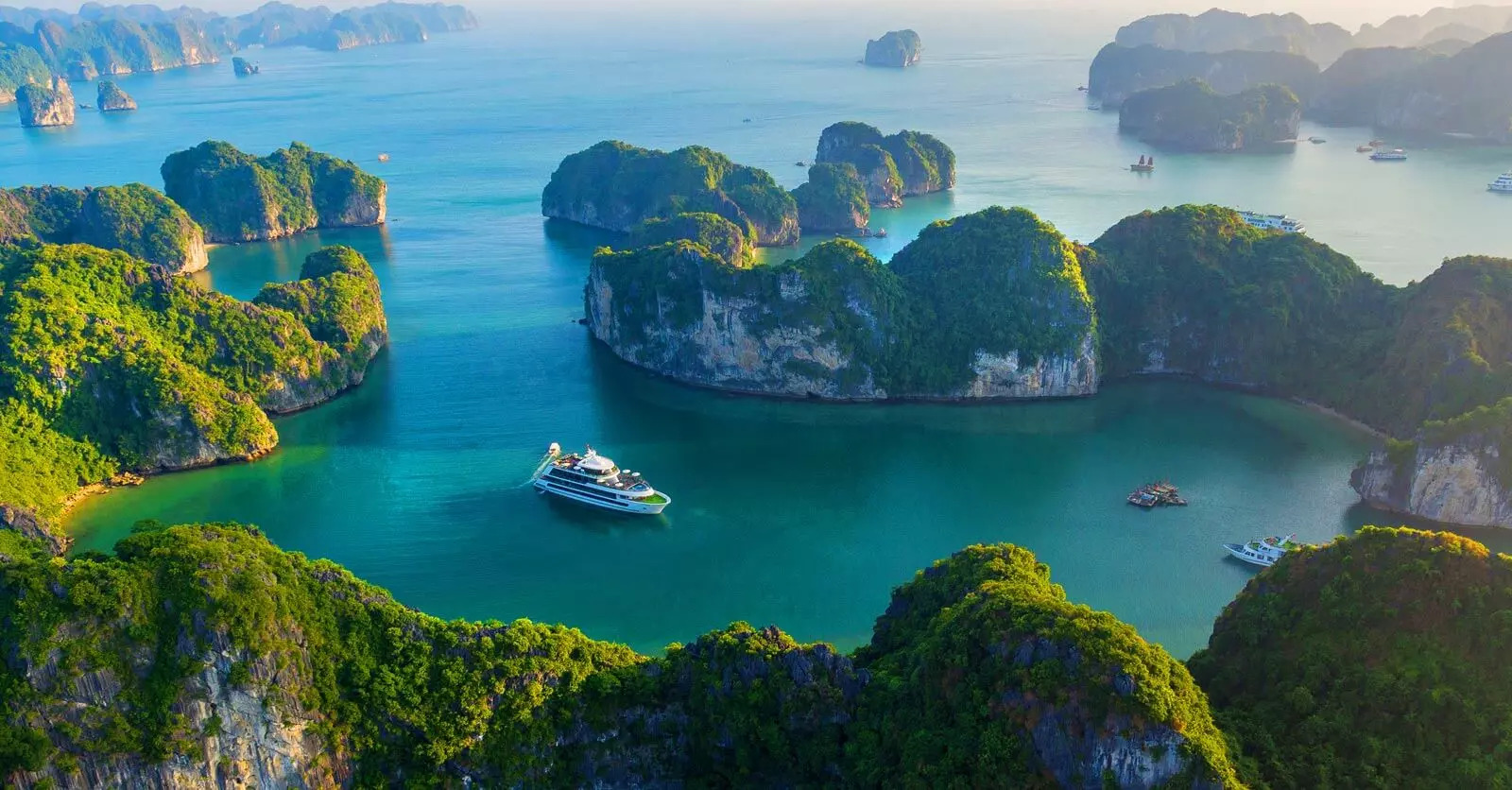
Truth 1: The Limestone Scenery Is Genuinely World-Class — No Editing Required
Before anything negative gets said, this needs to be stated clearly: the limestone landscape of Halong Bay is one of the most extraordinary natural environments in Southeast Asia, and no amount of oversaturation on Instagram changes that fact.
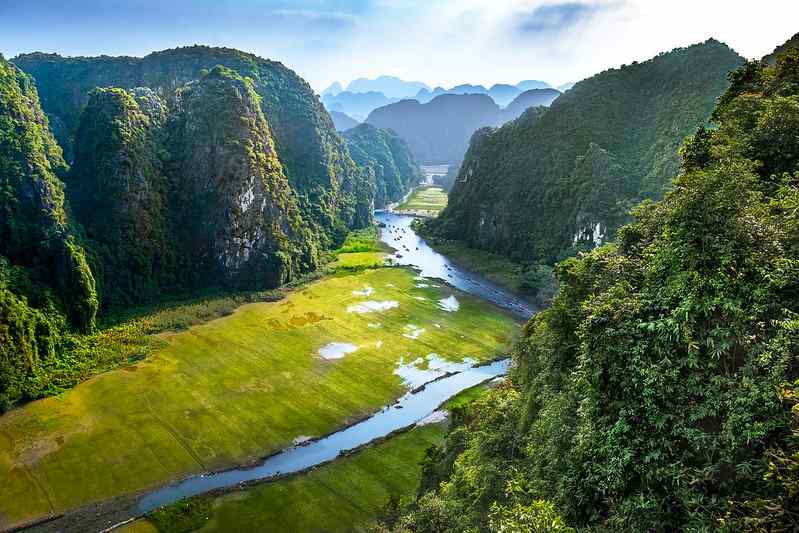
The karst formations in Halong Bay were shaped by roughly 500 million years of geological activity—a combination of limestone deposition, tectonic movement, and chemical erosion by water over millions of years. The result is a seascape of vertical towers, arches, grottos, and islets that rise directly from the water with no foothills or transitions. It looks unlike nearly anywhere else on earth.
The tallest karst towers in the bay reach heights of around 100 meters above sea level, though some formations appear even more dramatic due to their sheer verticality relative to the flat water surface below. When you cruise through a narrow passage flanked by rock on both sides and the only sound is water, it is difficult to feel anything other than genuine awe—regardless of how many social media photos you have already seen.
The problem is not the scenery. The scenery has never been the problem. The problems come from everything that surrounds accessing that scenery: the crowds, the choices, the expectations, and the planning.
Truth 2: Yes, the Crowds Are Real — But They Are Concentrated in Specific Areas
One of the most honest things that can be said about Halong Bay is that the crowding is real, but it is also geographically specific. The congestion is not spread evenly across 1,553 square kilometers of water. It is concentrated along the most heavily trafficked cruise routes, at the most famous cave entrances, and at the most photographed viewpoints.
Stops like Sung Sot Cave (also called Surprise Cave), Titop Island, and the scenic sightseeing corridor near the central Halong Bay port area see a high volume of boat traffic—particularly between 10:00 a.m. and 3:00 p.m., when most day boats and short cruises are active. During Vietnamese public holidays and Chinese New Year, the situation intensifies further.
What this means practically: if your cruise visits the same five stops that every other cruise visits, at the same time as every other cruise, you will feel like you are in a very busy tourist park. But cruises that depart earlier, take longer routes, or include Lan Ha Bay and Bai Tu Long Bay can bypass the worst of this and offer a noticeably different atmosphere.
The crowd problem at Halong Bay is a planning problem more than a destination problem. Know which areas get congested and choose routes that work around them.
Truth 3: Day Trips Miss Almost Everything That Makes Halong Bay Special
This is one of the clearest, most practical truths about Halong Bay: a same-day trip from Hanoi is simply not enough to experience the bay at its best.
The expressway has cut the drive from Hanoi to Halong City to approximately 2.5 to 3 hours, depending on traffic and pickup location. On a standard day trip, that means roughly 5 to 6 hours of round-trip transfer time alone. What remains is typically a 4- to 6-hour window on the water—enough to see the karst formations, stop at a cave, perhaps try a brief kayak, have lunch on the boat, and return to the harbor.
What a day trip cannot give you:
- Sunset on the bay, when the light drops low and the limestone towers turn amber and gold
- Overnight silence, when virtually all day boats have left and the bay becomes genuinely quiet
- Sunrise from the deck, arguably one of the most atmospheric and photographically rewarding experiences in northern Vietnam
- Deeper route access, where quieter caves, hidden lagoons, and floating villages are located
- The feeling of actually being somewhere, rather than ticking a checklist
A day trip can work for a traveler with a single day to spare who simply wants to glimpse the landscape. But if your goal is to understand why Halong Bay made every “wonders of the world” shortlist, a day trip will often leave you unmoved. The magic of Halong Bay is temporal as much as it is visual—it reveals itself most clearly in the early morning, the late afternoon, and the stillness of being anchored overnight among the karsts.
Truth 4: The Weather Is Not Reliable — And That Is Actually Fine, If You Know What to Expect
Halong Bay’s weather is one of the most consistently misunderstood parts of the destination, and it is responsible for a significant portion of the “overrated” verdict from disappointed travelers.
Many visitors arrive expecting the classic image: bright blue sky, emerald green water, sharp limestone peaks, golden sunlight. That image is real—but it is not guaranteed, and it is not even the norm for much of the year.
Halong Bay sits in northern Vietnam’s humid subtropical climate zone. Between November and March, misty, overcast, and drizzly conditions are common. The water color on a gray day is closer to gray-green or jade than tropical blue. Visibility across the bay may be limited, and you may not see the far formations at all.
Here is the counterintuitive truth: many travelers who experience Halong Bay on a misty day describe it as more atmospheric and beautiful than the sunny postcard version. Low clouds wrapped around karst towers, diffused silver light on still water, fog banks rolling through narrow channels—these conditions can make the bay feel ancient, remote, and cinematic in a way that direct midday sunlight simply cannot replicate.
The key is arriving without rigid expectations about the exact visual. Halong Bay is beautiful across a wide range of weather conditions. It just looks different depending on what the sky is doing.
Truth 5: Cruise Quality Varies More Than Almost Any Other Tourist Destination in Vietnam
If there is one practical truth that could prevent more disappointment than any other, it is this: the cruise you choose affects your Halong Bay experience more than almost any other variable, including the weather, the season, and the specific route.
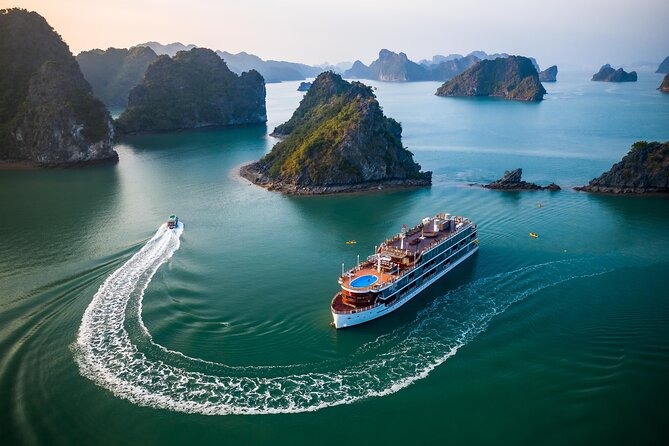
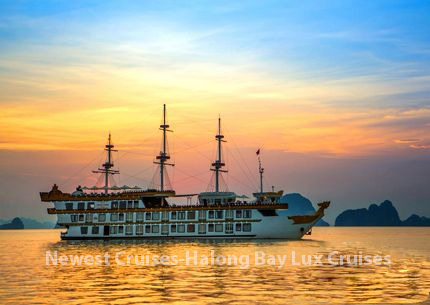
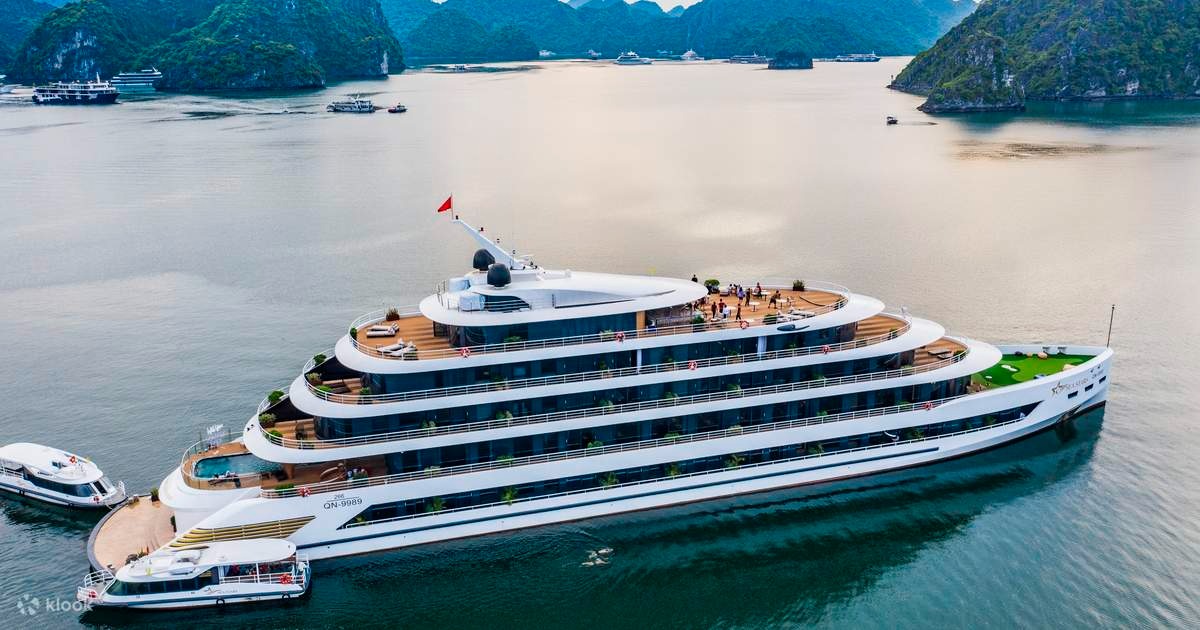
The range of cruise options in the Halong Bay region is extraordinary—from basic open boats running half-day group tours for under $30 USD to fully equipped luxury vessels with private balconies, à la carte menus, butler service, plunge pools, spa facilities, and cabins larger than many hotel rooms. The difference between these two ends of the spectrum is not just about comfort. It is about:
- Route selection: Budget boats often follow the most congested routes. Higher-end cruises have more flexibility to access quieter zones and anchor farther from busy areas.
- Passenger-to-space ratio: A budget boat might carry 40+ passengers. A luxury vessel might carry 20 or fewer.
- Schedule: Premium cruises often depart from quieter secondary harbors, reducing dock congestion and time spent waiting.
- Safety standards: Vessel age, life-safety equipment, fire suppression systems, and crew certifications vary significantly.
- Cabin quality: Luxury cruise cabins in the Halong Bay region commonly range from approximately 28 square meters to over 50 square meters for standard and suite categories, with private balconies, rainfall showers, and in some cases, freestanding bathtubs.
Two people can visit Halong Bay in the same week, book a cruise at the same price point, and have completely different experiences depending solely on which operator they chose. Research matters here in a way that it simply does not for many other travel decisions.
Explore Halong Bay Lux Cruises for a curated selection of verified luxury operators across Halong Bay, Lan Ha Bay, and Bai Tu Long Bay—all vetted for safety, service quality, and route diversity.
Truth 6: The Bay Is Not Just One Place — Lan Ha Bay and Bai Tu Long Bay Change the Conversation
One of the biggest misconceptions that drives the “Halong Bay is overrated” verdict is the assumption that Halong Bay is a single, uniform destination. In reality, the wider bay region encompasses multiple distinct zones, and the difference between them is substantial.
Lan Ha Bay: Scenic, Active, and Often Quieter
Lan Ha Bay is located southeast of Halong Bay, adjacent to Cat Ba Island, and is considered part of the broader Ha Long Bay–Cat Ba Archipelago World Heritage property. It shares the same geological landscape—towering limestone karsts, emerald lagoons, hidden caves—but is generally accessed by fewer cruise boats than the main Halong Bay sightseeing corridor.
Lan Ha Bay is particularly well-suited for travelers who want:
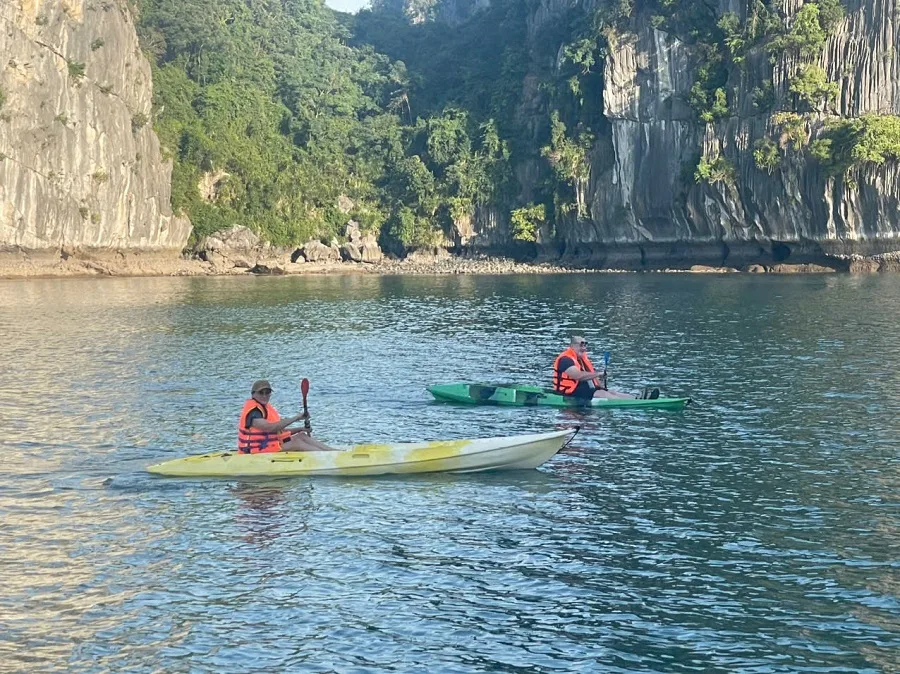
- Active itineraries with more kayaking, swimming, and cycling
- Access to Cat Ba Island and villages like Viet Hai
- Beautiful scenery without the concentrations of boat traffic seen in the central Halong Bay zones
- Longer exploration time through lagoons, passages, and cave systems that see fewer visitors daily
A quality 2-day Halong Bay and Lan Ha Bay cruise typically combines the iconic scenery of Halong Bay with the quieter, more active character of Lan Ha Bay—giving travelers the best of both areas in a single itinerary.
Bai Tu Long Bay: The Quietest of the Three Major Zones
Bai Tu Long Bay extends northeast of the main Halong Bay zone and sees considerably less commercial cruise traffic. It has fewer cruise operators and fewer established tourist stops, which means itineraries here tend to feel more exploratory and less structured.
For travelers who prioritize solitude, authenticity, and an unhurried pace over access to the famous landmarks, Bai Tu Long Bay is frequently described as the most peaceful part of the entire bay region.
Which Bay Is Right for You?
| Bay Area | Best For | Crowd Level | Key Activities | Overall Character
|
|---|---|---|---|---|
| Halong Bay (Main Zone) | First-time visitors, iconic scenery, famous caves | Higher on popular routes | Caves, viewpoints, kayaking, beach stops | Iconic, busier, impressive |
| Lan Ha Bay | Active travelers, couples, families, scenic alternatives | Moderate | Kayaking, Cat Ba access, village visits, lagoon exploration | Scenic, active, slightly quieter |
| Bai Tu Long Bay | Solitude seekers, repeat visitors, off-beaten-path preference | Lower | Quiet cruising, caves, floating villages, kayaking | Peaceful, less commercial, uncrowded |
Truth 7: Sunrise and Sunset Are the Bay’s Best-Kept Secrets — And You Only Get Them Overnight
During the middle of the day, Halong Bay can feel busy. Tour boats congregate, cave queues form, and the harbor areas are active. But the bay early in the morning and late in the afternoon is an entirely different environment—and it is accessible only to those who stay overnight.
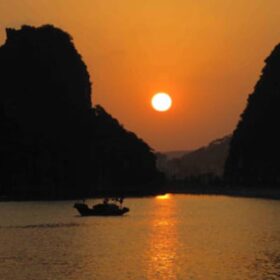
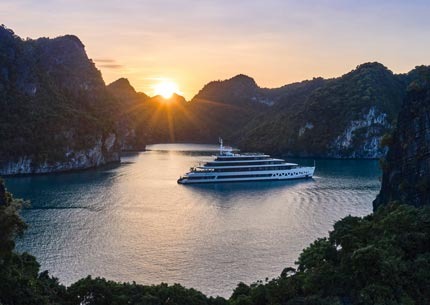
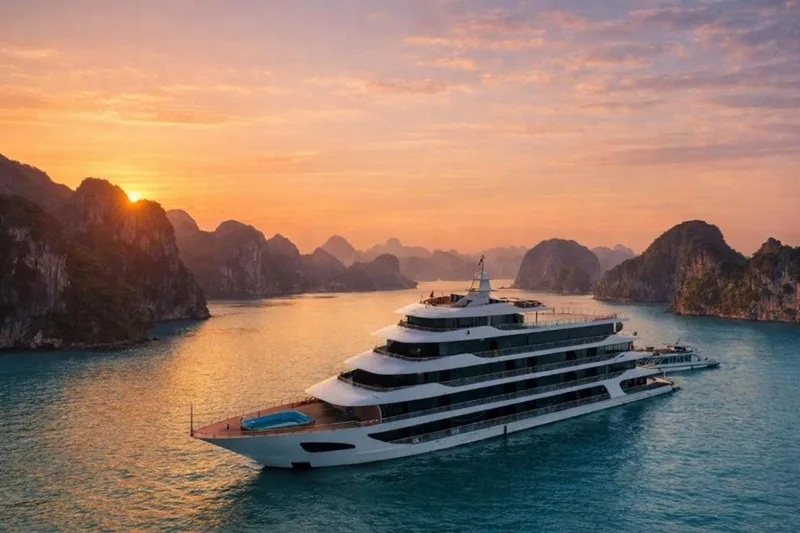
By around 5:00 p.m., the majority of day cruise boats have returned to the harbor. The bay becomes noticeably quieter. Sunset begins to change the light across the karst towers—oranges and pinks reflected in still water, silhouettes of limestone formations against a fading sky. Most quality overnight cruises will slow down or anchor during this period so passengers can watch from the deck.
Then, early the next morning—typically around 5:30 a.m. to 6:30 a.m. depending on the season—the bay is at its most peaceful. Mist may sit in the valleys between the karsts. The water is flat. The only sounds are birds, water, and the occasional distant engine. It is the closest thing to the “untouched paradise” image that many travelers are searching for, and it exists—but only for those who are there to see it.
Many overnight cruise operators include a sunrise tai chi session on deck, which has become a signature Halong Bay experience for a reason. Even travelers who have never tried tai chi often describe it as one of the most memorable moments of their Vietnam trip.
Truth 8: Environmental Concerns Are Legitimate — and They Affect Which Cruise You Should Choose
The environmental situation in Halong Bay is not a rumor or an exaggeration. It is a real and ongoing challenge that responsible travelers should understand.
Halong Bay receives millions of visitors annually—the exact number fluctuates depending on the year, but the Vietnamese government reported over 3 million tourist arrivals to Quang Ninh Province in the first half of 2024 alone. This volume of tourism creates significant pressure on water quality, marine ecosystems, waste management infrastructure, and the general sustainability of the destination.
Specific concerns that have been documented and discussed include:
- Waste disposal from boats and harbor facilities
- Anchor damage to coral and seabed habitat in certain zones
- Water pollution from boat fuel, untreated waste, and high-density tourism infrastructure near the shore
- Overcrowding at cave and beach sites, which causes physical erosion and damages fragile formations over time
None of this means Halong Bay should be avoided. It means travelers should make thoughtful choices about which operators to support. Cruise operators that invest in waste treatment systems, follow established anchoring protocols, use regulated routes, and maintain clear environmental policies are materially contributing to the long-term preservation of the destination.
When comparing cruises, do not ask only about price and cabin size. Ask about the operator’s environmental practices, waste management systems, and compliance with local marine authority guidelines.
Truth 9: The Best Itinerary Length Is 2 Nights Minimum — Here Is Exactly Why
This is not a sales pitch for a longer cruise. It is a practical recommendation based on how the bay actually works.
A 2-day, 1-night cruise gives you the basic overnight experience: sunset and sunrise, onboard dinner, morning kayaking or cave visits, and a slower pace than a day trip. For most first-time visitors, this is the appropriate minimum.
A 3-day, 2-night cruise is where the destination genuinely opens up. With two nights on the water, cruise itineraries can extend into quieter zones, add full-day kayaking excursions into hidden lagoons, include cycling or hiking on Cat Ba Island, visit the Viet Hai Village by electric car, spend time anchored away from other boats at night, and cover far more of the bay’s diverse landscape.
The difference between one and two nights in Halong Bay is not simply a quantitative increase in time. It is a qualitative shift in the kind of experience you have. On a 3-day cruise, the bay starts to feel less like a sightseeing tour and more like a journey.
For travelers who want the absolute best version of what Halong Bay offers—and for whom budget is less of a constraint—explore the Halong Bay 6-star luxury cruise options available through Halong Bay Lux Cruises, which include extended multi-night itineraries with private routes, butler service, and cabins of 40 square meters and above with private balconies overlooking the water.
Truth 10: The Best Time to Visit Halong Bay- Depends on What You Prioritize
Halong Bay does not have a single universally “best” month. The right time to visit depends on whether you are optimizing for weather clarity, lower crowds, active water sports, or budget value.
October to April: Generally the Most Comfortable Window
This is broadly the recommended period for first-time visitors. Temperatures are more moderate, humidity is lower, and conditions on the water are generally comfortable. However, within this window there are meaningful differences:
- October and November: Often excellent—warm enough for outdoor activities, dry enough for good visibility, and not yet into peak international travel season. Water temperatures in October average around 27°C to 28°C.
- December and January: Cooler and often misty or overcast. Temperatures can drop to 16°C to 18°C on some days. Light rain is possible. The atmosphere is moody and atmospheric, which many travelers love, but it is not ideal for swimming.
- February: Chinese New Year affects crowd levels significantly if the holiday falls in February (in 2026, Lunar New Year begins on January 29). Book well in advance for late January or early February.
- March and April: Often considered the sweet spot. Temperatures climb back into the low-to-mid 20s Celsius, skies begin to clear, and conditions are favorable for both sightseeing and active water activities.
May to September: Hot, Humid, and Potentially Stormy
Summer in Halong Bay brings heat—temperatures regularly reach 30°C to 34°C—combined with high humidity and a higher probability of heavy rainfall and tropical weather systems. July, August, and September carry the most significant risk of cruise disruptions due to typhoons and tropical depressions passing through the South China Sea.
That said, summer is not entirely without appeal:
- Water temperatures are warmest for swimming
- Low-season pricing can offer genuine value
- Weekday summer cruises can feel surprisingly uncrowded
If you travel in summer, build flexibility into your return schedule. Cruise departures can be delayed or rerouted by the marine authorities when weather conditions are unsafe, and this can occasionally affect onward flight or train connections from Hanoi.
Truth 11: Who Will Get Real Value from Halong Bay — and Who Probably Will Not
Rather than making a blanket claim that Halong Bay is or is not worth visiting, it is more useful to be specific about which types of travelers will leave satisfied and which will not.
Travelers Who Tend to Love Halong Bay
You are likely to find Halong Bay deeply rewarding if:
- You appreciate dramatic natural landscapes more than beach resorts or city destinations
- You enjoy cruise-style travel with a combination of guided activities, onboard dining, and scheduled exploration
- You are traveling as a couple or on a honeymoon and want a romantic overnight experience
- You are a photographer interested in landscape, atmospheric light, and geological formations
- You have at least two days to devote to the experience
- You choose a mid-range to luxury cruise rather than the cheapest option available
- You find atmospheric, moody weather interesting rather than disappointing
Travelers Who May Find Halong Bay Falls Short
You may walk away with a lukewarm impression if:
- You dislike organized tour structures and prefer completely self-directed exploration
- You are expecting deserted, untouched wilderness with no other humans in sight
- You have only one day and expect a full experience from a rushed day trip
- You booked the cheapest available cruise without checking reviews, vessel age, or route details
- You are visiting during peak Vietnamese holiday periods without anticipating crowd levels
- You strongly prefer tropical beach destinations with consistently warm, clear, and calm conditions
Knowing which category you fall into is genuinely useful information—not to discourage you from going, but to help you calibrate how you plan and what you book.
Truth 12: Halong Bay Is Worth Visiting in 2026 — With One Clear Condition
The final honest verdict is this: Halong Bay in 2026 is worth visiting, but only when approached correctly.
The destination has been receiving travelers for decades and continues to appear on nearly every serious list of the world’s most remarkable natural landscapes. The UNESCO recognition has been extended, not withdrawn. Responsible luxury operators continue to invest in the region, and the best cruise itineraries in Halong Bay are genuinely exceptional travel experiences by any global standard.
What has changed is the context around the destination. Travelers now arrive with extremely high expectations shaped by years of curated social media imagery, and the volume of visitors means that careless planning produces a noticeably worse outcome than it might have a decade ago.
The solution is not to lower expectations. The solution is to plan specifically: choose an overnight cruise of at least two days, select a reputable operator, consider whether Lan Ha Bay or Bai Tu Long Bay better suits your preferences, travel on weekdays when possible, and arrive ready to experience the bay as it actually is rather than as it looks in an edited photo taken at golden hour from a helicopter.
When you do that, Halong Bay stops being a question of overrated or underrated—and becomes something considerably more interesting: one of the best things you can do in northern Vietnam.
FAQs: Is Halong Bay Overrated or Underrated?
Is Halong Bay overrated in 2026?
Halong Bay can feel overrated for travelers who book a short day trip, choose a low-quality cruise, or arrive expecting deserted tropical wilderness. When visited with a quality overnight cruise, realistic expectations, and a route that goes beyond the most congested zones, Halong Bay is genuinely impressive and remains one of Vietnam’s most distinctive natural destinations.
Is one day enough for Halong Bay?
A single day is sufficient to see the limestone landscape from the water, but it is not enough to experience what makes Halong Bay memorable. Sunset, sunrise, overnight stillness on the bay, and access to deeper cruise routes all require at least a 2-day, 1-night itinerary. For most travelers, one day on the bay will feel more like a preview than an experience.
How does Lan Ha Bay compare to Halong Bay?
Lan Ha Bay shares the same geological landscape as Halong Bay—towering karsts, caves, lagoons—but generally sees less boat traffic on its central routes. It is particularly well-suited for active itineraries involving kayaking, swimming, and visits to Cat Ba Island. Many experienced travelers and repeat visitors consider Lan Ha Bay to offer a more relaxed atmosphere while delivering equivalent or better scenic quality.
Is Bai Tu Long Bay worth visiting instead of Halong Bay?
Yes, for the right traveler. Bai Tu Long Bay is the quietest of the three main zones in the wider bay region and has fewer cruise operators, which translates to less congestion and a more exploratory feel. It is an excellent choice for travelers who place solitude and calm above access to famous landmarks.
What is the best cruise length for Halong Bay?
For most first-time visitors, a 2-day, 1-night cruise is the appropriate minimum. A 3-day, 2-night cruise is significantly better for travelers who want a fuller experience, access to quieter routes, more kayaking and activity time, and a generally more relaxed pace. The difference between one and two nights on the bay is qualitative, not just quantitative.
What is the best time of year to visit Halong Bay?
March, April, October, and November are generally considered the most favorable months—comfortable temperatures, reasonable weather windows, and good conditions for outdoor activities. December through February can be misty and cool, which is atmospheric but less suitable for swimming. May through September brings heat, humidity, and a higher risk of storm-related disruptions, particularly in July through September.
How do I avoid crowds in Halong Bay?
Avoid crowds by: traveling on weekdays (Monday through Thursday); avoiding Vietnamese public holidays; choosing a cruise that includes Lan Ha Bay or Bai Tu Long Bay; selecting itineraries that do not focus exclusively on the most popular cave and viewpoint stops; and booking an overnight cruise rather than a day trip, which means you are present on the bay during the quieter early morning hours when day boats have not yet departed.
Is a luxury cruise worth the extra cost in Halong Bay?
For most travelers who are making a once-in-a-trip or once-in-a-lifetime visit to Halong Bay, yes—a quality mid-range to luxury cruise makes a significant difference. The gap between budget and luxury in Halong Bay is not just about room comfort. It affects route selection, passenger numbers, staff quality, food, safety standards, and the overall pace and atmosphere of the trip. A good cruise is the single most impactful planning decision you can make for this destination.
Best Cruise to Book Halong Bay
Option 1: Book with Ha Long Bay Lux Cruises : halongbayluxcruises.com
Option 2: You can choice best OTA Getyourguide, TripAdvisor, Viator
⭐ Top Rated Cruises & Tours – Getyourguide
⭐ Top Rated Luxury Cruises & Tours – Viator and TripAdvisor
Hotline | WhatsApp: +84.978.358.422
Phone | WhatsApp: +84.962.261.687
Email: halongbayluxcruises@gmail.com or vietnammarveltravel@gmail.com
Website: halongbayluxcruises.com
Reviews: Top Halong Bay Cruise Reviews on TripAdvisor
Fanpage: https://www.facebook.com/halongbayluxcruises
Book Your Luxury Halong Bay Experience
Contact Halong Bay Lux Cruises now via Hotline | WhatsApp: +84.978.358.422 for pricing and special offers!
Thousands of travelers from Europe, UK, USA, and Australia have rated us 5-stars for our exceptional service and unforgettable Halong Bay luxury experience.