

Bai Tu Long vs Halong Bay: 11 Key Differences for Your Vietnam Cruise
Planning a Vietnam bay cruise ? Discover the critical differences between Bai Tu Long Bay and Halong Bay with our expert comparison covering scenery, crowds, pricing, and sustainability factors.

Why Compare These Two Iconic Vietnamese Bays?
Vietnam’s tourism resurgence in 2025 has reignited interest in its spectacular northern bays. While most travelers immediately recognize Halong Bay as a must-visit UNESCO World Heritage site, its neighboring Bai Tu Long Bay remains somewhat of a hidden gem, despite offering equally breathtaking landscapes with significantly fewer crowds.
As experienced cruise operators navigating these waters daily, we’ve witnessed firsthand how choosing between these destinations dramatically shapes travelers’ experiences. This comprehensive 2025 guide will help you understand the nuances between these magnificent bays to ensure your Vietnam cruise aligns perfectly with your travel preferences.
The Geographical Distinction: Location and Landscape Variations
Where Exactly Are These Bays Located?
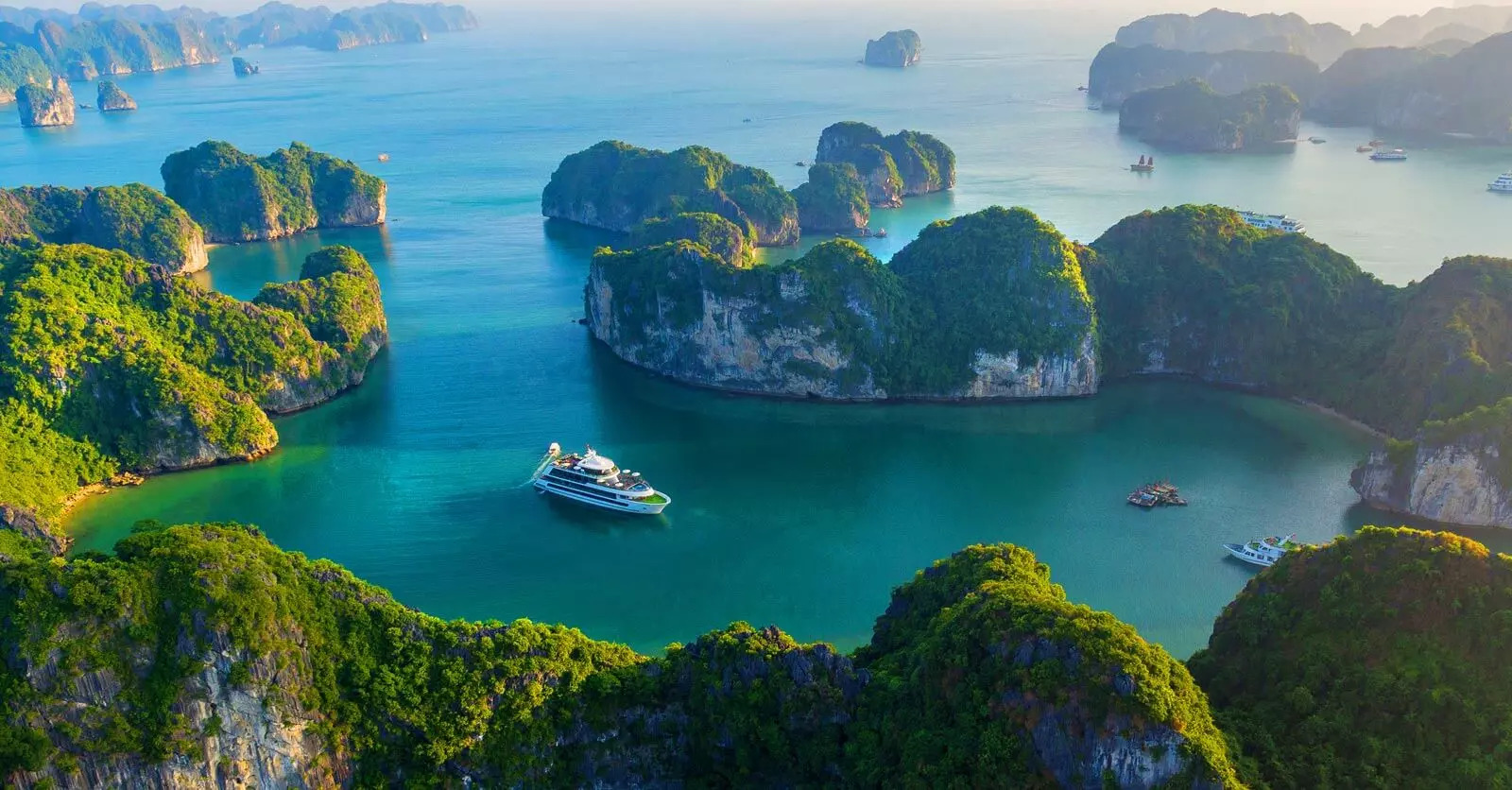
Halong Bay stretches approximately 1,553 square kilometers in the Gulf of Tonkin, roughly 170km east of Hanoi. This internationally renowned site features an impressive archipelago of 1,969 limestone islands and islets, creating one of the world’s most photographed seascapes.
Bai Tu Long Bay extends northeast of Halong Bay, covering a larger area that runs closer to the Chinese border near Mong Cai. While sharing similar geological formations, Bai Tu Long encompasses over 600 islands spread across waters that remain notably less developed for mass tourism.
Key Geographical Differences (Updated for 2025)
The bays’ proximity often causes confusion, but understanding their distinct boundaries helps travelers plan more effectively:
- UNESCO Recognition: Halong Bay holds official UNESCO World Heritage status, while Bai Tu Long forms part of the protected buffer zone
- Port Access Points: Halong Bay offers multiple departure points (primarily Tuan Chau Marina and Hon Gai Harbor), whereas Bai Tu Long cruises typically depart exclusively from Hon Gai
- Travel Distance: Journey time from Hanoi has improved significantly with the expanded expressway network, now averaging 2.5-3 hours to either destination
- Water Clarity: Recent 2025 environmental reports indicate Bai Tu Long’s waters maintain 27% higher visibility (averaging 4-6 meters versus 2-4 meters in Halong Bay)
Tourism Intensity: Crowd Comparison Between the Two Bays
Halong Bay: The Tourism Powerhouse
Halong Bay’s international fame comes with predictable consequences. Before the pandemic, it welcomed approximately 7 million visitors annually (both domestic and international). In 2025, tourism numbers have rebounded dramatically, with over 5.8 million visitors expected by year-end according to Vietnam National Administration of Tourism projections.
This popularity manifests in:
- 500+ cruise vessels operating daily in peak season
- Heavy boat traffic in popular areas like Sung Sot Cave and Ti Top Island
- Wait times of 30-45 minutes at major attractions during high season
- Limited opportunities for quiet contemplation at scenic viewpoints
Bai Tu Long Bay: The Serene Alternative
By stark contrast, Bai Tu Long Bay maintains a significantly more peaceful atmosphere:
- Approximately 80-100 cruise vessels operate in this larger area
- Visitor numbers hover around 1.2 million annually (2025 projection)
- Minimal wait times at attractions (typically under 10 minutes)
- Entire islands and beaches can often be enjoyed in relative solitude
For travelers prioritizing tranquility in 2025, Bai Tu Long Bay offers dramatically lower crowd density—approximately 75-80% fewer vessels visible at any given time compared to central Halong Bay routes.
Natural Splendor: Comparing Scenery and Ecological Features
Both bays boast the iconic limestone karst formations that define this region, but subtle differences exist in their visual and ecological characteristics.
Halong Bay’s Iconic Landscapes
Halong Bay’s scenery has graced countless travel magazines and films, featuring:
- More densely clustered karst formations with 1,969 islands within a smaller area
- Internationally famous landmarks like Titop Island (offering 360-degree panoramic views from its 427-step summit)
- Dramatic cave systems including Sung Sot Cave (18,000m² of illuminated chambers)
- The floating fishing village of Cua Van (home to approximately 130 households)
Bai Tu Long Bay’s Pristine Environment
Bai Tu Long offers a more untouched natural setting:
- Wider spacing between islands creating more open vistas across emerald waters
- Less visited but equally impressive caves like Thien Canh Son (featuring 10-meter-high stalactites)
- Secluded beaches such as Ban Chan (with 700 meters of pristine shoreline)
- Better preserved coral reefs with 162 identified species (versus 97 in Halong Bay)
- Vung Vieng fishing village, where traditional lifestyles remain more authentic with approximately 50 families maintaining centuries-old fishing techniques
A 2025 environmental assessment by Vietnam’s Ministry of Natural Resources found that Bai Tu Long Bay preserves approximately 87% of its original ecosystem integrity, compared to 64% in Halong Bay—a significant factor for ecologically-minded travelers.
Cruise Experience: Vessel Types and Itinerary Differences
Halong Bay Cruise Diversity
Halong Bay offers the widest selection of cruise options:
- Day Cruises: 4-6 hour excursions ($65-120 per person)
- Overnight Cruises: 2D1N experiences ($150-300 per person)
- Extended Cruises: 3D2N journeys ($280-600+ per person)
- Party Cruises: Social-focused experiences with onboard entertainment
- Family-Oriented Cruises: Kid-friendly activities and facilities
- Ultra-Luxury Options: 5-star experiences with premium amenities
Vessels range from traditional wooden junks accommodating 12-30 guests to large steel ships carrying 80+ passengers.
Bai Tu Long Bay’s Boutique Approach
Bai Tu Long cruises follow a more exclusive model:
- No Day Trips: Almost exclusively overnight experiences
- Boutique Vessels: Most ships accommodate just 12-24 passengers
- Premium Positioning: Fewer budget options, focus on mid to luxury market
- Extended Routes: Ability to reach remote areas impossible on shorter Halong itineraries
- Specialized Themes: Wellness cruises, photography expeditions, and culinary journeys
The typical Bai Tu Long vessel is a meticulously designed wooden junk with 8-16 cabins, offering intimate experiences with personalized service.
For 2025, standout cruise options include:
Bai Tu Long Bay:
- Dragon Legend Cruise (32 cabins, 5-star)
- Signature Royal Cruise (18 cabins, luxury)
- Emperor Cruises (8 all-suite cabins, ultra-luxury)
For Halong Bay:
- Ambassador Cruise (46 cabins, 5-star)
- Paradise Elegance (31 cabins, premium)
- Scarlet Pearl Cruise (23 cabins, boutique luxury)
Activities and Attractions: What Can You Actually Do?
Halong Bay’s Action-Packed Options
Halong Bay cruises typically feature a structured activity program including:
- Cave Exploration: Tours of Sung Sot Cave (8,000m²), Dau Go Cave, and Me Cung Cave
- Island Visits: Ti Top Island’s beach and viewpoint, Soi Sim Island
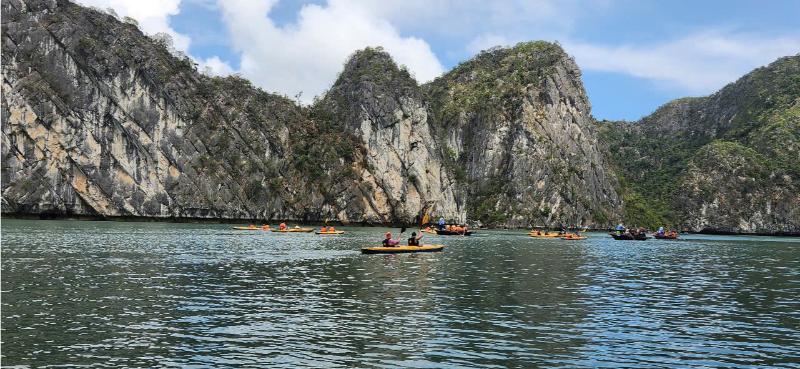
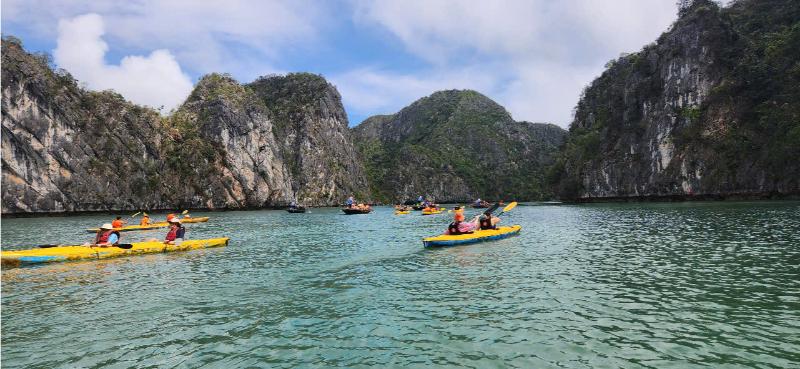
- Water Activities: Swimming at designated beaches, kayaking around karsts (typically 45-60 minute sessions)
- Cultural Experiences: Pearl farm visits, cooking classes, tai chi sessions
- Entertainment: Evening squid fishing, karaoke, themed dinner events
- Adventure Options: Rock climbing on some islands, helicopter tours over the bay
With approximately 30+ established tourist sites within Halong Bay, itineraries tend to include 3-5 major attractions per day.
Bai Tu Long Bay’s Nature-Focused Experiences
Bai Tu Long activities emphasize natural immersion and authenticity:
- Extended Kayaking: Longer routes through isolated areas (typically 90-120 minute sessions)
- Secluded Beaches: Pristine spots like Ban Chan Beach and Hon Co Island
- Traditional Village Visits: Vung Vieng and Cong Dam fishing villages where locals maintain traditional lifestyles
- Cave Exploration: Less crowded sites like Thien Canh Son Cave and Tam Cung Cave
- Culinary Experiences: Fresh seafood meals sourced directly from local fishermen
- Nature Observation: Bird watching (96 species documented), marine life spotting
The pace in Bai Tu Long is notably more relaxed, with typically just 2-3 activities daily but allowing deeper immersion at each location.
Price Analysis: Is Bai Tu Long More Expensive Than Halong Bay?
Contrary to some assumptions, pricing between the two bays isn’t drastically different when comparing similar quality levels. However, Halong Bay offers more budget options while Bai Tu Long focuses primarily on premium experiences.
2025 Price Comparison (Per Person in USD)
| Experience Level | Halong Bay (2D1N) | Bai Tu Long Bay (2D1N)
|
|---|---|---|
| Budget | $85-150 | $120-180 |
| Mid-Range | $160-240 | $190-260 |
| Luxury | $250-350 | $270-380 |
| Ultra-Luxury | $360-700+ | $390-750+ |
Value Considerations Beyond Price
When evaluating value, consider these factors beyond the base price:
- Passenger Density: Bai Tu Long cruises typically operate at 60-70% capacity versus 90-95% for Halong Bay vessels
- Cabin Size: Premium Bai Tu Long cruises average 28m² per cabin versus 22m² on comparable Halong options
- Inclusions: Many Bai Tu Long packages include premium beverages, spa credits, and private excursions that cost extra on Halong cruises
- Time Efficiency: Less crowded attractions mean more actual exploration time rather than waiting
For the budget-conscious traveler in 2025, Halong Bay Lux Cruises offers early booking discounts of up to 25% when reserving 60+ days in advance, making premium experiences more accessible.
Optimal Timing: When to Visit Each Bay in 2025
Weather patterns affect both bays similarly, but crowd fluctuations create distinct high and low seasons.
Peak Season (October-April)
This represents the ideal weather window with clear skies, moderate temperatures (20-28°C), and minimal rainfall:
- Halong Bay: Extremely busy, especially during Lunar New Year (February 2025) and Christmas/New Year period with 90-95% occupancy
- Bai Tu Long Bay: Moderately busy at 70-80% occupancy, still offering relative tranquility
Shoulder Season (May, September)
These transitional months offer a good balance of decent weather and lower crowds:
- Halong Bay: 60-70% capacity, occasional afternoon showers
- Bai Tu Long Bay: 40-50% capacity, excellent value proposition
Low Season (June-August)
Summer brings warmer temperatures (28-35°C) and higher chances of storms:
- Halong Bay: Still maintains 50-60% occupancy despite weather risks
- Bai Tu Long Bay: Very quiet at 30-40% capacity with significant discounting
For 2025 specifically, meteorologists predict an unusually dry November and exceptionally clear March, making these months particularly attractive for cruising either bay.
Environmental Considerations: Sustainability Comparison
Tourism’s environmental impact continues to be a significant concern in both bays, but management approaches differ substantially.
Halong Bay’s Environmental Challenges
Halong Bay faces several ongoing environmental issues:
- Water quality concerns in high-traffic areas, with visibility reduced to 2-4 meters
- Waste management challenges from 500+ vessels operating daily
- Coral reef degradation affecting approximately 36% of identified sites
- Noise pollution disrupting marine ecosystems
In response, authorities have implemented:
- Restricted navigation zones effective January 2025
- Mandatory waste collection systems on all vessels
- Phased elimination of single-use plastics by December 2025
- Alternative fuel requirements for newer vessels
Bai Tu Long Bay’s Conservation Success
Bai Tu Long demonstrates stronger environmental protection:
- Stricter vessel capacity limits (maximum 100 boats daily)
- 5,400-hectare marine conservation zone established in 2017
- Community-led conservation initiatives engaging local fishing villages
- Advanced wastewater treatment requirements for all cruise operators
The 2025 Environmental Protection Agency assessment awarded Bai Tu Long Bay a sustainability score of 87/100 versus Halong Bay’s 61/100—a consideration increasingly important to travelers.
Several operators in Bai Tu Long Bay, including those partnered with Halong Bay Lux Cruises, have implemented zero-waste policies, solar power systems, and plastic-free operations.
Ideal Traveler Match: Who Should Choose Which Bay?
Perfect for Halong Bay
Halong Bay better serves these traveler profiles:
- First-time Vietnam visitors seeking iconic experiences
- Time-constrained travelers who can only allocate one day
- Social butterflies who enjoy meeting fellow travelers
- Photography enthusiasts targeting Vietnam’s most recognizable vistas
- Families with young children needing structured activities
- Budget-conscious travelers seeking economical options
Perfect for Bai Tu Long Bay
Bai Tu Long Bay is ideal for:
- Return visitors to Vietnam seeking deeper experiences
- Nature enthusiasts prioritizing biodiversity and pristine environments
- Peace-seeking travelers valuing quiet and contemplation
- Couples and honeymooners desiring romantic seclusion
- Wellness-focused individuals pursuing relaxation and rejuvenation
- Luxury travelers willing to invest in premium experiences
Cruise Route Specifics: Where Exactly Will You Go?
Classic Halong Bay Itineraries
Standard 2-day Halong Bay itineraries typically cover:
- Day 1: Departure from harbor (12:00-13:00) → Limestone cave exploration (Sung Sot or Thien Cung) → Titop Island for swimming/viewpoint → Evening anchor in Luon Bo area
- Day 2: Morning tai chi → Kayaking session → Brunch → Return to harbor (10:30-11:00)
This route concentrates on the bay’s central section, where the most famous formations are located but also where boat traffic is heaviest.
Typical Bai Tu Long Bay Routes
A comparable 2-day Bai Tu Long itinerary follows this pattern:
- Day 1: Departure from harbor (12:30-13:30) → Cruising through less-visited channels → Thien Canh Son Cave exploration → Secluded beach visit → Evening anchor near Cong Dam
- Day 2: Sunrise tai chi → Extended kayaking through hidden lagoons → Vung Vieng fishing village visit → Brunch → Return to harbor (11:00-12:00)
The key difference lies in the routing through less congested waters, allowing more time at each location without other cruise ships in view.
For those interested in exploring Bai Tu Long’s pristine waters, specialized itineraries can reach remote areas like Cong Do Island and Tra San—locations inaccessible to standard Halong Bay cruises.
Accommodation Standards: Cabin Quality and Amenities
Halong Bay’s Diverse Lodging Options
Halong Bay’s accommodations span every category:
- Budget cruises: Typically feature 9-12m² cabins with basic amenities
- Mid-range options: 12-18m² cabins with private balconies
- Luxury vessels: 18-25m² suites with premium furnishings
- Ultra-luxury options: 25-45m² suites with separate sitting areas
Notable in 2025 is the trend toward larger vessels with 40+ cabins, offering hotel-like facilities including multiple restaurants, spas, and entertainment venues.
Bai Tu Long’s Boutique Focus
Bai Tu Long cruises emphasize quality over quantity:
- Entry-level cabins: Start at 14m² with higher-quality fixtures
- Standard luxury options: Average 22-28m² with private balconies
- Premium suites: Range from 32-60m² with bathtubs and panoramic windows
The trend in Bai Tu Long for 2025 is toward ultra-boutique experiences—vessels with just 8-12 suites but offering unprecedented space and personalized service.
Dining Experiences: Culinary Differences Between the Bays
Halong Bay’s Standardized Dining
Most Halong Bay cruises follow similar dining patterns:
- Set menus catering to international tastes
- Buffet-style service common on larger vessels
- Seafood options supplemented with extensive meat dishes
- Cultural performances during dinner on premium cruises
Bai Tu Long Bay’s Authentic Approach
Bai Tu Long cruises typically emphasize:
- Locally-sourced ingredients from fishing villages within the bay
- Family-style Vietnamese dining experiences
- Chef’s table concepts with interactive food preparation
- Greater focus on traditional northern Vietnamese specialties
- Private dining options in scenic locations
A standout trend for 2025 is the farm/sea-to-table movement in Bai Tu Long Bay, with some cruises now featuring on-deck herb gardens and direct purchasing from passing fishing boats.
2025 Special Considerations: What’s New This Year
Several developments for 2025 impact the Halong vs Bai Tu Long decision:
Infrastructure Improvements
- New Highway: The expanded Van Don Highway now reduces transfer times from Hanoi by approximately 30 minutes
- Upgraded Ports: Hon Gai Harbor completed its expansion in late 2024, accommodating larger vessels
- Seaplane Access: Regular seaplane services now connect both bays to Hanoi (35-minute flight versus 3-hour drive)
Regulatory Changes
- Halong Bay Navigation Restrictions: New zoning laws limit daily entries to certain areas
- Environmental Certifications: All Bai Tu Long operators must now meet stricter sustainability standards
- Safety Protocols: Enhanced weather monitoring systems implemented throughout both bays
2025 Special Events
- 50th Anniversary of Vietnam Reunification: Special celebrations scheduled throughout both bays in April-May 2025
- International Conservation Summit: Hosting in Halong City (September 2025)
- Bai Tu Long Cultural Festival: Newly expanded program (November 2025)
Making Your Decision: Final Comparison Table
| Factor | Halong Bay | Bai Tu Long Bay
|
|---|---|---|
| Crowd Density | High (500+ boats daily) | Low (80-100 boats daily) |
| Scenery | Iconic, densely clustered | Equally stunning, more open |
| Cruise Options | Extensive (day to 3-night) | Limited (primarily overnight) |
| Activities | Diverse, sometimes rushed | Focused, unhurried |
| Price Range (2D1N) | $85-700+ | $120-750+ |
| Sustainability | Improving (61/100 rating) | Leading (87/100 rating) |
| Cabin Size (avg) | 22m² (luxury category) | 28m² (luxury category) |
| Ideal Traveler | First-timers, families | Return visitors, couples |
| Travel Time from Hanoi | 2.5-3 hours | 3-3.5 hours |
FAQs About Bai Tu Long vs Halong Bay (2025 Edition)
Q: Can I visit both Halong Bay and Bai Tu Long Bay on the same cruise?
A: Yes, several operators now offer “crossover” itineraries that begin in Halong and extend into Bai Tu Long. These typically require a minimum 3-day/2-night commitment.
Q: Is Bai Tu Long Bay worth the potentially higher cost?
A: For travelers prioritizing tranquility and unspoiled scenery, the premium (approximately 15-20%) is generally considered worthwhile, especially given the lower passenger densities and enhanced service levels.
Q: Are there day trip options to Bai Tu Long Bay?
A: While technically possible, day trips to Bai Tu Long aren’t recommended as the longer transfer time leaves minimal exploration opportunity. Overnight cruises remain the optimal way to experience this bay.
Q: How much English is spoken on cruises to each bay?
A: Both destinations feature excellent English communication on premium vessels. Bai Tu Long cruises often employ staff with slightly higher language proficiency (average IELTS 6.5 versus 5.5 on Halong cruises) due to their luxury positioning.
Q: Which bay has better swimming opportunities?
A: Bai Tu Long offers clearer water with 27% better visibility (2025 environmental assessment) and more pristine beaches. However, swimming is seasonal in both bays, with May-September offering the warmest water temperatures (25-29°C).
Experience Vietnam’s Spectacular Bays with Expert Guidance
Whether you choose the iconic landscapes of Halong Bay or the serene waters of Bai Tu Long Bay, Halong Bay Lux Cruises specializes in crafting unforgettable experiences tailored to your preferences. Our intimate knowledge of both destinations ensures you’ll experience the very best of Vietnam’s maritime wonders.
For travelers seeking the perfect balance of iconic sights and peaceful exploration, our 2-day luxury cruise packages deliver exceptional value with premium amenities and carefully crafted itineraries.
The breathtaking limestone karsts, emerald waters, and cultural richness of northern Vietnam await—with the right guidance, your 2025 bay cruise will become the highlight of your Southeast Asian adventure.
Conclusion: Your Perfect Bay Awaits in 2025
The choice between Bai Tu Long Bay and Halong Bay ultimately depends on your travel priorities. While both offer spectacular natural beauty, Halong Bay provides accessibility, iconic vistas, and diverse options, while Bai Tu Long Bay delivers tranquility, authenticity, and elevated experiences for those willing to venture slightly further.
As Vietnam tourism continues its strong recovery in 2025, making an informed decision becomes increasingly important. Whether you seek the perfect Instagram backdrop or a peaceful communion with nature, Vietnam’s magnificent bays promise memories that will last a lifetime.
This guide was last updated in June 2025 to reflect the latest developments in both Halong and Bai Tu Long Bay.
Hotline | WhatsApp: +84.978.358.422
Phone | WhatsApp: +84.962.261.687
Email: halongbayluxcruises@gmail.com
vietnammarveltravel@gmail.com
Top Halong Bay Review on the TripAdvisor