








Top 15 Best Times to Visit Ninh Binh: Complete Seasonal Guide
Nestled in the heart of northern Vietnam, Ninh Binh offers an enchanting escape from bustling city life with its breathtaking limestone karsts, serene waterways, and rich cultural heritage. Often called “Halong Bay on land,” this destination demands thoughtful timing to fully appreciate its natural splendor and authentic Vietnamese experiences. Whether you’re drawn to golden rice paddies, ancient temples, or misty mountain landscapes, knowing exactly when to visit can transform your journey from memorable to magical. Let’s explore the optimal times to experience Ninh Binh’s diverse seasonal charms throughout
The Complete Seasonal Breakdown of Ninh Binh’s Climate
Understanding Ninh Binh’s distinct seasonal patterns is essential for planning your perfect Vietnamese adventure. The region’s subtropical climate creates four markedly different experiences throughout the year, each with unique advantages for different types of travelers.
Spring’s Awakening (February – April)
Spring breathes new life into Ninh Binh’s landscapes, making it arguably the most photogenic season. During these months, temperatures hover comfortably between 18-27°C (64-81°F), creating ideal conditions for exploration. The moderate humidity (around 75-80%) and minimal rainfall (averaging just 15-45mm monthly) provide perfect circumstances for outdoor activities.
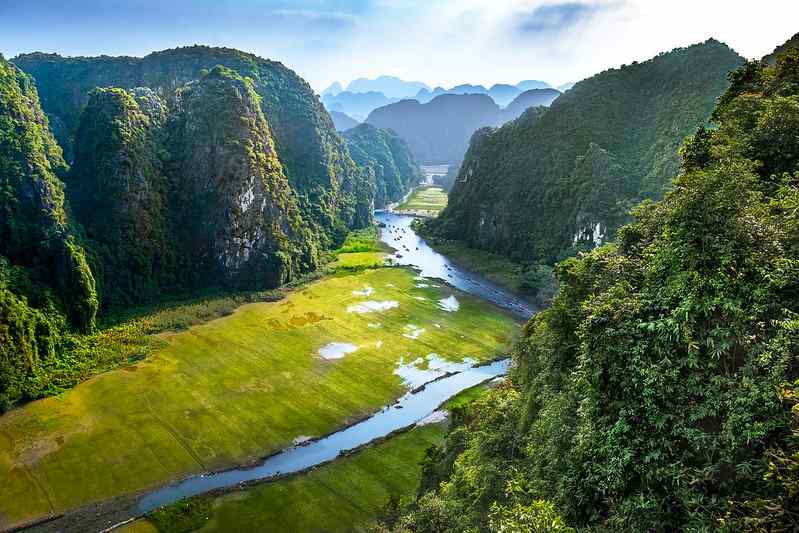
February marks the tail end of winter, with gradually warming days that encourage early blooms across the countryside. By March, you’ll witness vibrant splashes of color appearing throughout the region as wildflowers carpet the limestone foothills. The iconic boat rides through Tam Coc become especially magical as tender green rice shoots emerge from the paddies, creating reflective surfaces that mirror the towering karst formations.
April deserves special recognition as perhaps the single most perfect month for visiting Ninh Binh. The weather stabilizes with consistent sunshine (approximately 6-7 hours daily) and temperatures reaching a pleasant 25-27°C (77-81°F). The landscape achieves peak verdancy, with rich emerald tones dominating the scenery before summer’s heat intensifies.
Spring Highlights:
- Tam Coc’s “young rice” period with brilliant green paddies (mid-March to early April)
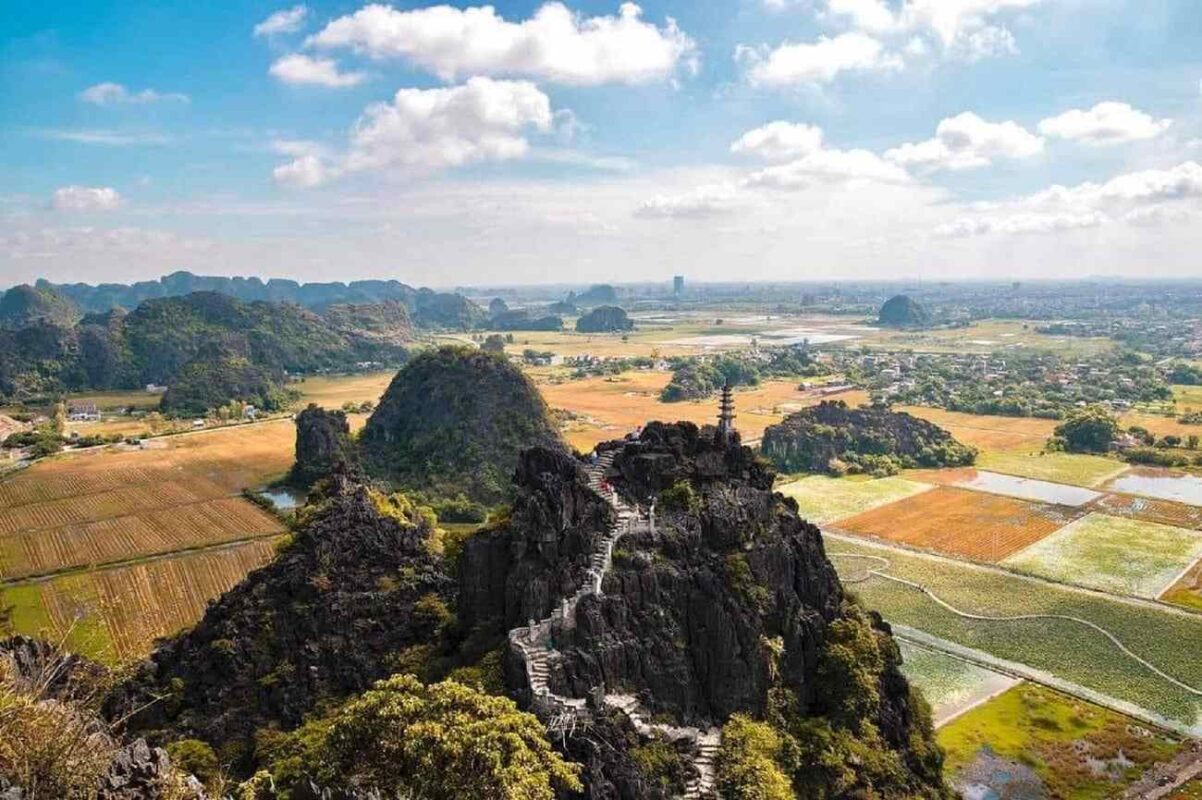
- Clear visibility for spectacular panoramic views from Mua Cave’s 500-step summit
- Hoa Lu Ancient Capital Festival (April 9-10, 2025) featuring traditional processions, folk games, and cultural performances
Spring Travel Tip: Book accommodations at least 2-3 months in advance for April visits, especially around the Hoa Lu Festival when occupancy rates exceed 90% in premium properties.
Summer’s Abundance (May – August)
Summer transforms Ninh Binh into a tropical paradise, albeit one that demands adaptation from travelers. The mercury climbs considerably, with daytime temperatures frequently reaching 32-35°C (90-95°F) and occasionally spiking toward 38°C (100°F) during June and July. Humidity levels soar to 85-90%, creating that characteristic Vietnamese summer atmosphere.
May represents a transitional period when rice fields begin their transformation from vibrant green to golden yellow. This photogenic phase typically peaks in late May to early June, when the paddies create stunning golden carpets beneath the limestone mountains. Despite increasing rainfall (100-230mm monthly), the intermittent nature of summer showers still allows for productive sightseeing with proper planning.
July and August bring the heaviest precipitation, with an average of 14-18 rainy days per month. While this might seem deterring, these rains create dramatic misty landscapes that photographers particularly treasure. The abundant rainfall nourishes Ninh Binh’s natural attractions, with waterfalls in Cuc Phuong National Park reaching their most impressive flow rates.
Summer Highlights:
- Golden harvest scenes in Tam Coc and Trang An (late May to early June)
- Lush, dramatic landscapes with misty mountains after rainfall
- Significantly reduced crowds at major attractions (up to 40% fewer visitors compared to peak season)
- Budget-friendly accommodation rates (typically 15-30% lower than spring prices)
Summer Travel Tip: Schedule your outdoor activities during early morning (6-9 AM) or late afternoon (after 4 PM) to avoid the midday heat. Pack quick-dry clothing, quality rain gear, and insect repellent for comfortable exploration.

Autumn’s Gentle Embrace (September – November)
Many seasoned Vietnam travelers consider autumn the ultimate sweet spot for visiting Ninh Binh. As summer’s intense heat gradually retreats, September introduces more moderate temperatures ranging from 25-30°C (77-86°F), with October cooling further to 22-28°C (72-82°F). By November, the refreshing 18-25°C (64-77°F) range creates perfect conditions for active exploration.
The region’s natural beauty transitions during these months. September still carries summer’s lushness but with decreasing rainfall (averaging 130mm compared to August’s 200+mm). By October, precipitation drops dramatically (around 70mm monthly), and humidity levels decline to a comfortable 70-75%.
November deserves special mention for travelers seeking tranquility and clear skies. With minimal rainfall (averaging just 30mm across the month) and consistently mild temperatures, this month provides exceptional conditions for hiking, cycling, and photography. The second rice harvest sometimes occurs in late October through November, potentially offering another opportunity to witness golden fields.
Autumn Highlights:
- Crystal-clear skies with exceptional visibility for landscape photography
- Comfortable hiking conditions for exploring Hang Mua, Bai Dinh, and Trang An
- Second rice harvest scenes (weather dependent, typically late October)
- Pleasant evening temperatures perfect for enjoying local cuisine at outdoor venues
Autumn Travel Tip: Mid-October through November represents Ninh Binh’s “shoulder season,” when you’ll find an optimal balance of good weather, reasonable prices, and manageable crowd levels. Consider planning a 3-day itinerary combining Ninh Binh and Halong Bay during this period for the ultimate northern Vietnam experience.
Winter’s Contemplative Quiet (December – January)
Winter brings a distinctly different character to Ninh Binh. Temperatures cool significantly, ranging from 15-20°C (59-68°F) during the day and potentially dropping to 10-12°C (50-54°F) at night. While these temperatures remain mild by global standards, the high humidity (70-80%) can make evenings feel cooler than thermometers suggest.
December and January offer the year’s driest conditions, with rainfall averaging just 20-25mm monthly. This creates excellent opportunities for exploring historical and cultural sites without weather interruptions. The winter light casts a softer glow across the landscape, creating atmospheric conditions that photographers particularly appreciate during the “golden hours” of early morning and late afternoon.
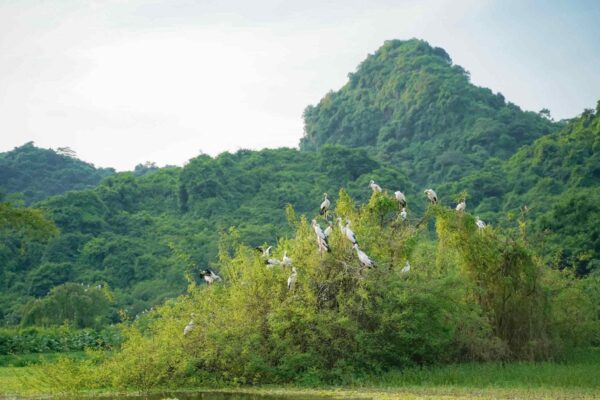
The rice fields lie fallow during winter, with earthy browns dominating where vibrant greens and golds appeared in other seasons. While less conventionally picturesque, this period offers a more authentic glimpse into rural Vietnamese life outside the tourist high season. Bird-watching opportunities improve dramatically in winter, with several migratory species visiting Ninh Binh’s wetlands.
Winter Highlights:
- Dramatically reduced tourist numbers (approximately 60-70% fewer visitors than peak season)
- Excellent bird-watching in Van Long Nature Reserve
- Crisp, clear conditions for temple visits and cultural experiences
- Significant accommodation discounts (often 25-40% below peak season rates)
Winter Travel Tip: Pack layers, including a light jacket and scarf for mornings and evenings. Consider booking homestays with heating options, as many budget accommodations lack climate control systems.
15 Prime Best Time To Visit Ninh Binh (Month by Month)
Let’s break down each month’s unique characteristics to help you pinpoint the perfect time for your visit in 2025:
1. January: Tranquil Cultural Immersion
January offers a uniquely peaceful Ninh Binh experience. With average temperatures of 15-19°C (59-66°F) and minimal rainfall (approximately 18mm across the month), conditions remain stable for exploration. The tourist population reaches its annual low, with major attractions operating at just 30-40% of peak capacity.
This month particularly suits travelers interested in authentic cultural experiences. The quiet atmosphere at sites like Bai Dinh Pagoda (Vietnam’s largest Buddhist complex) allows for meaningful spiritual encounters without the distraction of crowds. Local markets operate at a relaxed pace, providing opportunities to engage genuinely with vendors and artisans.
Perfect for: Cultural enthusiasts, photographers seeking atmospheric mist, budget travelers
January Special Event: Vietnamese New Year preparations begin in late January, offering glimpses into traditional customs as families prepare for the upcoming holiday.
2. February: Pre-Spring Awakening
February marks the transition from winter to spring, with temperatures gradually warming to 17-21°C (63-70°F). Rainfall remains minimal (approximately 25mm monthly), and humidity levels stay moderate at 75-80%. This creates increasingly comfortable conditions for outdoor activities.
The landscape begins showing subtle signs of renewal, with early blossoms appearing on fruit trees throughout the countryside. February 2025 will likely see the beginning of agricultural preparations for the spring rice planting, offering insights into traditional farming practices.
Perfect for: Off-season travelers seeking value, photographers capturing the winter-to-spring transition, cultural explorers
February Special Event: Depending on the lunar calendar, Vietnamese New Year (Tet) celebrations may fall in early February 2025, offering a spectacular cultural experience with elaborate ceremonies, traditional foods, and festive decorations.
3. March: Springtime Perfection
March delivers Ninh Binh in its emerging spring glory. Temperatures reach a comfortable 20-25°C (68-77°F), creating ideal conditions for active exploration. With moderate rainfall (averaging 45mm) and increasing sunshine (approximately 5-6 hours daily), natural attractions showcase their beauty without weather disruptions.
The rice planting season typically begins in March, transforming the famous Tam Coc paddies into reflective pools that mirror the surrounding limestone karsts. This creates one of the year’s most photogenic landscapes, particularly during morning boat rides when mist often lingers among the mountains.
Perfect for: Photographers, nature enthusiasts, active travelers
March Special Event: The traditional Bai Dinh Pagoda Festival typically continues through early March, featuring Buddhist ceremonies, folk games, and cultural performances.
4. April: Festival Season & Peak Beauty
April represents perhaps the single most ideal month for visiting Ninh Binh in 2025. With reliable temperatures of 23-27°C (73-81°F), moderate humidity (around 80%), and limited rainfall (approximately 65mm), conditions consistently favor outdoor exploration. Clear skies dominate, providing excellent visibility for landscape photography.
The young rice reaches its most vibrant green stage by mid-April, creating spectacular scenery throughout Tam Coc and Trang An. The limestone mountains stand in sharp contrast against the verdant paddies and increasingly blue skies, creating postcard-perfect vistas from every angle.
Perfect for: All travelers, especially first-time visitors to Vietnam, festival enthusiasts, photographers
April Special Event: The Hoa Lu Ancient Capital Festival (April 9-10, 2025) offers the year’s most spectacular cultural display, featuring elaborate processions, traditional performances, and historical reenactments honoring King Dinh Tien Hoang and King Le Dai Hanh.
5. May: Golden Harvest Beginnings
May introduces summer’s warmth while maintaining relatively comfortable conditions. Temperatures climb to 26-32°C (79-90°F), and humidity increases noticeably. Rainfall begins increasing (averaging 150mm), though typically in short afternoon bursts rather than all-day downpours.
This month captures a magical transition in the rice fields, as they gradually shift from deep green to golden yellow. By late May, many paddies achieve that coveted golden hue, creating spectacular photography opportunities—particularly during morning and evening “golden hours” when low-angle light illuminates the landscape.
Perfect for: Photographers seeking harvest scenes, budget travelers (as high season ends), heat-tolerant adventurers
May Special Event: The Trang An Festival typically occurs in early May, featuring boat processions, traditional music performances, and cultural displays celebrating local heritage.
6. June: Summer Harvest & Dramatic Skies
June brings full summer conditions, with temperatures regularly reaching 30-35°C (86-95°F) and high humidity (85-90%). Rainfall increases significantly (averaging 180mm), creating dramatic weather patterns with intense but typically brief afternoon downpours followed by clearing skies.
The rice harvest usually reaches its peak in early June, creating golden landscapes throughout the region. After harvest, the cycle begins anew with flooding and preparation for the second planting. This agricultural transition creates constantly changing scenes that fascinate cultural observers.
Perfect for: Photographers seeking dramatic weather and golden harvests, budget travelers, heat-adapted explorers
June Travel Tip: Explore the region’s numerous caves, which maintain cool temperatures year-round. Consider adding the spectacular 5-star Lan Ha Bay cruise experience to your itinerary for a refreshing coastal complement to Ninh Binh’s inland beauty.
7. July: Lush Monsoon Landscapes
July represents Ninh Binh’s wettest month, with rainfall averaging 240mm across approximately 15 rainy days. Temperatures remain high at 29-34°C (84-93°F), with humidity consistently above 85%. While these conditions challenge some travelers, they create extraordinarily lush landscapes and dramatically reduced tourist numbers.
The frequent rainfall nourishes Ninh Binh’s vegetation, creating vibrant green panoramas everywhere. Waterfalls in Cuc Phuong National Park reach their most impressive flow rates, and the limestone mountains often appear draped in atmospheric mist after rainfall.
Perfect for: Photographers seeking atmospheric conditions, wildlife enthusiasts, budget travelers
July Special Event: The second rice planting typically occurs in July, offering opportunities to observe traditional farming methods as locals work in the paddies.
8. August: Vivid Green Landscapes
August continues summer’s pattern with high temperatures (29-33°C/84-91°F) and substantial rainfall (averaging 200mm). Humidity remains elevated at 85-90%, creating that characteristic tropical atmosphere. However, the frequent rain showers maintain the landscape’s exceptional verdancy.
By mid-to-late August, the second rice crop develops into vibrant green paddies, recreating spring’s emerald beauty. With tourism at its annual low point, you’ll find peaceful conditions at major attractions—sometimes having entire sections of Trang An or Tam Coc to yourself, especially during weekdays.
Perfect for: Budget travelers, photographers seeking green landscapes and atmospheric conditions, crowd-averse explorers
August Travel Tip: Many hotels offer significant discounts during this low season, with luxury properties sometimes available at 30-40% below peak rates. Consider splurging on premium accommodation to enhance your experience during this humid month.
9. September: Early Autumn Transition
September marks the beginning of autumn’s more moderate conditions. While still warm at 27-31°C (81-88°F), temperatures gradually decrease throughout the month. Rainfall remains significant (approximately 130mm) but declines from summer peaks, and humidity begins dropping to more comfortable levels.
The landscape maintains its lushness while beginning subtle transitions toward autumn. The second rice crop reaches maturity in some areas, potentially creating another round of golden paddies (though less reliable than the May-June harvest). With tourist numbers still relatively low, September offers good value with improving weather.
Perfect for: Budget-conscious travelers seeking better weather, photographers, active adventurers
September Special Event: The Mid-Autumn Festival (exact date varies by lunar calendar) brings lantern displays, mooncake sharing, and cultural performances throughout the region.
10. October: Autumn’s Perfect Balance
October delivers what many consider the year’s most perfect conditions. Temperatures moderate to 24-29°C (75-84°F), humidity drops to comfortable levels (70-75%), and rainfall decreases dramatically (averaging 70mm across the month). Clear skies dominate, creating excellent visibility for landscape photography.
The second rice harvest sometimes occurs during October, potentially offering another round of golden fields (though this varies by local farming schedules). The moderate temperatures create ideal conditions for exploring Ninh Binh’s many hiking trails, including the popular 500-step climb to Mua Cave’s panoramic viewpoint.
Perfect for: All travelers, especially those seeking perfect weather, active adventurers, photographers
October Travel Tip: Consider combining your Ninh Binh adventure with a 2-day luxury cruise exploring Halong Bay and Lan Ha Bay to experience northern Vietnam’s most spectacular limestone landscapes both on land and at sea.
11. November: Clear Skies & Comfortable Exploration
November solidifies autumn’s pleasant conditions with temperatures cooling further to 20-26°C (68-79°F). Rainfall drops to minimal levels (averaging just 30mm across the entire month), creating consistently dry conditions perfect for outdoor activities. Humidity levels remain comfortable at 70-75%.
The landscape transitions toward winter, with rice fields in various states depending on local harvesting schedules. While less uniformly green or golden than other seasons, November’s clear skies and comfortable temperatures create perfect conditions for exploring Ninh Binh’s numerous hiking trails, cycling routes, and cultural attractions.
Perfect for: Active travelers, hikers, cyclists, cultural enthusiasts
November Special Event: The Vietnam Cultural Heritage Day (November 23, 2025) often features special events and performances at historical sites throughout Ninh Binh province.
12. December: Winter’s Peaceful Arrival
December introduces winter conditions with cooler temperatures ranging from 17-22°C (63-72°F) during the day and potentially dropping to 13-15°C (55-59°F) at night. Rainfall remains minimal (approximately 20mm monthly), and skies generally stay clear with excellent visibility.
The tourist population decreases significantly as December progresses, creating peaceful conditions at major attractions. While the rice fields lie fallow during this period, the winter light creates beautiful conditions for landscape photography, especially during the “golden hours” around sunrise and sunset.
Perfect for: Crowd-averse travelers, photographers seeking winter light, cultural enthusiasts
December Special Event: Christmas celebrations gain increasing prominence in Vietnam, with decorative lights and special events in urban areas, creating an interesting cultural fusion experience.
13. Early April: Festival Season’s Beginning
Early April deserves specific mention for cultural enthusiasts. As preparations begin for the Hoa Lu Festival (April 9-10, 2025), the region buzzes with anticipation. Temperatures settle into the perfect range of 22-26°C (72-79°F), and rainfall remains minimal, creating ideal conditions for exploration.
The young rice reaches a vibrant green stage, creating spectacular backdrops for cultural activities. With the tourist high season just beginning, you’ll find a good balance between lively atmosphere and manageable crowd levels at major attractions.
Perfect for: Cultural enthusiasts, photographers, first-time visitors
Early April Special Event: Pre-festival activities begin several days before the main Hoa Lu celebration, with practice performances and preliminary ceremonies worth experiencing.
14. Late October: Autumn’s Golden Finale
Late October represents another specialized sweet spot in Ninh Binh’s calendar. With temperatures perfected to 22-27°C (72-81°F), minimal rainfall, and tourist numbers moderating after the autumn peak, conditions align for exceptional experiences.
The landscape achieves a beautiful balance between summer’s lushness and winter’s clarity. Sunsets during this period are particularly spectacular, with clear atmospherics creating vibrant colors over the limestone karsts and waterways.
Perfect for: Photographers, nature enthusiasts, romantic travelers
Late October Travel Tip: Consider visiting Cuc Phuong National Park during this period to witness the butterfly migration, when thousands of butterflies create magical scenes among the ancient forest.
15. Mid-May: Perfect Harvest Viewing
Mid-May offers a specialized window for photographers and cultural observers. As the first rice harvest approaches, fields throughout Tam Coc and Trang An transform into golden carpets stretching between the limestone mountains. Temperatures remain manageable at 25-30°C (77-86°F), though humidity increases noticeably.
The tourist high season begins winding down during this period, creating a good balance between services availability and crowd management. The changing rice colors create different photographic opportunities each day as the harvest approaches.
Perfect for: Photographers seeking harvest scenes, cultural observers, budget travelers
Mid-May Travel Tip: Book boat tours for early morning (6:00-7:30 AM) to capture the golden light illuminating the ripening rice paddies before the day’s heat and potential afternoon showers arrive.
Planning Your Best Time To Visit Ninh Binh
Essential Packing Recommendations by Season
Spring (February-April):
- Light layers for variable temperatures
- Sun protection (hat, sunglasses, SPF 30+ sunscreen)
- Light rain jacket for occasional showers
- Comfortable walking shoes for temple visits and hiking
- Insect repellent (mosquitoes become active as temperatures rise)
Summer (May-August):
- Lightweight, breathable clothing (natural fibers like cotton and linen)
- Quality rain gear (waterproof rather than water-resistant)
- High-SPF sunscreen and sun protection
- Quick-dry clothing for sudden showers
- Moisture-wicking undergarments
- Effective insect repellent (preferably containing DEET or picaridin)
Autumn (September-November):
- Light layers for variable temperatures
- Light jacket for evening coolness (especially in November)
- Sun protection
- Comfortable hiking footwear for exploring trails
- Binoculars for bird watching (autumn migration season)
Winter (December-January):
- Warmer layers including light jackets and sweaters
- Scarf and hat for morning/evening activities
- Comfortable walking shoes
- Moisturizer (winter air can be drying)
Accommodation Insights
Ninh Binh offers diverse accommodation options ranging from budget homestays to luxury resorts. Based on projections:
Luxury Options: Emeralda Resort and Tam Coc Garden remain the premium choices, with peak season rates expected to range from $150-250 per night. These properties offer stunning settings with limestone mountain views and excellent amenities.
Mid-Range Comfort: Properties like Tam Coc Rice Fields Resort and Hidden Charm Hotel provide excellent value at approximately $70-120 per night during peak season, with significant discounts during summer and winter.
Authentic Homestays: For cultural immersion, consider family-run options like Tam Coc Homestay or Ninh Binh Family Homestay, typically ranging from $25-50 per night including home-cooked meals.
Booking Strategy: Reserve accommodations 2-3 months in advance for April and October visits. For summer and winter travel, 2-4 weeks notice typically suffices. Most properties offer 15-30% discounts for stays of 3+ nights.
Transportation Tips
Reaching Ninh Binh:
- From Hanoi: Regular trains (2 hours, approximately 80,000 VND) and buses (2.5 hours, approximately 100,000 VND) provide convenient connections.
- Private car services offer the most comfortable option at approximately $60-80 one-way from Hanoi.
Local Transportation:
- Bicycle rental remains the most charming way to explore, typically costing 50,000-70,000 VND per day.
- Motorbike rentals offer greater range at approximately 150,000-200,000 VND daily.
- Private car with driver typically costs 800,000-1,200,000 VND for a full day of exploration.
2025 Transportation Tip: New electric shuttle services between major attractions are expected to launch in early 2025, offering eco-friendly transportation for approximately 250,000 VND for a day pass.
Combining Ninh Binh with Other Vietnamese Destinations
Ninh Binh and Halong Bay: The Perfect Pairing
Many travelers wisely combine Ninh Binh with nearby Halong Bay for a comprehensive northern Vietnam experience. This pairing allows you to experience similar limestone karst landscapes in dramatically different settings—Ninh Binh’s emerald rice paddies contrasting beautifully with Halong Bay’s azure waters.
For the ultimate northern Vietnam adventure, consider this strategic combination:
- Begin with 1-2 days exploring Ninh Binh’s terrestrial wonders
- Continue with a 3-day luxury cruise through Halong Bay and Lan Ha Bay to experience the marine side of Vietnam’s karst landscape
- Conclude in Hanoi for urban cultural experiences
This arrangement provides a perfect balance of land and sea, active adventure and relaxing cruise experiences. The recommended Ninh Binh and Halong Bay 3-day package offers seamless connections between these complementary destinations.
Best Time for This Combination: April, May, October and November offer optimal conditions at both destinations, with clear skies enhancing both terrestrial and marine views.
Extended Northern Vietnam Itineraries
For travelers with more time, consider this expanded northern Vietnam circuit:
- Hanoi (2-3 days) – Urban culture and history
- Ninh Binh (2 days) – Rural landscapes and ancient capitals
- Halong Bay luxury cruise (2-3 days) – Marine karst landscapes
- Sapa (2-3 days) – Mountain trekking and ethnic minority cultures
This comprehensive northern route provides extraordinary diversity in landscapes and cultural experiences while maintaining reasonable travel distances between destinations.
FAQs About Visiting Ninh Binh
How many days do I need to explore Ninh Binh properly?
While Ninh Binh can technically be visited as a day trip from Hanoi, we strongly recommend allocating at least 2 full days to properly experience its diverse attractions. This allows time for:
- Day 1: Tam Coc boat ride, Bich Dong Pagoda, and Mua Cave
- Day 2: Trang An Complex, Hoa Lu Ancient Capital, and Bai Dinh Pagoda
For nature enthusiasts, adding a third day allows for exploration of Cuc Phuong National Park or Van Long Nature Reserve.
Is Ninh Binh suitable for family travel with young children?
Absolutely! Ninh Binh offers numerous child-friendly activities:
- Gentle boat rides through scenic waterways
- Bicycle explorations of flat countryside paths
- Wildlife encounters at Cuc Phuong National Park
- Interactive cultural experiences at craft villages
The best seasons for family travel are spring (March-April) and autumn (October-November) when moderate temperatures and minimal rainfall create comfortable conditions for children of all ages.
How crowded will Ninh Binh ?
Tourism projections for 2025 suggest continued growth in Ninh Binh’s popularity, with peak season visitor numbers potentially increasing by 15-20% compared to 2023 figures. However, crowd levels vary dramatically by season:
Peak Periods (highest visitor concentrations):
- April 9-11, 2025 (Hoa Lu Festival)
- Vietnamese national holidays
- Weekends during April-May and September-October
Moderate Visitor Periods:
- Weekdays during spring and autumn
- Early June and late August
Low Season (fewest visitors):
- July (rainy season)
- December through January (winter)
Even during busy periods, strategic timing (early morning or late afternoon visits) allows for more peaceful experiences at major attractions.
Will climate change affect Ninh Binh’s seasonal patterns?
Climate projections suggest subtle shifts in Ninh Binh’s weather patterns, potentially including:
- Slightly higher average temperatures (approximately 0.5-1°C above historical norms)
- More intense but less frequent rainfall during summer months
- Possibly extended spring and autumn seasons
- Shorter but occasionally more intense winter cold snaps
These changes remain within the normal range of variability and shouldn’t significantly impact travel plans. However, travelers visiting during traditional shoulder seasons (February and November) may experience more favorable conditions than historical patterns would suggest.
Conclusion: Choosing Your Perfect Time for Ninh Binh
While each season offers distinct experiences in Ninh Binh, April and October emerge as the standout months for visits, providing optimal balances of comfortable weather, scenic beauty, and cultural opportunities.
For photographers seeking iconic rice field imagery, the specialized windows of late May (first harvest) and late October (potential second harvest) offer golden panoramas that define Ninh Binh’s visual identity. Cultural enthusiasts should prioritize early April to experience the region’s most significant traditional festival at Hoa Lu Ancient Capital.
Budget-conscious travelers will find excellent value during July-August (rainy season) and December-January (winter), when accommodation rates drop significantly while major attractions remain accessible.
Whatever season you choose, combining Ninh Binh with a luxury Halong Bay cruise experience creates the ultimate northern Vietnam adventure—experiencing the region’s spectacular limestone landscapes both on land and at sea. This perfect pairing showcases the extraordinary natural beauty that makes northern Vietnam one of Southeast Asia’s most captivating destinations.
Hotline | WhatsApp: +84.978.358.422
Phone | WhatsApp: +84.962.261.687
Email: halongbayluxcruises@gmail.com
vietnammarveltravel@gmail.com
Top Halong Bay Review on the TripAdvisor